Bihar Assembly Calls for Stricter Anti-Conversion Laws on Budget Session's Last Day
Synopsis
On the concluding day of the Bihar Budget Session, there was a strong push from ruling party members for stringent anti-conversion laws, emphasizing concerns over demographic changes and mass conversions within the state.
Key Takeaways
The Bihar Legislative Assembly discussed the need for stricter anti-conversion laws.
Members from the ruling party expressed concerns over demographic changes linked to religious conversions.
Similar laws exist in other Indian states, imposing severe penalties for fraudulent conversions.
The Bihar government currently has no plans for new legislation on this issue.
The matter has sparked significant debate among political figures in Bihar.
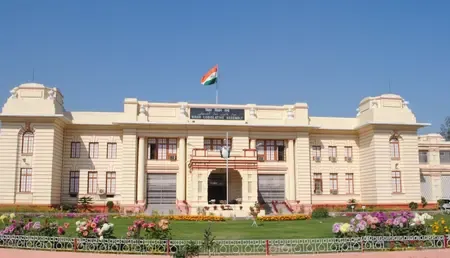
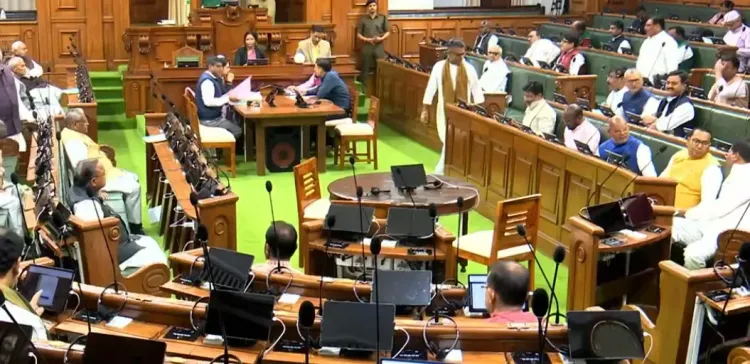
Patna, Feb 27 (NationPress) On the last day of the Bihar Budget Session, the Bihar Legislative Assembly echoed with calls for stringent legislation against religious conversion. Numerous members from the ruling coalition raised this critical issue through a calling attention motion.
Among the eighteen MLAs advocating for this law were prominent figures such as Maithili Thakur, Mithilesh Tiwari, Virendra Kumar, Janak Singh, Sanjay Kumar Singh, Jivesh Kumar, Tar Kishore Prasad, and Baidyanath Prasad. They urged the introduction of a law similar to those currently in effect in states like Uttar Pradesh, Madhya Pradesh, Uttarakhand, and Gujarat.
The legislators contended that these laws impose severe penalties, with imprisonment terms ranging from one to twenty years for cases of alleged fraudulent conversion, child marriage, or inducement.
They raised concerns over demographic shifts in certain areas of Bihar, asserting that mass conversions were occurring, particularly in border districts and the Seemanchal region.
Mithilesh Tiwari, an MLA from the BJP, stated, “Uttar Pradesh has established strict regulations, and Bihar should follow suit. Reports indicate that in Buxar, around 1,000 Dalit families have converted. The demographic landscape of Seemanchal has altered significantly. Thus, this law is essential; the government must take it into account.”
Other members highlighted statistics on population growth and the proliferation of churches within the state, alleging that conversions were often facilitated through inducement.
BJP MLA Sanjay Singh emphasized that this issue transcends religious conversion; it is about national identity. Another member, Anil Singh, called for robust legislation to address this matter.
Questions were also raised regarding reservation benefits following religious conversions, with references made to relevant constitutional provisions in their discussions.
In response to the debate, Arun Shankar Prasad, the Tourism and Arts & Culture Minister, confirmed that the Bihar government currently has no plans to introduce legislation concerning religious conversion.
“At this moment, there is no proposal for any legislation on this issue,” the minister reiterated in the assembly.
When certain BJP members persisted on the topic, Assembly Speaker Prem Kumar interjected, acknowledging the admission of the calling attention motion and assuring that the government would review the matter if required, stating that no further discussion would take place.
Point of View
The discussions in the Bihar Legislative Assembly highlight a growing concern regarding religious conversions and their socio-political implications. This issue is not only significant for Bihar but also reflects broader national dynamics. While the ruling party seeks to address perceived demographic changes, the response from the government indicates a cautious approach, emphasizing the need for legislative scrutiny before enacting such laws.
NationPress
26 Sept 2026
Frequently Asked Questions
What was discussed in the Bihar Assembly regarding conversion laws?
Members of the ruling party called for stricter anti-conversion laws, citing concerns over demographic changes and mass conversions in the state.
Which states have implemented similar laws?
States like Uttar Pradesh, Madhya Pradesh, Uttarakhand, and Gujarat have enacted laws against religious conversion.
What punishments are included in these proposed laws?
The proposed laws would impose severe penalties, including imprisonment for one to twenty years for fraudulent conversions.
Is the Bihar government planning to introduce new legislation on this issue?
Currently, the Bihar government has no proposals to introduce legislation relating to religious conversion.
What demographic changes are being reported in Bihar?
Claims have been made about significant demographic shifts in areas like Seemanchal, with reports of mass conversions, particularly among Dalit families.