BJP Celebrates Passage of UCC Bill in Gujarat, RJD Criticizes as Party's Agenda
Synopsis
In a significant political move, the BJP has applauded the passing of the UCC Bill in Gujarat while the RJD has raised concerns, labeling the bill as an agenda-driven initiative. This development underscores the ongoing debate over civil rights in India.
Key Takeaways
The UCC Bill aims to create a unified legal framework for civil issues.
Supporters believe it promotes equality and development.
Critics argue it undermines India's secularism.
Political reactions are sharply divided, highlighting ongoing tensions.
Implementation could reshape personal laws in India.
New Delhi, March 25 (NationPress) On Wednesday, BJP leaders expressed their approval of the Uniform Civil Code (UCC) Bill 2026, which was recently passed in the Gujarat Legislative Assembly. They advocated for the principle of 'one nation, one Constitution'. In contrast, the Rashtriya Janata Dal (RJD) voiced opposition to the bill, labeling it as the ruling party's 'agenda'.
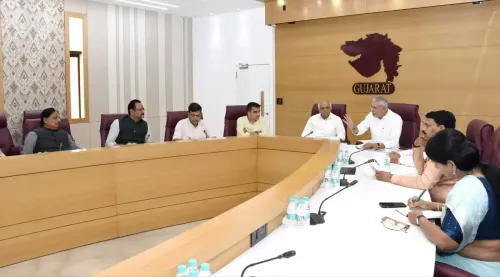
The bill was approved by the Gujarat Assembly on Tuesday, establishing a unified legal structure governing civil issues like marriage, divorce, maintenance, and inheritance across various communities and religions.
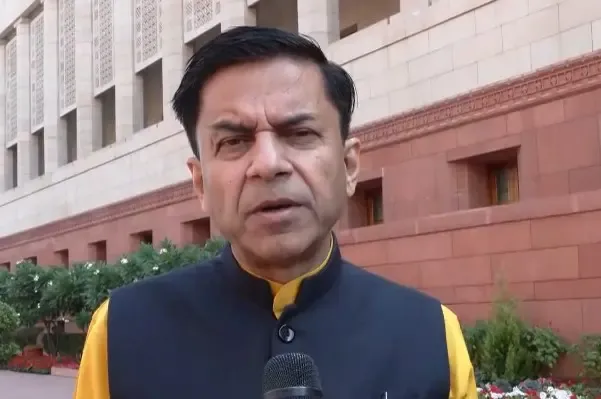
BJP MP Shashank Mani welcomed the new legislation, stating, "This Bill is commendable. We should strive for 'one nation and one Constitution'. There should not be multiple civil codes. If Gujarat has set this precedent, I hope other states will follow suit."
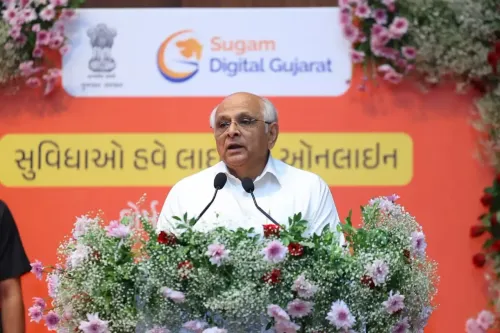
Another BJP MP, Mayank Nayak, expressed gratitude towards Gujarat Chief Minister Bhupendra Patel and Deputy CM Harsh Sanghavi, highlighting that the bill will ensure equal rights for all citizens and enhance Gujarat's performance on the Human Development Index. He stressed that this will contribute to the overall development of the state and the nation.
Babulal Marandi, the Leader of Opposition in the Jharkhand Assembly and a BJP MLA, concurred that if criminal laws are uniform, civil laws should be as well.
Sanjay Nishad, a minister from Uttar Pradesh, emphasized the necessity for consistent laws applicable to all citizens, asserting, "The nation should not operate under 'shariat'; it must function according to the Constitution of India."
He added, "In society, while there are numerous castes, the Constitution provides equality for all citizens. I support the Bill wholeheartedly," he told IANS.
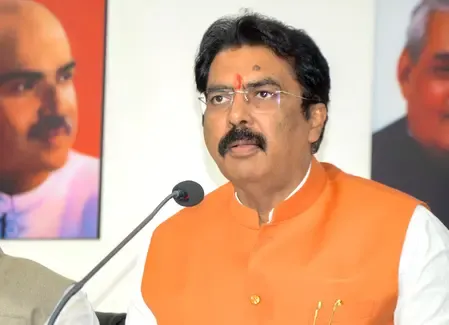
Conversely, RJD MLA Bhai Virendra expressed dissent towards the UCC Bill, claiming, "If the BJP government advocates 'one nation, one election', why not 'one nation, one education'? It appears there is an ulterior motive against a specific religion."
He further remarked, "This country belongs to everyone; it is a secular state. People from all faiths, including Hindus, Muslims, Christians, and Sikhs, fought for our independence from colonial rule."
Bhai Virendra accused the BJP government of attempting to implement the agendas of the RSS and the BJP across the nation.
"If they are capable, let them implement the UCC in Bihar; we will not permit that to occur here," he concluded.
Point of View
Critics argue it may undermine India's secular fabric. The debate highlights the complexities of governance in a diverse nation, necessitating a careful approach to ensure equitable rights for all citizens.
NationPress
24 Sept 2026
Frequently Asked Questions
What is the Uniform Civil Code (UCC)?
The UCC aims to provide a common set of laws governing civil matters such as marriage, divorce, maintenance, and inheritance for all citizens, regardless of religion or community.
Why is the UCC Bill significant?
The UCC Bill is significant as it seeks to unify civil laws in India, promoting equality and fairness in legal matters across diverse communities.
What are the main arguments for and against the UCC?
Supporters argue it promotes equality and simplifies the legal framework, while critics claim it could threaten religious freedoms and the secular nature of the country.
What has been the response from political parties?
The BJP has welcomed the bill as a step towards unity, while the RJD has criticized it as an agenda-driven move that could target specific religions.
What are the potential implications of the UCC?
If implemented, the UCC could significantly alter the legal landscape in India, affecting personal laws and the rights of individuals across various communities.