BIMSTEC nations meet in New Delhi to bolster Bay of Bengal maritime security
Synopsis
India hosted the fifth BIMSTEC Expert Group Meeting on Maritime Security on 17 November, with all seven member nations deliberating on underwater infrastructure protection and Bay of Bengal domain awareness — a push that follows the grouping's first-ever joint maritime exercise last month and signals a new depth to regional security architecture.
Key Takeaways
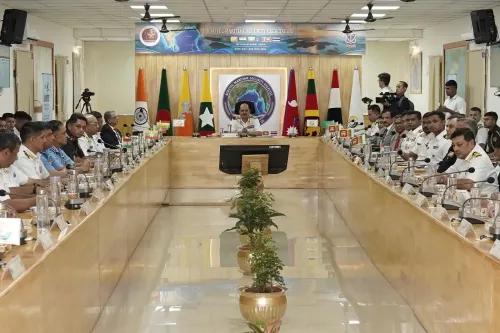
India's National Security Council Secretariat (NSCS) hosted the fifth BIMSTEC Expert Group Meeting on Maritime Security Cooperation on 17 November 2026 in New Delhi .
All seven BIMSTEC member nations participated, deliberating on Underwater Domain Awareness (UDA) and protection of critical underwater infrastructure.
Delegates discussed adoption of Guidelines for Major Marine Oil Pollution Response in the Bay of Bengal .
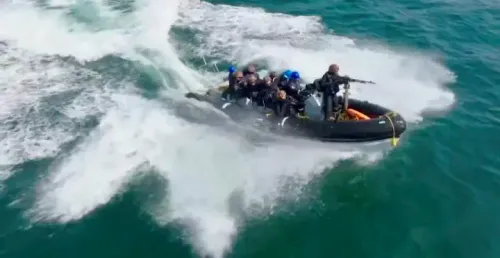
The inaugural BIMSTEC Maritime Security Exercise at Sri Vijaya Puram ( 30 Oct – 3 Nov 2026 ) involving naval ships from India , Myanmar , and Sri Lanka was acknowledged as a success.
Member states agreed to deepen information sharing and collective response mechanisms against maritime threats.
BIMSTEC collectively represents 1.7 billion people and a combined GDP of US$ 5 trillion .
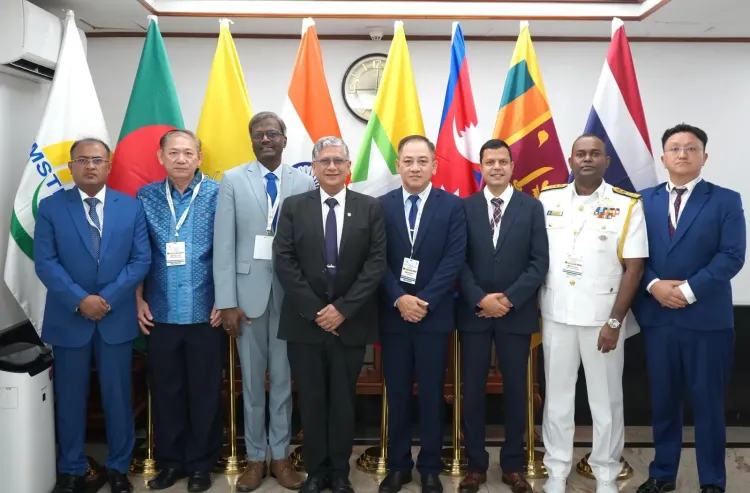
Member states of the Bay of Bengal Initiative for Multi-Sectoral Technical and Economic Cooperation (BIMSTEC) convened in New Delhi on 17 November 2026 for the fifth meeting of the BIMSTEC Expert Group on Maritime Security Cooperation, deliberating on measures to strengthen Underwater Domain Awareness (UDA) and the protection of critical underwater infrastructure. The meeting was hosted by India's National Security Council Secretariat (NSCS), with representatives from all seven BIMSTEC member nations in attendance, the Ministry of External Affairs (MEA) confirmed.
Key Areas of Discussion
The fifth expert group meeting marked the completion of another round of result-oriented discussions across five focus areas: Maritime Domain Awareness (MDA), Humanitarian Assistance and Disaster Relief (HADR), Oil Pollution Response, Blue Economy, and Maritime Security Cooperation. Delegates also deliberated on the adoption of Guidelines for Major Marine Oil Pollution Response in the Bay of Bengal — a critical step toward a unified regional response framework.
'The participating delegates articulated their views and provided sound professional recommendations on the issues of maritime security, highlighting need for a collaborative approach to address maritime security threats in the Bay of Bengal region,' the MEA stated.
Maiden BIMSTEC Maritime Security Exercise
Member states also acknowledged the successful conduct of the inaugural BIMSTEC Maritime Security Exercise held at Sri Vijaya Puram in the Andaman and Nicobar Islands from 30 October to 3 November 2026. The exercise involved harbour and sea-phase operations with naval vessels from India, Myanmar, and Sri Lanka participating — including INS Taragiri, INS Karmuk, INS Saryu, UMS King Aung Zeya, and SLNS Gajabahu. The Ministry of Defence had described the drill as underscoring 'the shared commitment of all stakeholders to maritime security and stability across the Bay of Bengal.'
Notably, this exercise is among the key initiatives that Prime Minister Narendra Modi announced at the sixth BIMSTEC Summit in Thailand last year, signalling India's intent to deepen its maritime leadership role within the grouping.
What Was Agreed Upon
The meeting concluded with member states agreeing to continue efforts toward enhancing information sharing and collective response mechanisms against maritime threats, alongside capacity enhancement and capability building through cooperative measures. The focus on underwater infrastructure protection comes amid rising global concerns over the vulnerability of submarine cables and pipelines — assets that underpin both communications and energy supply across the Indo-Pacific.
BIMSTEC's Strategic Significance
BIMSTEC brings together 1.7 billion people — roughly 22 per cent of the world's population — across seven member states: Bangladesh, Bhutan, India, Nepal, Sri Lanka, Myanmar, and Thailand. The grouping commands a combined GDP of US$ 5 trillion and serves as a unique bridge between South Asia and South-East Asia. The MEA underscored that the meeting 'marks a significant milestone in the collective maritime security endeavours in the region,' reinforcing the Bay of Bengal as the common strategic binding factor for all member nations.
With underwater infrastructure threats drawing fresh attention globally, the outcomes of this meeting are likely to shape BIMSTEC's maritime agenda heading into its next summit cycle.
Point of View
Not mere diplomatic housekeeping. The emphasis on underwater infrastructure protection is timely: the sabotage of the Nord Stream pipelines and repeated incidents involving undersea cables have made this a live global vulnerability, and the Bay of Bengal, crisscrossed by critical cable routes, is no exception. Yet BIMSTEC's record on converting expert group deliberations into operational capacity is uneven — the maiden maritime exercise involved only three of seven members. The real measure of this meeting's success will be whether its agreed information-sharing mechanisms are operationalised before the next summit, or quietly deferred as past deliverables have been.
NationPress
17 Nov 2026
Frequently Asked Questions
What was decided at the fifth BIMSTEC Expert Group Meeting on Maritime Security?
Member states agreed to strengthen Underwater Domain Awareness, advance guidelines for marine oil pollution response in the Bay of Bengal, and continue building collective response mechanisms against maritime threats. The meeting, hosted by India's National Security Council Secretariat on 17 November 2026, covered five focus areas including Maritime Domain Awareness, HADR, Oil Pollution Response, Blue Economy, and Maritime Security Cooperation.
What is BIMSTEC and which countries are members?
BIMSTEC — the Bay of Bengal Initiative for Multi-Sectoral Technical and Economic Cooperation — is a seven-nation grouping comprising Bangladesh, Bhutan, India, Nepal, Sri Lanka, Myanmar, and Thailand. It represents 1.7 billion people, or about 22 per cent of world population, with a combined GDP of US$ 5 trillion.
What was the inaugural BIMSTEC Maritime Security Exercise?
The maiden BIMSTEC Maritime Security Exercise was held at Sri Vijaya Puram in the Andaman and Nicobar Islands from 30 October to 3 November 2026. Naval ships from India, Myanmar, and Sri Lanka participated, including INS Taragiri, INS Karmuk, INS Saryu, UMS King Aung Zeya, and SLNS Gajabahu.
Why is underwater infrastructure protection a focus for BIMSTEC nations?
Critical underwater infrastructure — including submarine communication cables and energy pipelines — underpins the Bay of Bengal region's digital and economic connectivity. Growing global incidents of sabotage and damage to such assets have prompted BIMSTEC nations to prioritise Underwater Domain Awareness as a collective security concern.
How does this meeting connect to PM Modi's BIMSTEC commitments?
The inaugural BIMSTEC Maritime Security Exercise, acknowledged at this meeting, was among the key initiatives announced by Prime Minister Narendra Modi at the sixth BIMSTEC Summit in Thailand last year. The fifth expert group meeting is part of a broader follow-through on those summit-level commitments.