BIMSTEC Maritime Security Exercise kicks off at Sri Vijaya Puram on Oct 30
Synopsis
India's Andaman and Nicobar Command is hosting the first-ever BIMSTEC Maritime Security Exercise starting 30 October at Sri Vijaya Puram — a landmark drill that brings together navies from Bangladesh, Myanmar, Sri Lanka, and Thailand to operationalise collective Bay of Bengal security for the first time, against a backdrop of rising global maritime transit risks.
Key Takeaways
The inaugural BIMSTEC Maritime Security Exercise begins on 30 October 2026 at Sri Vijaya Puram , hosted by the Andaman and Nicobar Command (ANC) .
The drill runs through 2 November 2026 in two phases — a harbour planning phase and an at-sea interoperability phase.
Naval assets from Bangladesh , Myanmar , Sri Lanka , and Thailand will participate; Bhutan and Nepal will send observers.
Objectives include Maritime Domain Awareness (MDA) , HADR , oil spill response, and counter-maritime crime coordination.
India is set to present a draft BIMSTEC White Shipping Agreement to member states, with a proposed BIMSTEC Disaster Management Centre also on the table.
The exercise follows the BIMSTEC Agreement on Maritime Transport Cooperation signed at the 6th BIMSTEC Summit in Bangkok in April 2025 .
The Andaman and Nicobar Command (ANC) is set to host the inaugural BIMSTEC Maritime Security Exercise beginning 30 October 2026 at Sri Vijaya Puram (formerly Port Blair), marking the first time the seven-nation grouping has launched a dedicated multilateral naval drill in the Bay of Bengal. The four-day exercise, running through 2 November 2026, will bring together naval assets and officials from across South Asia and Southeast Asia to sharpen collective readiness at sea.
Participating Nations and Format
Naval assets from Bangladesh, Myanmar, Sri Lanka, and Thailand will participate directly in the exercise. Bhutan and Nepal — both landlocked nations that are heavily dependent on the Bay of Bengal for EXIM trade — will send representatives to observe and engage in planning sessions.
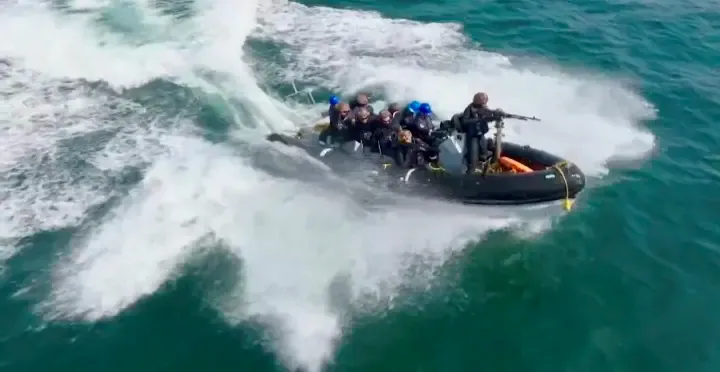
The exercise is structured in two phases. A harbour phase will focus on professional exchanges and joint planning to build trust and interoperability frameworks, while a subsequent sea phase will test coordinated operations on the water. According to the ANC, 'together they turn a common vision for a safe, secure and stable Bay into coordinated action at sea.'
Key Objectives of the Drill
The exercise targets five core areas: enhancing Maritime Domain Awareness (MDA), building operational coordination across the Bay of Bengal, strengthening regional security cooperation, improving Humanitarian Assistance and Disaster Relief (HADR) capabilities, and developing responses to cross-border maritime crimes and marine pollution from oil and hazardous material spills.
Notably, the BIMSTEC Expert Group on Maritime Security Cooperation has already finalised guidelines for maritime law enforcement agencies to ensure effective coordination during at-sea interactions. A BIMSTEC White Shipping Agreement is also under consideration, with India set to present a draft to member states in the near term.
Why the Bay of Bengal Demands Coordinated Action
The Bay of Bengal connects South Asia to Southeast Asia and serves as a critical corridor for global energy and trade flows. The region is also acutely vulnerable to natural disasters — four editions of the BIMSTEC Disaster Management Exercise have already been held to build joint operational response capabilities.
The exercise comes amid heightened global awareness about maritime transit risks. The crisis in the Middle East, particularly around the Strait of Hormuz, has demonstrated how violations of the right of transit passage — enshrined in Article 44 of the United Nations Convention on the Law of the Sea (UNCLOS) — can disrupt trade and destabilise regions. BIMSTEC nations have cited the UNCLOS principle that 'states bordering straits shall not hamper transit passage' as central to their shared maritime vision.
Regional Frameworks Underpinning the Exercise
The exercise builds on the BIMSTEC Agreement on Maritime Transport Cooperation, signed at the 6th BIMSTEC Summit in Bangkok in April 2025. Member states are also advancing a regional oil spill response framework, including a regional contingency plan, standardised emergency procedures, and joint pollution response drills.
India has additionally proposed establishing a BIMSTEC Disaster Management Centre to serve as a permanent focal point for coordinating regional HADR operations. The grouping is also pursuing collaboration with the United Nations Office for Disaster Risk Reduction (UNDRR) and the Coalition for Disaster Resilient Infrastructure (CDRI). The ANC stated: 'The Bay of Bengal binds our region's security, trade and prosperity... Together, we chart the course for collective maritime wellbeing.'
The inaugural exercise is expected to set a precedent for regular multilateral naval engagement in the Bay of Bengal, with the ANC positioned as the regional hub for maritime security coordination under the BIMSTEC framework.
Point of View
The ANC's home base, is a deliberate assertion of India's centrality to the BIMSTEC security architecture. Yet the real test will be whether this drill evolves into a sustained, annual mechanism with verifiable interoperability gains, or remains a one-off diplomatic gesture. The grouping's ability to operationalise joint response to oil spills and HADR — not just hold planning seminars — will determine whether BIMSTEC maritime cooperation can match the pace of China's expanding naval footprint in the Indian Ocean Region.
NationPress
29 Oct 2026
Frequently Asked Questions
What is the BIMSTEC Maritime Security Exercise?
It is the first-ever multilateral maritime security drill conducted under the BIMSTEC framework, hosted by India's Andaman and Nicobar Command at Sri Vijaya Puram from 30 October to 2 November 2026. The exercise aims to enhance Maritime Domain Awareness, HADR capabilities, and joint responses to maritime crimes and oil spills across the Bay of Bengal.
Which countries are participating in the BIMSTEC Maritime Security Exercise?
Naval assets from Bangladesh, Myanmar, Sri Lanka, and Thailand will participate in the exercise. Bhutan and Nepal, both landlocked nations dependent on the Bay of Bengal for trade, will send representatives as observers.
Why is the Bay of Bengal significant for BIMSTEC maritime cooperation?
The Bay of Bengal is a critical corridor connecting South Asia to Southeast Asia and carries a large share of global energy and trade flows. All seven BIMSTEC member states are either directly bordered by it or depend on it for EXIM trade, making regional maritime cooperation essential for their collective security and economic stability.
What agreements underpin BIMSTEC maritime cooperation?
The BIMSTEC Agreement on Maritime Transport Cooperation, signed at the 6th BIMSTEC Summit in Bangkok in April 2025, provides the core legal framework. Additionally, the BIMSTEC Expert Group on Maritime Security Cooperation has finalised guidelines for law enforcement coordination, oil spill response, and HADR operations at sea.
What is India's role in the BIMSTEC maritime security framework?
India is hosting the inaugural exercise through its Andaman and Nicobar Command and has proposed two major initiatives: a BIMSTEC White Shipping Agreement — for which India will present a draft — and a BIMSTEC Disaster Management Centre to serve as a permanent regional HADR coordination hub.