Karnataka BJP Accuses Congress of Failing Dalits Over Internal Reservation
Synopsis
The Karnataka BJP has raised serious allegations against the Congress-led government for not implementing internal reservation, claiming it has betrayed Dalits and youth. This ongoing issue has sparked protests and demands for clarification on the government's stance.
Key Takeaways
BJP accuses Congress of failing Dalits and youth.
Internal reservation remains a contentious issue.
Youths in Dharwad protest for clarity.
Other states have successfully implemented similar policies.
Previous government increased reservation quotas.
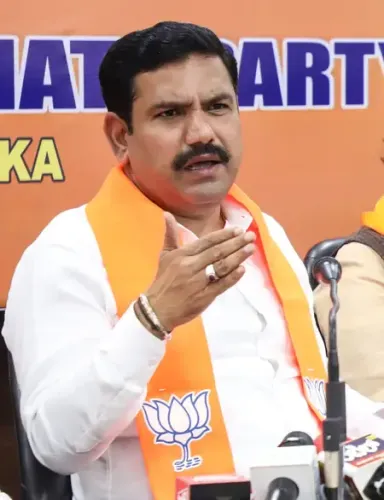
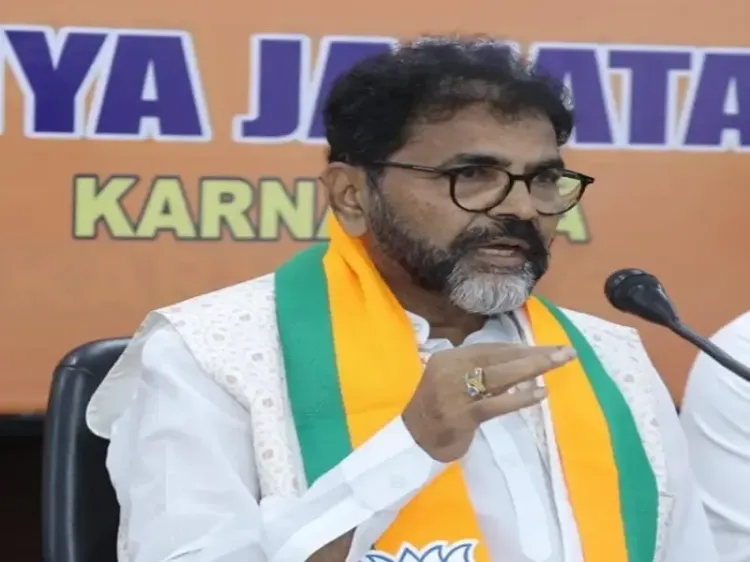
Bengaluru, Feb 28 (NationPress) The Karnataka division of the Bharatiya Janata Party (BJP) on Saturday criticized the Congress-led administration for maintaining the outdated reservation framework and neglecting to enforce internal reservation, claiming that Dalits have been deceived and youth have been wronged.
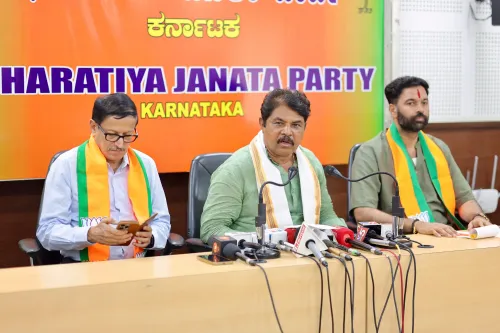
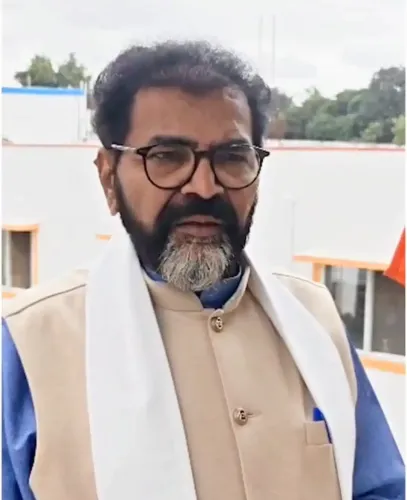
In a press conference in Bengaluru, Chalavadi Narayanaswamy, the Leader of the Opposition in the Legislative Council, challenged the government to reveal how it plans to implement internal reservation, emphasizing that merely persisting with the old system does not fulfill this requirement.
It is noteworthy that the Congress-led government, citing technical and legal barriers, had previously declared it would recruit 56,432 candidates using the old reservation criteria.
Narayanaswamy stated, “The Congress administration has failed to establish internal reservation. For too long, you have betrayed Dalits and denied justice to the youth. The current predicament is due to the government’s shortcomings, not the populace’s fault.”
He insisted that internal reservation should be allocated within the 17 percent quota designated for Scheduled Castes, yet highlighted that the issue is currently pending in court, complicating its implementation.
He referenced states like Jharkhand, Haryana, and Telangana, which have successfully executed internal reservation. He also stressed that while the government points to a 50 percent reservation cap, no such limitation applies specifically to Scheduled Castes and Scheduled Tribes within their designated quota.
He accused the government of inadequately communicating these matters to the public and asserted that blaming citizens is unacceptable. He warned that should the government fail to clearly articulate its plans for internal reservation, he would inform the affected communities that they are being disrespected and misled.
Narayanaswamy recalled that during the BJP-led administration under former Chief Minister Basavaraj Bommai, the reservation for Scheduled Castes was raised from 15 percent to 17 percent, and for Scheduled Tribes from 3 percent to 7 percent.
He noted that the demand for internal reservation among Scheduled Castes has persisted for decades, with the previous government establishing sub-groups and forwarding this proposal to the Central government, as the state lacked the authority to implement it at that moment.
According to him, the Central government had advised patience due to the pending court case, but later the court permitted states to make their own determinations, simplifying the process for internal reservation. He urged the state administration to make a political decision and implement this policy.
Narayanaswamy explained that the earlier classification of 6 percent, 5 percent, 4 percent, and 1 percent was revised, with a political decision made to categorize the Adi Karnataka, Adi Dravida, and Adi Andhra communities separately.
These are their authentic caste identities. He also noted that nomadic communities, despite being distributed across these categories, were classified under Group C.
He acknowledged that while this arrangement was not entirely accurate, a consensus was reached to achieve a resolution, with the understanding that any injustices faced by certain groups could be rectified in the future.
Narayanaswamy mentioned that a tense environment has emerged in the state, with fears that all government positions would be monopolized by a single group. During this time, youths in Dharwad staged a significant protest over these issues.
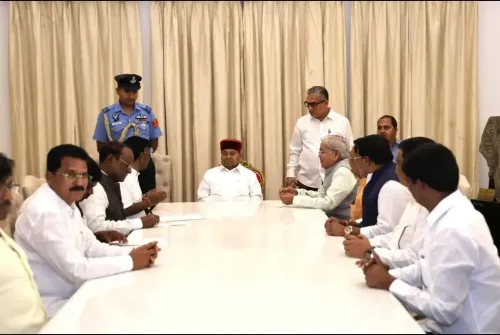
Concerns have arisen regarding the unequal distribution of opportunities among sub-groups, causing unrest within the state. The youth in Dharwad claimed that 2.84 lakh government positions remain unfilled due to delays associated with internal reservation. He stated that as BJP leaders supported the protesting students and youth, the government was compelled to act and seek the Governor's approval for internal reservation. However, he questioned what tangible actions have been taken by the government despite securing the Governor’s consent.
Point of View
The ongoing conflict between the Karnataka BJP and the Congress-led government over internal reservation highlights significant socio-political tensions. The allegations raised by the BJP concerning Dalit rights and youth opportunities reflect broader issues of representation and equity that are critical to address in a diverse society.
NationPress
3 Oct 2026
Frequently Asked Questions
What is the internal reservation issue in Karnataka?
The internal reservation issue in Karnataka pertains to the demand for a dedicated quota within the existing reservation framework for Scheduled Castes, aimed at addressing disparities among sub-groups.
Why is the BJP criticizing the Congress government?
The BJP criticizes the Congress government for allegedly continuing with the outdated reservation system and failing to implement internal reservation, claiming that it has betrayed Dalits and youth.
What have been the responses from the youth regarding this issue?
Youth in Karnataka, particularly in Dharwad, have staged protests demanding clarity and action on the internal reservation issue, expressing concerns over unfilled government positions.
How have other states addressed internal reservation?
States like Jharkhand, Haryana, and Telangana have successfully implemented internal reservation policies, serving as potential models for Karnataka.
What changes were made during the previous BJP administration?
During the BJP administration led by Basavaraj Bommai, the reservation for Scheduled Castes was increased from 15% to 17%, and for Scheduled Tribes from 3% to 7%.