BJP Challenges Rahul Gandhi's Stance on National Identity Amid Controversial Protest
Synopsis
The BJP has intensified its critique of Rahul Gandhi over a provocative shirtless protest by the Congress youth wing at the AI Impact Summit, invoking Jawaharlal Nehru's historical views on national identity. This incident raises questions about representation and national loyalty in contemporary politics.
Key Takeaways
BJP's Criticism: The BJP has intensified its attacks on Rahul Gandhi regarding his views on national identity.
Historical Context: The BJP invoked Nehru's opinions on representation to question Gandhi's legitimacy.
Political Backlash: The protest faced condemnation from various political factions, including Congress allies.
National Identity Issues: The incident highlights ongoing debates about identity and loyalty in contemporary India.
Public Reaction: The protests have sparked significant public and media discourse about the appropriateness of such demonstrations.
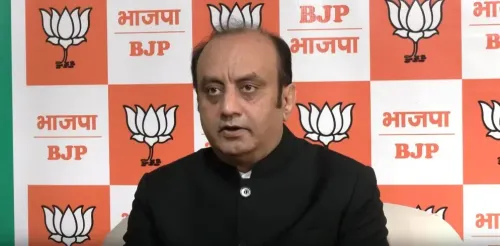
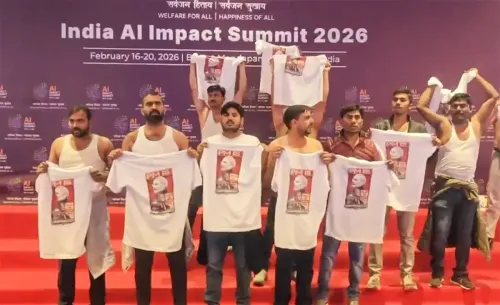
New Delhi, March 10 (NationPress) The Bharatiya Janata Party (BJP) intensified its criticism of the Congress and the Lok Sabha Leader of Opposition (LoP) Rahul Gandhi on Tuesday over the shirtless demonstration organized by the youth wing during the AI Impact Summit and the subsequent comments made by the Congress leader.
Referencing a historical instance from the era of the late Prime Minister Jawaharlal Nehru concerning the Holkar dynasty's succession, the BJP challenged the Congress to consider Nehru's views on national identity and representation.
The BJP posited that if Nehru had once asserted that a child born to a foreigner should not represent the country, it was time for the Congress to reconsider that stance today. This remark indirectly pointed to Rahul Gandhi, whose mother Sonia Gandhi is of Italian descent.
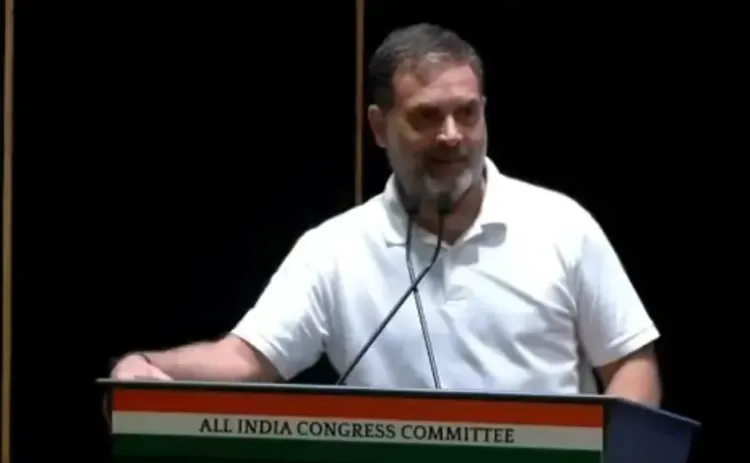
Amit Malviya, the head of the BJP IT cell, shared a clip on social media featuring Rahul Gandhi, who appeared to smile and comment on the controversial protest at the AI Impact Summit.
In the clip, Rahul Gandhi was quoted saying, 'Kar diya kaam Youth Congress walo ne (The Youth Congress members have done their job),' in reference to the demonstration held by members of the Indian Youth Congress.
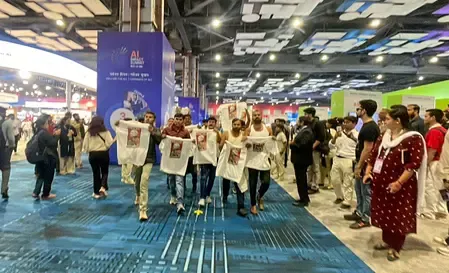
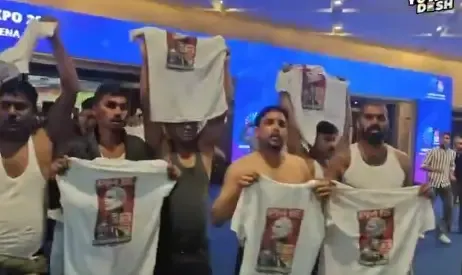
On February 20, Indian Youth Congress activists conducted a 'shirtless' protest at the India AI Impact Summit in New Delhi, breaching security at the Bharat Mandapam venue and stripping off their shirts to unveil T-shirts with slogans critical of the government and the India-US trade agreements.
This incident attracted backlash from various political factions, including some allies of the Congress within the INDIA bloc, with numerous leaders accusing the protest of tarnishing the nation’s image on an international stage.
In sharing the video on X, Amit Malviya condemned Rahul Gandhi's reaction, stating, 'Rahul Gandhi proudly declared, 'Youth Congress members have done the job,' after Youth Congress workers staged a naked protest that disrupted the esteemed AI Summit in Delhi, bringing embarrassment to India on a global platform. Let that sink in.'
He elaborated, 'While the world's foremost technology experts, policymakers, and innovators discussed the future of Artificial Intelligence, the Congress party opted for disruption and indecency as its representation of India.'
Malviya also recounted an incident from the 1950s regarding the succession to the Indore throne following Maharaja Yeshwantrao Holkar II's death, questioning whether his son, Richard Holkar, born to an American mother, could inherit the Holkar dynasty's legacy.
'The irony is that even Jawaharlal Nehru, whom the Congress considers its ideological cornerstone, held a very different view regarding national character and loyalty,' he stated.
According to him, after deliberations with leaders of that time, including President Rajendra Prasad and Home Minister Sardar Vallabhbhai Patel, Nehru made a decisive statement: the throne should be inherited by a child born to an Indian mother.
This decision mirrored the sentiments of a newly independent nation, where concepts of national identity, loyalty, and civilizational belonging were heavily underscored.
'Ultimately, the government acknowledged Princess Usha Devi Raje Sahib Holkar, the daughter of the Maharaja from his Indian spouse, as the rightful heir to the Holkar heritage,' he remarked.
Nehru later rationalized this by stating her recognition was due to her legitimate birthright within the Holkar dynasty.
Malviya contended that this example illustrates how national identity was perceived in that era.
'The precedent was clear: National identity and loyalty were not mere abstract concepts; they were intrinsically connected to origin and belonging. This brings us back to Rahul Gandhi and the Congress today. If even Jawaharlal Nehru believed that a child born of a foreigner could not be entrusted with the duty of representing the nation, why is the Congress unable to comprehend Nehru's own statements?' Malviya queried.
'Perhaps this explains why they today celebrate protests that disgrace India on the world stage rather than defending the country's dignity,' he concluded.
Point of View
The ongoing political discourse surrounding the Congress's protest highlights significant issues of identity and representation in India. While the BJP's response seeks to question the Congress's values, it also reflects broader societal debates about loyalty and belonging in an increasingly globalized world.
NationPress
30 Sept 2026
Frequently Asked Questions
What was the shirtless protest about?
The shirtless protest organized by the Indian Youth Congress at the AI Impact Summit was aimed at criticizing the government and specific trade agreements with the US.
Why did the BJP criticize Rahul Gandhi?
The BJP criticized Rahul Gandhi for his supportive remarks about the protest, linking it to historical views on national identity held by Jawaharlal Nehru.
What historical reference did the BJP use?
The BJP referenced a 1950s incident regarding the succession of the Indore throne to underscore Nehru's views on national loyalty and representation.
What was the response from other political factions?
The protest drew criticism from various political groups, including allies within the Congress's own INDIA bloc, highlighting concerns over the impact on India's international standing.
What are the implications of this protest?
This protest raises significant questions about how political representation is conducted in India and challenges the notion of national identity in modern politics.