BJP alleges foreign forces fuelling 'regime change' bid to incite violence in India
Synopsis
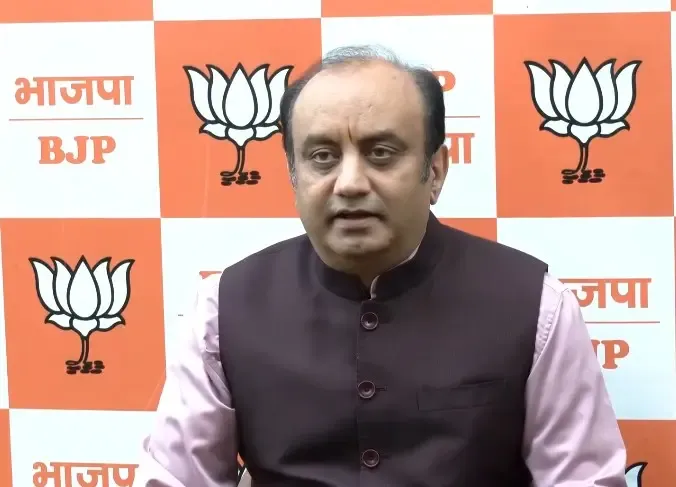
BJP spokesperson Sudhanshu Trivedi alleged on 21 October that the Opposition's 'regime change' narrative is being driven by foreign entities seeking to incite violence in India — citing PM Modi's Vijayadashami address, protests in Europe, and Sanjay Raut's remarks about a visitor from Vietnam as evidence of what he called a coordinated, cross-border conspiracy against the government.
Key Takeaways
BJP MP Sudhanshu Trivedi on 21 October 2026 alleged that the 'regime change' narrative is being orchestrated by 'unidentified and suspicious foreign entities' to incite violence in India.
The remarks came after Shiv Sena (UBT) chief Uddhav Thackeray and other Opposition leaders publicly called 'regime change' 'inevitable.' Trivedi cited PM Modi's Vijayadashami address of 20 October as a prior warning about forces seeking to destabilise India through corruption and societal divisions.
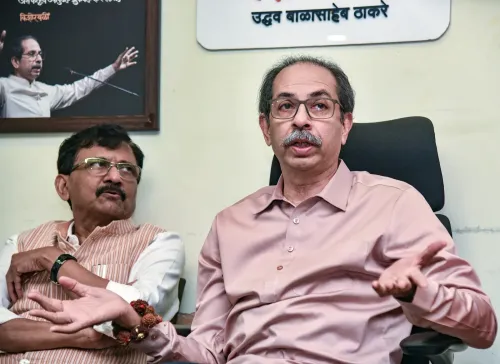
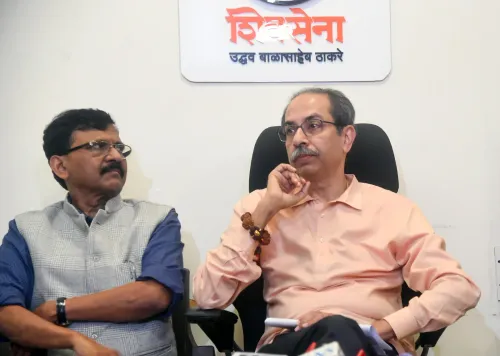
Sanjay Raut's remarks about a visitor from Vietnam triggering regime change were directly questioned by Trivedi, who called for Congress to explain what Raut knew.
The BJP asserted that any attempt at regime change would fail against the resolve of 140 crore Indians who back the Modi government.
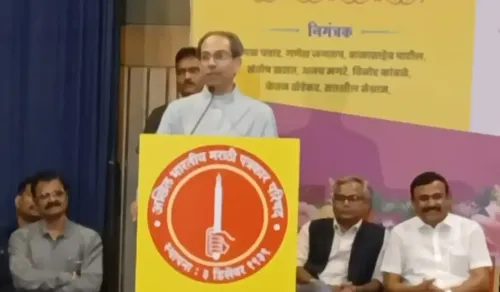
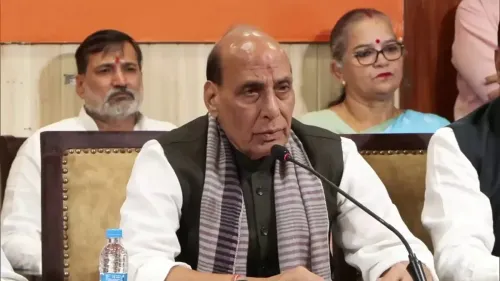
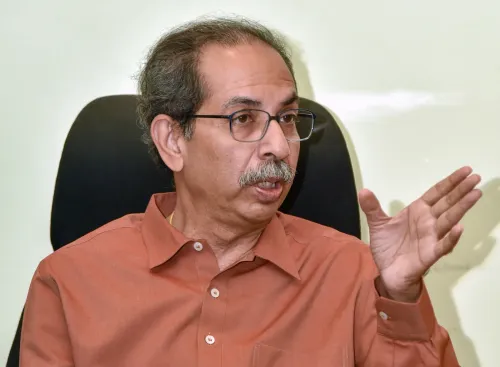
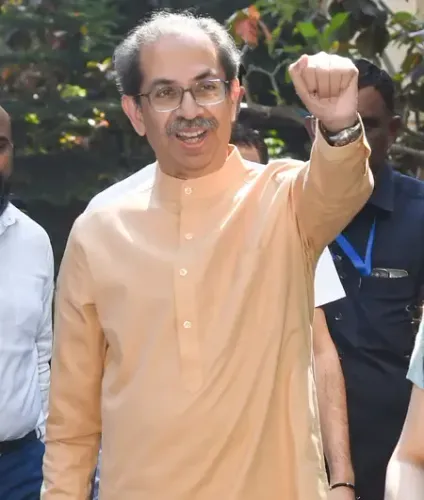
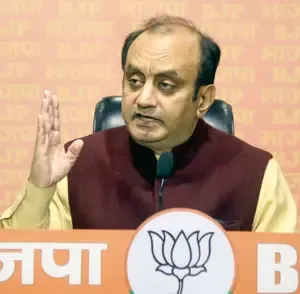
The Bharatiya Janata Party (BJP) on Wednesday, 21 October 2026, accused the Opposition of amplifying a 'regime change' narrative it claims is being orchestrated by 'unidentified and suspicious foreign entities' with the stated aim of inciting violence in India. The allegation was made at a press conference in New Delhi by BJP national spokesperson and Member of Parliament Sudhanshu Trivedi, and came a day after Shiv Sena (UBT) chief Uddhav Thackeray and other Opposition leaders publicly described 'regime change' as 'inevitable.'
What the BJP Said
Addressing the press conference, Trivedi drew a direct line between domestic Opposition voices and what he characterised as a cross-border conspiracy. 'As India, under the leadership of Prime Minister Narendra Modi, continues to progress and establish its position on the global stage, there are forces that are unhappy with this development. These forces exist both within and outside the country, and a clear nexus between them is visible,' he said.
Trivedi also referenced protests taking place across Europe, arguing they were making what he described as a coordinated pattern 'clearer to every Indian citizen.' He directly questioned Shiv Sena (UBT) MP Sanjay Raut and the Indian National Congress (Congress), asking what intelligence Raut possessed about Congress leader Rahul Gandhi that even Congress's own senior leaders purportedly did not.
The Vijayadashami Reference
Much of Trivedi's framing drew from Prime Minister Narendra Modi's Vijayadashami address delivered on Tuesday, 20 October. The BJP spokesperson said Modi had explicitly warned of forces working to destabilise India through 'corruption, divisions in society and opposition to Indian culture and religion.'
Trivedi invoked the mythological figure of Ravan to explain the BJP's position, alleging that each time one demand of protesting groups was met, a new one emerged — with the 'root cause,' as he put it, lying deeper. 'The same phrases and words are repeatedly used in different movements, and this common thread needs to be recognised,' he said. He further cited the episode of Ravan disguising himself as a sage to suggest that disruptive forces conceal their true intentions.
The Opposition Trigger
The BJP's remarks were a direct response to statements by Uddhav Thackeray and other Opposition figures who had used the phrase 'regime change' and called it 'inevitable.' Trivedi took a pointed jab at Thackeray, questioning how a leader who claims to carry the legacy of the late Balasaheb Thackeray could align himself with forces the BJP accuses of undermining religion and culture.
Trivedi also cited statements about a visitor from Vietnam triggering 'regime change' — an apparent reference to remarks made by Sanjay Raut — and questioned the pattern of political predictions being made after foreign travel or foreign references. 'Be it talks about dropping a hydrogen bomb after coming from abroad, or predicting a tsunami, and now, Sanjay Raut's statements indicate that these actions are being orchestrated by unidentified and suspicious foreign entities who seek to incite violence in our nation,' he alleged.
BJP's Confidence in Public Support
Trivedi asserted that the Modi government retained strong public trust and that any attempt at 'regime change' through alleged conspiracy would not succeed. 'The dream of regime change will be shattered when it collides with the firm resolve of 140 crore patriotic Indians, just as glass shatters when it strikes a stone,' he said.
He also flagged what he described as economic harm to businesses and traders caused by protests during the festive season — typically among the most commercially active weeks of the year — framing the disruption as evidence of anti-development intent.
Political Context
The exchange reflects a sharpening confrontation between the ruling BJP and a fragmented Opposition heading into a politically charged period. The BJP's invocation of foreign interference echoes a recurring line of attack it has deployed against Opposition-led protests over the past several years. Critics argue that labelling domestic dissent as foreign-funded is itself a political strategy to delegitimise opposition voices — a charge the BJP has consistently denied. How the Opposition responds, and whether any verifiable evidence of foreign interference emerges, will determine the durability of this narrative cycle.
Point of View
A move that raises the political cost of dissent. What is notable here is the specificity of the attack: naming Sanjay Raut, referencing Vietnam, and tying it to Europe protests suggests a deliberate effort to build a coherent, evidence-adjacent narrative rather than a generic allegation. Yet no verifiable evidence of foreign orchestration has been placed in the public domain. The Opposition, for its part, has handed the BJP an opening by using the charged phrase 'regime change' without carefully contextualising it — a rhetorical misstep that feeds exactly the kind of counter-narrative Trivedi deployed. The real question is whether this exchange stays at the level of competing press conferences or escalates into something with institutional consequences.
NationPress
21 Oct 2026
Frequently Asked Questions
What did the BJP allege about the 'regime change' narrative?
The BJP alleged on 21 October 2026 that the Opposition's 'regime change' campaign is being orchestrated by 'unidentified and suspicious foreign entities' with the aim of inciting violence in India. BJP spokesperson Sudhanshu Trivedi claimed a visible nexus existed between domestic Opposition voices and external forces.
Who triggered the BJP's response and what did they say?
Shiv Sena (UBT) chief Uddhav Thackeray and other Opposition leaders, including Shiv Sena (UBT) MP Sanjay Raut, had publicly described 'regime change' as 'inevitable,' prompting the BJP's press conference. Raut had reportedly made remarks linking a visitor from Vietnam to a political upheaval.
What was PM Modi's Vijayadashami address about, according to the BJP?
According to BJP spokesperson Sudhanshu Trivedi, PM Modi's Vijayadashami address on 20 October warned that forces with three traits — looting after coming to power, creating societal divisions, and opposing Indian culture and religion — were working to destabilise India.
Did the BJP provide evidence of foreign interference?
No verifiable evidence of foreign interference was placed in the public domain at the press conference. The BJP's claims were based on Trivedi's characterisation of repeated patterns in Opposition statements and protests in Europe, which critics argue amount to political allegations rather than documented proof.
What does this political exchange signal for the Opposition and the ruling party?
The confrontation reflects a deepening divide between the BJP and a fragmented Opposition in a politically active period. The BJP is framing domestic dissent as externally driven, while Opposition leaders face pressure to clarify the context of their 'regime change' rhetoric. How both sides respond will shape the next phase of this political contest.