BJP, JD(U) slam Prashant Bhushan's 'regime change' call, cite democratic norms
Synopsis
Prashant Bhushan's blunt declaration — 'Yes, we want regime change' — has detonated a fresh political row, with the BJP calling it 'fascist language' and JD(U) invoking his fractured AAP history. The episode raises a sharper question: in a democracy, where does legitimate electoral aspiration end and destabilising rhetoric begin?
Key Takeaways
Advocate Prashant Bhushan called for 'regime change' at a press conference on Thursday, 16 October 2026 , alongside AISA and CJP representatives.
BJP MP Praveen Khandelwal called Bhushan's language 'fascist and irresponsible,' alleging separatist undertones.
BJP MP Rahul Sinha alleged foreign powers were backing protests aimed at destabilising India.
JD(U) spokesperson Rajiv Ranjan linked Bhushan's remarks to his past with AAP , saying such methods do not earn public trust.
Sivadasan backed Bhushan's call, arguing regime change was necessary for India's development.
Advocate Prashant Bhushan's call for 'regime change' at a press conference on Thursday, 16 October 2026, drew sharp rebukes from the Bharatiya Janata Party (BJP) and Janata Dal (United) (JD(U)), both insisting that any transfer of political power in India must occur exclusively through the ballot box. The remarks have reignited a political flashpoint over the boundaries of dissent and democratic expression.
What Bhushan Said
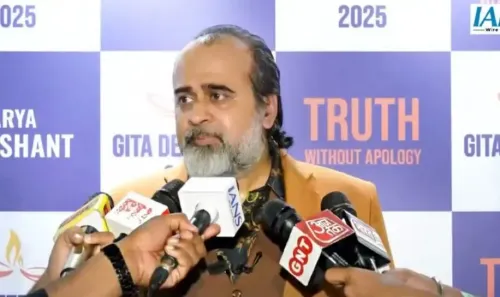
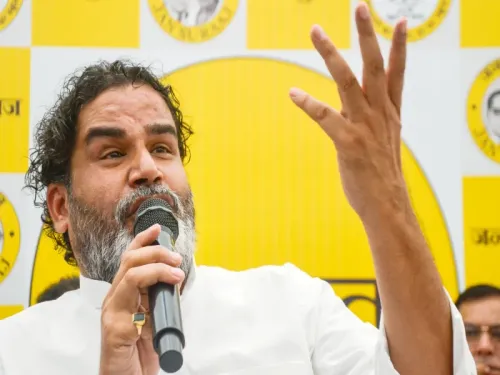
Bhushan made the statement at a press conference alongside AISA member Neha Bora and Cockroach Janta Party (CJP) founder Abhijeet Dipke. He defended the position explicitly: 'Yes, we want regime change,' adding that expressing 'disaffection' towards a government was not a crime in a democracy.
He elaborated that while the immediate fight was for free and fair elections, the broader struggle had shifted towards securing a change in government. 'But if this kind of brutality continues, there will certainly be regime change. Yes, we all want regime change,' Bhushan said, according to reports.
BJP's Reaction: 'Fascist Language'
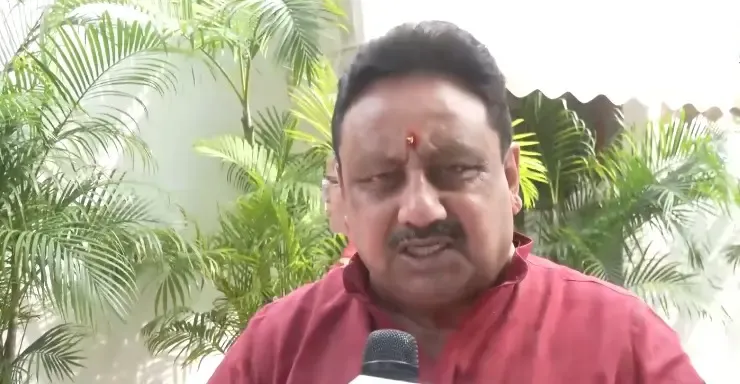
BJP MP Praveen Khandelwal accused Bhushan of deploying what he called fascist and irresponsible language. 'India is a democracy, and whenever a regime changes, it happens through democratic means. This has been the case continuously from Independence until now,' Khandelwal said. He further alleged that Bhushan's choice of words carried separatist undertones — a charge he described as particularly surprising given Bhushan's legal background.
BJP MP Rahul Sinha went further, alleging that certain groups were attempting to destabilise the country through protests with foreign backing. 'What happened in Bangladesh, Nepal or Sri Lanka cannot happen in India because India is a democracy and PM Narendra Modi is the Prime Minister,' Sinha said, invoking recent political upheavals in neighbouring countries as a contrast.
JD(U) Invokes Bhushan's AAP Past
JD(U) spokesperson Rajiv Ranjan argued that political mandates — not street movements or rhetoric — determine who holds power. He also drew a pointed reference to Bhushan's history with the Aam Aadmi Party (AAP), noting that he had made similar claims while associated with the party before parting ways. 'Who knows this better than Prashant Bhushan? He made similar claims while associated with the AAP, but he could not remain with the party either,' Ranjan said. He added that the AAP had eroded public confidence in alternative politics through its conduct in Delhi and elsewhere.
CPI(M) Backs the Call
Not all reactions were critical. CPI(M) MP V. Sivadasan endorsed the demand for regime change, framing it as essential to national development. 'Prime Minister Modi, Amit Shah and their entire team are trying to loot the assets of society and the nation. So, regime change is necessary for the nation's development,' Sivadasan said. His remarks underlined the sharp partisan divide the episode has exposed.
The Wider Context
The controversy arrives at a politically charged moment, with opposition coalitions under sustained pressure and civil society voices increasingly drawn into partisan contestation. Notably, the phrase 'regime change' carries different connotations in Indian political discourse — from legitimate electoral aspirations to, as the BJP alleges, extra-constitutional intent. How the debate over its use plays out could influence the framing of protest movements ahead of upcoming state elections.
Point of View
And they are exploiting that ambiguity. Yet the harder question is whether mainstream opposition politics benefits from such blunt language, or whether it hands the ruling coalition a ready-made distraction from substantive governance critiques. The CPI(M)'s endorsement signals that the left sees electoral value in the framing, even as centrist opposition voices stay quiet. Bhushan's invocation of election integrity — his stated core demand — got buried under the regime-change headline, which may be precisely the outcome the BJP wanted.
NationPress
16 Oct 2026
Frequently Asked Questions
What did Prashant Bhushan say about 'regime change'?
At a press conference on Thursday, 16 October 2026, Bhushan explicitly stated 'Yes, we want regime change,' arguing that expressing disaffection towards a government is not a crime in a democracy. He framed it as part of a broader struggle for free and fair elections, warning that continued 'brutality' would make regime change inevitable.
Why did the BJP call Bhushan's remarks 'fascist'?
BJP MP Praveen Khandelwal used the term to characterise what he called irresponsible language that, in his view, carried separatist undertones. He argued that in India, any change of government has always come through democratic electoral means since Independence, and that Bhushan's framing implied otherwise.
What did JD(U) say about Bhushan's history with AAP?
JD(U) spokesperson Rajiv Ranjan noted that Bhushan had made similar claims when he was associated with the Aam Aadmi Party, but ultimately parted ways with it. Ranjan argued that political power is won through public trust, not 'anarchic methods,' and that the AAP had already eroded confidence in alternative politics.
Did any party support Bhushan's call for regime change?
Yes. CPI(M) MP V. Sivadasan backed the demand, calling regime change necessary for India's development. He alleged that Prime Minister Modi, Home Minister Amit Shah, and their team were 'trying to loot the assets of society and the nation.'
What is the political significance of this controversy?
The row highlights a deepening divide over the language of dissent in India, with the ruling coalition framing 'regime change' as a threat to democratic order and parts of the opposition treating it as a legitimate electoral goal. The dispute is likely to influence how protest movements are characterised ahead of upcoming state elections.