BJP Appeals to Kerala Governor for Malayalam Language Bill Approval

Synopsis
In a significant move to enhance cultural identity, BJP leader Rajeev Chandrasekhar has urged Kerala's Governor to approve the Malayalam Language Bill, which aims to promote Malayalam as the official language of governance and strengthen the pride of its people.
Key Takeaways
Promotion of Malayalam: The Bill seeks to establish Malayalam as the primary language of governance.
Cultural Identity: Approval of the Bill is viewed as a means to strengthen Kerala's cultural identity.
Public Involvement: Enhanced communication between the government and citizens is expected.
Minority Rights: The rights of linguistic minorities must be safeguarded.
Phased Rollout: A measured approach to implementation is proposed.
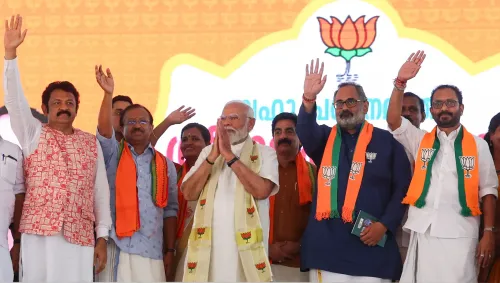
Thiruvananthapuram, March 3 (NationPress) State BJP leader Rajeev Chandrasekhar has called upon Kerala Governor Rajendra V. Arlekar to approve the upcoming Malayalam Language Bill, emphasizing that this legislation would significantly bolster Kerala's cultural identity and enhance the self-esteem of its citizens.
Chandrasekhar highlighted that the Bill marks a pivotal advancement in elevating Malayalam as the principal language of governance.
He pointed out that cultural representatives who recently met with the Prime Minister to express gratitude for the official recognition of the State's name as “Kerala” also advocated for the approval of the Malayalam Language Bill.
As per his statements, this legislation would elevate the status of both Kerala and the Malayalam language, instilling a renewed sense of pride among Malayalis.
The BJP leader contended that just like the formal adoption of the name “Keralam,” ensuring that government communications, official documents, and public services are accessible in Malayalam would greatly enhance interaction between the government and the citizens.
He argued that such an initiative would render governance more transparent, accessible, and effective, naturally driving increased public involvement in governmental processes.
Additionally, Chandrasekhar noted that reinforcing Malayalam in official contexts would deepen the emotional ties of the younger generation to the language and promote greater understanding of the State's rich cultural heritage.
However, he urged that this should not be seen as an exclusionary approach.
Establishing Malayalam as the primary official language must not come at the expense of other languages, he insisted.
Languages like English and Hindi remain vital for the educational and professional development of Kerala’s youth.
He stressed the need to protect the rights of linguistic minorities before the law is enacted.
Calling for a measured approach, he advocated for addressing concerns through clear regulations, a phased implementation strategy, a strong translation framework, multilingual support where necessary, and special considerations for border areas.
Point of View
Culture, and governance in Kerala. While the push for promoting Malayalam is commendable, it is crucial to ensure that the rights of linguistic minorities are not overlooked.
NationPress
19 Sept 2026
Frequently Asked Questions
What is the Malayalam Language Bill?
The Malayalam Language Bill aims to establish Malayalam as the primary language of governance in Kerala, enhancing its usage in official communications and public services.
Who is advocating for the Bill?
The Bill is being advocated by BJP leader Rajeev Chandrasekhar, who has called on the Kerala Governor to approve it.
What are the expected benefits of the Bill?
The Bill is expected to reinforce Kerala's cultural identity, improve communication between the government and citizens, and foster a sense of pride among Malayalis.
Will other languages be marginalized if Malayalam is prioritized?
Chandrasekhar emphasized that prioritizing Malayalam should not marginalize other languages, as English and Hindi remain essential for educational and professional growth.
What measures are suggested for implementing the Bill?
A phased implementation plan, clear regulations, robust translation mechanisms, and multilingual support are suggested to address concerns during the rollout of the Bill.