BJP rebuts 'exclusionary' Vande Mataram charge after Cabinet move
Synopsis
The Union Cabinet's move to legally equate Vande Mataram with Jana Gana Mana has ignited a sharp political battle. BJP's Amit Malviya invoked India's freedom struggle and global national symbolism to rebut Opposition charges, while AIMIM's Owaisi argues the song's religious character makes the equation constitutionally problematic.
Key Takeaways
The Union Cabinet on 7 May approved an amendment to the Prevention of Insults to National Honour Act, 1971 to grant Vande Mataram statutory protection equal to the national anthem.
Obstruction to the singing of Vande Mataram would become a punishable offence under the proposed amendment.
BJP IT cell chief Amit Malviya called Opposition charges "untenable and unjustifiable" and "intellectually dishonest." AIMIM chief Asaduddin Owaisi argued the song is "an ode to the Goddess" and cannot be equated with the national anthem.
The Constituent Assembly accorded Vande Mataram equal respect as the national song on 24 January 1950 , alongside adopting Jana Gana Mana as the national anthem.
The Bharatiya Janata Party (BJP) on Friday, 8 May firmly rejected Opposition criticism of the Union Cabinet's decision to grant statutory protection to Vande Mataram on par with the national anthem Jana Gana Mana, calling the charges "untenable and unjustifiable". The party said attempts to portray the national song as "exclusionary or unconstitutional" amounted to an "intellectually dishonest and historically selective" position.
What the Cabinet Decided
The Union Cabinet, on Thursday night, 7 May, approved a proposal to amend the Prevention of Insults to National Honour Act, 1971. The amendment would extend similar statutory protection to Vande Mataram that currently applies to the national anthem, making any obstruction to the singing of the national song a punishable offence. The decision triggered an immediate and sharp political debate.
BJP's Detailed Rebuttal
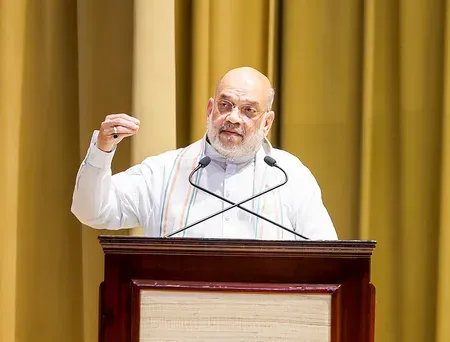
BJP IT cell chief Amit Malviya, also the party's co-in-charge of Bengal, issued a point-by-point rebuttal on X, arguing that India's civilisational heritage belongs equally to all citizens and that Vande Mataram is an inseparable part of that heritage.
Rejecting the charge that the song is merely an ode to a goddess, Malviya said the argument "deliberately ignores the civilisational context of Bharat." He drew parallels with national symbols in other democracies: Britannia representing Britain, Marianne representing France, and Mother Russia representing Russia. "India's cultural symbolism cannot be selectively delegitimised simply because it emerges from Indic civilisation," he stated.
Malviya also invoked the role of Vande Mataram in India's anti-colonial movement, noting that "countless freedom fighters marched to the gallows chanting Vande Mataram" and that its emotional power in the national movement "cannot be erased by retrospective ideological filters."
Opposition's Concerns
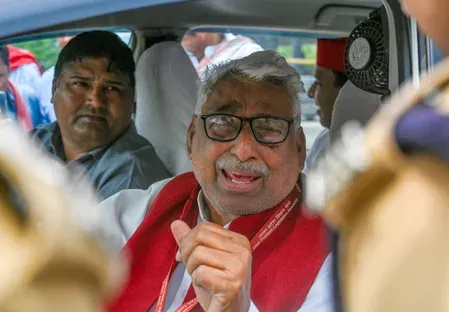
All India Majlis-e-Ittehadul Muslimeen (AIMIM) chief Asaduddin Owaisi was among the Opposition leaders who reacted sharply, claiming that Vande Mataram is "an ode to the Goddess and hence cannot be treated at par with the national anthem." Other Opposition voices raised concerns that equating the two could alienate sections of the population and promote discord in society.
Constitutional and Historical Context
Malviya pointed out that the Constituent Assembly adopted Jana Gana Mana as the national anthem on 24 January 1950 and simultaneously accorded Vande Mataram equal respect and status as the national song, in recognition of its historic role in India's freedom struggle. "To suggest that India's constitutional founders 'rejected' Vande Mataram is factually incorrect," he asserted.
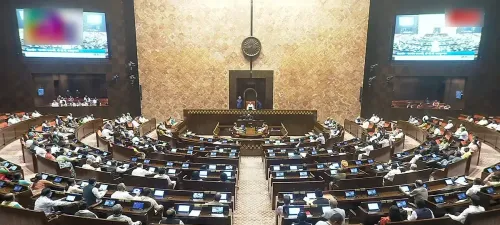
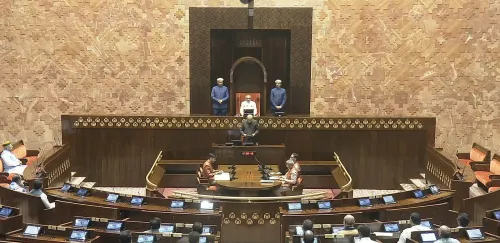
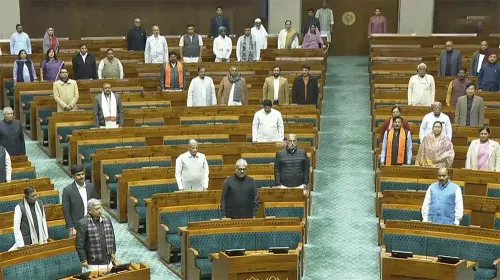
He also underscored that India is not a theocratic state and that "respecting Vande Mataram does not make India less constitutional, less democratic, or less inclusive." The amendment is now expected to be tabled in Parliament, where its passage will likely face continued scrutiny from Opposition benches.
Point of View
But the Opposition's concern is not about history; it is about the coercive potential of a punishable-offence clause applied to a song that a section of citizens has long had theological reservations about. The real test of this amendment will not be in Parliament, but in how it is enforced on the ground — whether it becomes a tool for inclusion or a lever for intimidation.
NationPress
23 Sept 2026
Frequently Asked Questions
What did the Union Cabinet decide about Vande Mataram?
The Union Cabinet on 7 May approved an amendment to the Prevention of Insults to National Honour Act, 1971, to grant Vande Mataram the same statutory protection as the national anthem Jana Gana Mana. Under the proposed change, obstructing the singing of Vande Mataram would become a punishable offence.
Why is the Opposition opposing the Vande Mataram amendment?
Opposition leaders, including AIMIM chief Asaduddin Owaisi, argue that Vande Mataram is an ode to a goddess and therefore cannot be constitutionally equated with the national anthem. Others have raised concerns that the move could alienate minorities and promote societal discord.
What is BJP's response to the 'exclusionary' charge?
BJP IT cell chief Amit Malviya rejected the charge as intellectually dishonest, arguing that the motherland's personification in Vande Mataram is a cultural and civilisational expression, not a sectarian one. He also noted that the Constituent Assembly itself accorded the song equal respect in 1950.
Was Vande Mataram recognised by India's Constituent Assembly?
Yes. The Constituent Assembly adopted Jana Gana Mana as the national anthem on 24 January 1950 and simultaneously accorded Vande Mataram equal respect and status as the national song, citing its historic role in India's freedom struggle.
What happens next with the Vande Mataram amendment?
The amendment to the Prevention of Insults to National Honour Act, 1971 is expected to be tabled in Parliament, where it is likely to face continued Opposition scrutiny before it can become law.