Breaking: Bomb Threat Hits Rajasthan Assembly Again; Evacuation Ordered

Synopsis
A chilling anonymous email claiming four cyanide gas bombs were planted inside the Rajasthan Legislative Assembly triggered mass evacuation and a full BDDS sweep in Jaipur on April 25. The threat — referencing LTTE, Pakistan's ISI, and Rajiv Gandhi-style belt bombs — marks the second such incident in days, exposing alarming gaps in institutional security.
Key Takeaways
Anonymous email received by the Rajasthan Assembly Secretariat on April 25, 2025 claimed four cyanide gas bombs were planted inside the premises, set to explode at 1:00 PM .
The threat referenced two operatives allegedly trained by LTTE (Chennai) and Pakistan's ISI , wearing electronic vests and belt bombs with 1.5 kg of 'silicon' .
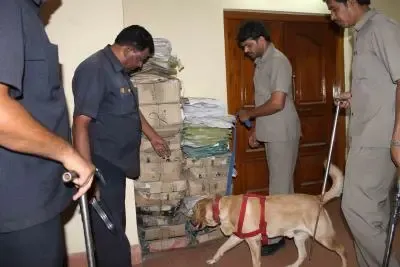
The entire Rajasthan Legislative Assembly complex was evacuated; BDDS, elite commandos, and dog squads launched a comprehensive anti-sabotage sweep.
Jyoti Nagar and surrounding areas were sealed; intensive vehicle checking imposed on all approach roads to the Assembly.
This is the second bomb threat targeting the Assembly within days, raising concerns about a pattern of repeated security breaches at the institution.
The cyber cell is actively tracing the origin of the threatening email; authorities have not yet confirmed if the threat is a hoax or part of a larger conspiracy.
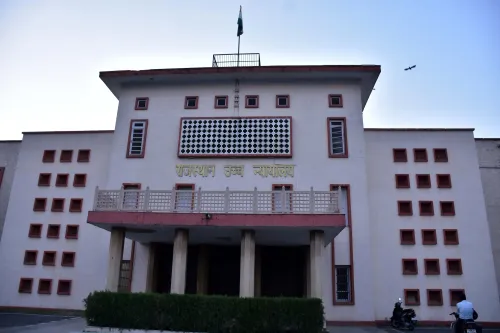
Jaipur, April 25: A fresh bomb threat targeting the Rajasthan Legislative Assembly plunged Jaipur into high alert on Friday, April 25, after an anonymous email warned of four cyanide gas bombs planted inside the premises, set to detonate at 1:00 PM. Authorities immediately evacuated all personnel and launched a sweeping anti-sabotage operation across the complex. This is the second such threat in quick succession, raising alarming questions about recurring security failures at one of Rajasthan's most fortified institutions.
The Threatening Email: What It Said
The anonymous email, received by the Assembly Secretariat, contained a chilling and detailed threat. It claimed that four cyanide gas bombs had already been planted inside the Legislative Assembly and that two operatives — allegedly trained by the LTTE in Chennai and Pakistan's ISI — had been dispatched to Jaipur wearing concealed electronic vests.
According to the email, the bombs were equipped with GPS systems designed to auto-trigger upon proximity to the operatives, eliminating the need for manual detonation. The letter further warned that if the primary devices were neutralised, the individuals would detonate belt bombs packed with 1.5 kilograms of 'silicon' — described as similar in design to those used in the assassination of former Prime Minister Rajiv Gandhi.
The email also contained a sectarian dimension, requesting that Muslim individuals be evacuated from the premises before the alleged attack, and explicitly threatened Brahmin community members, citing opposition to EWS reservation implementation in Tamil Nadu as justification. Investigators are treating this ideological framing as a key lead in tracing the origin of the threat.
Security Response: Massive Deployment Across Assembly Complex
Upon receiving the threat, Jaipur Police Commissionerate officials activated emergency protocols without delay. All employees, officials, and visitors inside the Assembly were evacuated, and entry of incoming staff was halted at the main gates.
Elite commandos, the Bomb Disposal and Detection Squad (BDDS), and trained dog squads were deployed across the entire complex. Teams conducted exhaustive searches covering gardens, parking zones, corridors, offices, and the main Assembly chamber.
Senior officers from the Jaipur Police Commissionerate personally supervised ground operations. Authorities also sealed all approach roads to the Assembly and imposed strict vehicle-checking blockades in Jyoti Nagar and adjoining localities.
Pattern of Threats: A Deepening Security Crisis
This incident follows a similar bomb threat received at the same venue just days earlier, signalling a disturbing pattern of targeted intimidation against Rajasthan's legislative infrastructure. Security experts note that repeated threats — regardless of whether they prove genuine — impose massive operational costs, disrupt governance, and erode public confidence in institutional security.
The timing is particularly sensitive. The state is already on heightened alert following a major refinery fire incident in Pachpadra and ongoing preparations for several high-profile upcoming events across Rajasthan. The convergence of these pressures has stretched security resources and intelligence coordination across the state.
Notably, anonymous email-based bomb threats targeting state assemblies and courts have surged across India in recent months, with similar incidents reported in Delhi, Mumbai, and Ahmedabad — suggesting a possible coordinated pattern of hoax threats designed to paralyse institutions and drain law enforcement resources.
Investigation Underway: Cyber Cell Traces Email Origin
The cyber cell and other investigating agencies have initiated efforts to trace the IP address and origin of the threatening email. Officials are also examining the ideological references within the letter — including mentions of the LTTE, Pakistan's ISI, EWS reservation, and Rajiv Gandhi's assassination — as potential leads to identify the sender's profile and motive.
Authorities have stated that no individual will be permitted inside the Assembly premises until a comprehensive sweep has been completed and the complex is officially declared secure. As of the time of reporting, no explosive devices had been found, but officials have not yet confirmed whether the threat is a hoax or part of a larger conspiracy.
Implications for Intelligence Coordination and Institutional Security
The back-to-back threats against the Rajasthan Legislative Assembly have once again spotlighted critical gaps in intelligence coordination and preventive security at the state level. Critics argue that the repeated nature of these incidents points to a failure in proactive threat monitoring, particularly in tracking anonymous digital communications targeting public institutions.
Security analysts warn that even unverified threats carry real consequences — disrupting legislative proceedings, diverting police resources, and creating psychological pressure on elected officials and administrative staff. The National Investigation Agency (NIA) and Intelligence Bureau (IB) may be called upon to assist if the probe reveals inter-state or cross-border dimensions, given the explicit references to ISI and LTTE networks in the threatening email.
As the investigation deepens, all eyes will be on whether authorities can trace the source of the email and bring those responsible to justice — and whether Rajasthan's security apparatus will implement systemic reforms to prevent this from becoming a recurring crisis.
Point of View
And right now, the institutions are visibly struggling. The disturbing detail in the threatening email — invoking the LTTE, Pakistan's ISI, EWS reservation politics, and Rajiv Gandhi's assassination — suggests either a sophisticated actor exploiting multiple fault lines simultaneously, or a calculated attempt to trigger communal and political panic. Either way, the fact that a state assembly can be brought to a standstill twice in one week by anonymous emails exposes a systemic failure in proactive cyber-intelligence monitoring. Rajasthan's leadership must answer not just who sent these threats, but why the system failed to detect and prevent them before they landed in the Secretariat inbox.
NationPress
22 Sept 2026
Frequently Asked Questions
What was the bomb threat received at the Rajasthan Legislative Assembly on April 25?
An anonymous email sent to the Rajasthan Assembly Secretariat on April 25 claimed that four cyanide gas bombs had been planted inside the premises, set to detonate at 1:00 PM. The email also warned of two operatives wearing belt bombs, allegedly trained by the LTTE and Pakistan's ISI, who would trigger the devices.
What action did authorities take after the Rajasthan Assembly bomb threat?
Authorities immediately evacuated all employees, officials, and visitors from the Assembly complex and halted entry of incoming staff. Elite commandos, the Bomb Disposal and Detection Squad (BDDS), and dog squads were deployed to conduct a comprehensive anti-sabotage search of the entire premises.
Has the Rajasthan Assembly received bomb threats before?
Yes, this is the second bomb threat received at the Rajasthan Legislative Assembly within a matter of days, making it a recurring security concern. The back-to-back incidents have raised serious questions about intelligence coordination and preventive security at the state's most protected legislative institution.
Who is investigating the Rajasthan Assembly bomb threat email?
The cyber cell and other investigating agencies have begun tracing the IP address and origin of the anonymous threatening email. Senior officers from the Jaipur Police Commissionerate are supervising ground operations, and the ideological references in the letter are being examined as investigative leads.
Were any explosive devices found inside the Rajasthan Assembly after the threat?
As of the latest reports, no explosive devices had been found during the ongoing anti-sabotage search of the Assembly complex. Authorities have not yet confirmed whether the threat is a hoax or part of a larger conspiracy, and the premises remain sealed until a full sweep is completed.