Cauvery crisis: Bommai urges Karnataka govt to present solid data in Supreme Court
Synopsis
With a Supreme Court hearing on the Cauvery dispute days away and DMK's petition already filed, former Karnataka CM Basavaraj Bommai has put the Congress-led state government on notice: arrive with data or face a harsh court order. His sharpest jab — that reducing releases from 9,500 to 3,500 cusecs while not sending a single drop to farmers is no achievement at all.
Key Takeaways
Former Karnataka CM Basavaraj Bommai warned the state government on 2 August to prepare solid data-backed arguments for the upcoming Supreme Court hearing on the Cauvery dispute.
DMK has already filed a petition in the Supreme Court, with a hearing scheduled for Monday .
Bommai criticised the government for presenting the reduction of water release from 9,500 cusecs to 3,500 cusecs as an achievement, noting no water has been released from KRS dam to farmers.
Farmers completed nearly 70 per cent of sowing for Kharif and Rabi crops despite official advisories against it due to water shortage.
BJP gave ‘in-principle’ approval for cross-party cooperation on the Mekedatu project while issuing a stern warning to the Congress government on farmer welfare.
Minister of State for Jal Shakti V.
Somanna said recent rainfall in the Cauvery catchment has created a more favourable situation.
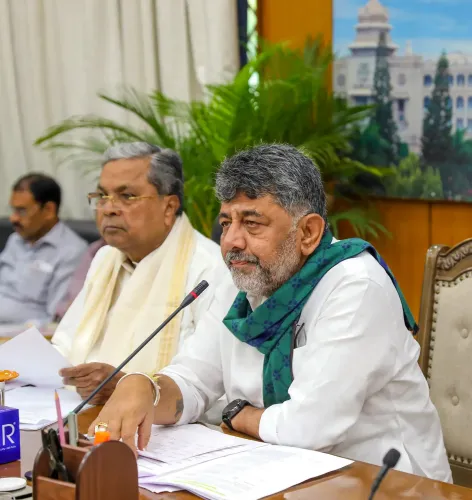
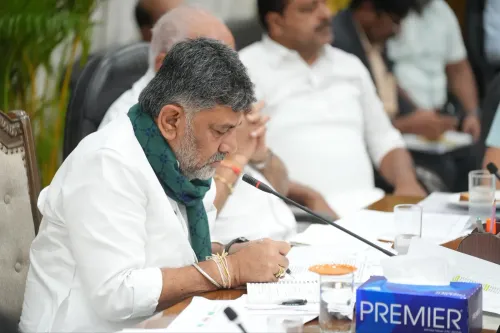
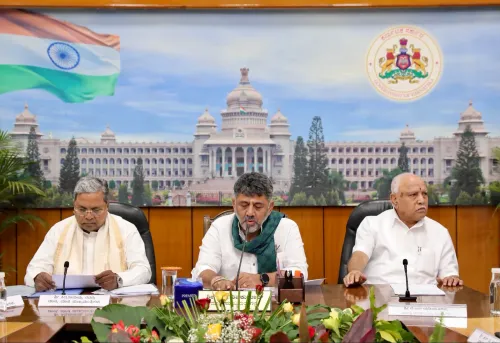
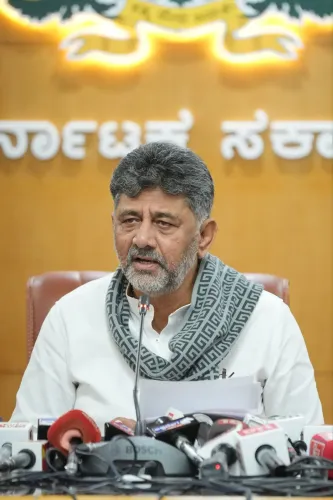
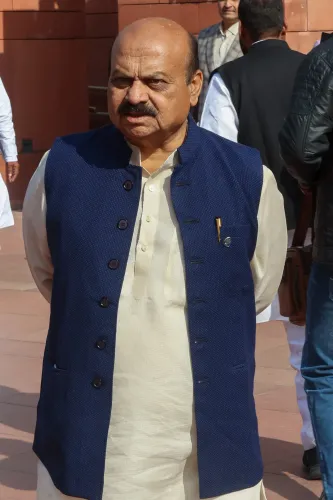
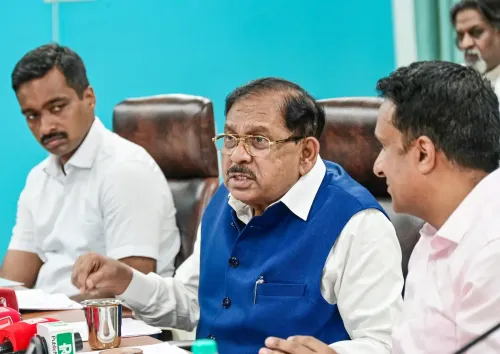
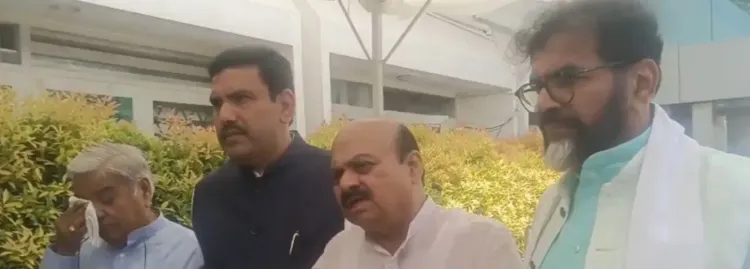
Former Karnataka Chief Minister and Bharatiya Janata Party (BJP) Member of Parliament Basavaraj Bommai on Sunday, 2 August warned the state government against complacency over the Cauvery water crisis, stressing that recent rainfall in the basin offers only a temporary reprieve and not a structural solution. Speaking to the media after an all-party meeting on Cauvery river water distribution convened by Chief Minister D.K. Shivakumar in Bengaluru, Bommai called on the government to approach the upcoming Supreme Court hearing with comprehensive data and well-prepared arguments.
The Supreme Court Hearing
With the Dravida Munnetra Kazhagam (DMK) having already filed a petition in the Supreme Court, a hearing is scheduled for the coming Monday. Bommai cautioned that inadequate preparation could prove costly. “Since DMK has already filed a petition in the Supreme Court and the hearing is scheduled for upcoming Monday, the state government must present valid arguments backed by solid data. Failing to do so could result in a severe court order, putting the government in distress once again,” he said. The Cauvery Water Regulation Committee (CWRC) meets every 15 days and the Cauvery Water Management Authority (CWMA) convenes monthly, with water releases governed by distress-sharing formulas that leave little room for political manoeuvre.
Rainfall Offers Temporary Relief, Not a Permanent Fix
Bommai acknowledged that heavy rainfall in Wayanad, Kodagu, Chikkamagaluru, and Sakleshpur had eased immediate pressure on the Cauvery basin. However, he was emphatic that this must not lull the administration into inaction. “Good rainfall in the Cauvery basin is nature’s temporary relief to the water scarcity. However, this is only a temporary respite and not a permanent solution,” he said. He urged the government to continuously monitor the situation and protect the state’s interests on both drinking water and agricultural fronts.
Sharp Criticism Over KRS Dam and Farmer Welfare
Bommai expressed strong objection to the state government projecting the reduction of water release from 9,500 cusecs to 3,500 cusecs as a major achievement. “If water had been released to farmers, canals, and lakes, it could have been called an achievement. Boasting about an achievement without releasing a single drop of water from the KRS dam to our farmers is unacceptable,” he said. He also pointed out that despite official advisories against sowing due to water shortage for both Kharif and Rabi crops, farmers had already completed nearly 70 per cent of sowing, and questioned what compensation the government intended to provide for their potential losses. He urged the government to act with foresight to ensure that drinking water and agricultural supplies to Bengaluru, Mandya, and Mysuru remain unaffected during the anticipated water-scarce months of January and February.
Mekedatu Project and Cross-Party Cooperation
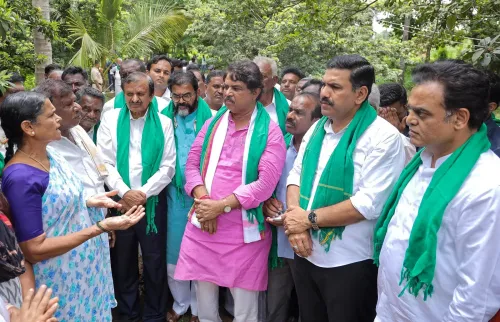
On the long-pending Mekedatu project, Bommai said the BJP had given its ‘in-principle’ approval to work collaboratively with the ruling Congress government. “We have consistently extended our support on various matters in the larger interest of the state. However, we have issued a stern warning to this government regarding the welfare of farmers and drinking water for the general public. Water management must be handled properly; otherwise, the people of this region will not forgive you,” he said firmly. Senior BJP leaders including State President B.Y. Vijayendra, Leader of the Opposition in the Legislative Council Chalavadi Narayanaswamy, and BJP MP Govind Karjol were present at the meeting.
Government Response
Minister of State for Jal Shakti V. Somanna offered a more optimistic reading of the situation, crediting the Chief Minister for convening the all-party meeting and noting that August has historically brought favourable developments for Karnataka during water crises. “Nature has once again come to our rescue. Today’s good rainfall in the Cauvery catchment area has created a more favourable situation,” he said. The divergence in tone between the ruling dispensation and the Opposition underscores the political sensitivity of the Cauvery dispute, which has historically strained Karnataka’s relations with Tamil Nadu. As the Supreme Court date approaches, how the state presents its case could shape water-release obligations for the months ahead.
Point of View
And neither the CWRC’s 15-day reviews nor the CWMA’s monthly meetings have produced durable storage or demand-management solutions. With 70 per cent of sowing already done against official advice, the human cost of policy incoherence is already baked in. The Mekedatu consensus, if it holds, is the first genuinely cross-party signal in years — but the project remains mired in inter-state objections that no all-party meeting in Bengaluru can resolve.
NationPress
17 Sept 2026
Frequently Asked Questions
What is the current status of the Cauvery water dispute in the Supreme Court?
The Dravida Munnetra Kazhagam (DMK) has filed a petition in the Supreme Court, with a hearing scheduled for Monday, 4 August. Former Karnataka CM Basavaraj Bommai has urged the Karnataka government to present comprehensive data-backed arguments to avoid an adverse court order.
Why did Basavaraj Bommai criticise the Karnataka government over the Cauvery crisis?
Bommai objected to the government projecting the reduction of water release from 9,500 cusecs to 3,500 cusecs as a major achievement, arguing that no water has been released from the KRS dam to farmers. He also questioned what compensation the government plans to offer farmers who sowed crops despite official advisories warning against it due to water shortage.
What is the Cauvery Water Regulation Committee and how often does it meet?
The Cauvery Water Regulation Committee (CWRC) is a regulatory body that meets every 15 days to oversee Cauvery water releases based on distress-sharing formulas. The Cauvery Water Management Authority (CWMA) meets monthly and has the authority to direct water releases between Karnataka and Tamil Nadu.
What is the Mekedatu project and what did Bommai say about it?
The Mekedatu project is a proposed reservoir on the Cauvery river in Karnataka intended to augment water storage for the state. Bommai said the BJP has given its in-principle approval to work collaboratively with the ruling Congress government on the project, while simultaneously warning the government to handle overall water management more responsibly.
Which regions of Karnataka are most at risk from the Cauvery water shortage?
Bommai specifically flagged Bengaluru, Mandya, and Mysuru as regions likely to face acute water scarcity during January and February, when reduced river inflows and potential court-ordered releases could strain both drinking water and agricultural supply.