Women in Ancient India: New book traces feminism from Vedas to Gupta era
Synopsis
A civil servant's debut non-fiction work digs into Vedic texts, the Manusmriti, the Arthashastra, and the Kamasutra to ask whether Indian patriarchy is as ancient as claimed — or a construct of selective interpretation. The findings, the author says, are counter-intuitive, and the argument lands at a moment when history, gender, and tradition are fiercely contested in India.
Key Takeaways
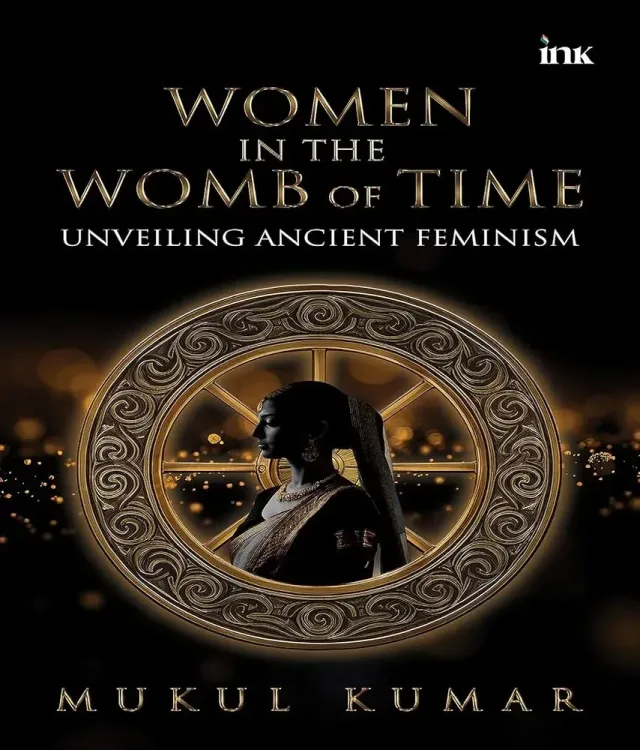
Mukul Kumar's debut non-fiction, 'Women in the Womb of Time: Unveiling Ancient Feminism' (BluOne Ink, ₹799 , 328 pp ), examines women's status from the Vedic age to the Gupta era (7th century CE) .
The book scrutinises Shruti and Smriti literature — including the Rig Veda , Upanishads, Ramayana , Mahabharata , Manusmriti , Arthashastra , and Kamasutra — for evidence on gender roles.
Kumar recovers lesser-known Vedic women scholars such as Viswavara and Apala alongside celebrated figures like Gargi and Maitreyi .
The Arthashastra is identified as possibly the first Indian text to address women's roles in the economic domain beyond the household.
The book draws on thinkers including Romila Thapar , Wendy Doniger , Sri Aurobindo , and Simone de Beauvoir to build its cross-cultural analytical framework.
Kumar frames the work as the start of informed exploration rather than a definitive verdict on ancient Indian gender history.
A new non-fiction work by civil servant Mukul Kumar takes a rigorous look at the status of women in ancient Indian civilisation, challenging the assumption that gender discrimination in India is rooted in timeless scriptural tradition. Titled 'Women in the Womb of Time: Unveiling Ancient Feminism' (BluOne Ink Pvt, 328 pp, ₹799), the book asks a pointed question: did patriarchal oppression always define the Indian social order, or is that narrative itself a product of selective — and at times mischievous — interpretation?
The Central Argument
Kumar, an Indian Rail Traffic Service officer whose earlier published works include novels and poetry anthologies, frames the investigation around a single driving query: 'How did discrimination against women emerge?' To answer it, he undertakes a comprehensive scrutiny of ancient texts and corroborating evidentiary material, mapping the arc of women's status from the earliest Vedic compositions through to the Gupta era of the 7th century CE.
The findings, the book suggests, are counter-intuitive. Far from confirming a monolithic tradition of female subjugation, the evidence Kumar marshals points to a far more complex and contested historical reality.
Scope and Methodology
Before entering the textual record, Kumar establishes his analytical framework, engaging with contested definitions of femininity, masculinity, and feminism itself. This opening section draws on Karl Marx and his theory of the means of production, Friedrich Engels, Simone de Beauvoir, and Judith Butler, grounding the inquiry in both Western feminist theory and indigenous intellectual traditions.
The main body of the work moves through Shruti literature — the Vedas, particularly the Rig Veda, and the Upanishads — before turning to Smriti literature, which includes the Ramayana, the Mahabharata, the Shastras, and the Puranas. Kumar then devotes separate chapters to three texts that rarely receive joint treatment in gender studies: the Manusmriti, the Arthashastra, and the Kamasutra.
His rationale is instructive. The Manusmriti warrants examination for its internally contradictory treatment of women; the Arthashastra earns its place as arguably the first Indian work to address women's roles in the economic domain beyond the household; and the Kamasutra, he argues, is widely misread as an erotic manual when it is, in fact, a broader treatise on social customs and conduct.
Female Luminaries Brought to Light
One of the book's more valuable contributions is its recovery of lesser-known women from the Vedic period. Alongside familiar figures such as Gargi, Maitreyi, and Lopamudra, Kumar draws attention to Viswavara and Apala, philosopher-poets who deserve wider recognition. In his treatment of epic literature, the lens extends beyond Sita and Draupadi to encompass Tara, Mandodari, Savitri, and other characters whose stories complicate easy readings of women's agency in the epics.
The survey also covers varying traditions across the subcontinent, including Buddhism and Jainism, before moving from scriptural exegesis to epigraphical and numismatic evidence — material that often escapes literary-focused gender histories.
Voices the Book Draws On
Kumar marshals a wide range of domain experts alongside his own analysis, citing — among others — Mahatma Gandhi, Sri Aurobindo, historian Romila Thapar, Radha Kumud Mukherjee, D.N. Jha, and Wendy Doniger. The breadth of reference lends the work its authority, while the author's stated aim — to assess how far ancient articulations resonate with contemporary feminist concerns, using indigenous rather than purely Western frameworks — gives it contemporary relevance.
Verdict
Kumar acknowledges that the work should be read as the beginning of informed exploration rather than a definitive settlement of the debate. As a first non-fiction offering, it is an impressive and intellectually honest start — cerebral in ambition, yet lucid in presentation, wearing its considerable erudition lightly. The book arrives at a moment when questions of tradition, gender, and historical interpretation carry acute political weight in India, making its timing as significant as its content.
Point of View
But it will draw fire from both sides: traditionalists who dislike the feminist lens, and scholars who question whether the texts can be read outside their social context of production. The recovery of figures like Viswavara and Apala is genuinely valuable. The harder question — whether textual evidence of learned women reflects social reality or elite exception — is one the book opens rather than closes.
NationPress
12 Oct 2026
Frequently Asked Questions
What is 'Women in the Womb of Time: Unveiling Ancient Feminism' about?
It is a non-fiction work by civil servant Mukul Kumar that examines the status of women in ancient India through a close reading of Vedic, epic, and legal texts, as well as epigraphical and numismatic evidence. The book spans from the Rig Veda to the Gupta era of the 7th century CE, asking whether gender discrimination in India has genuine ancient scriptural roots or is partly a product of selective interpretation.
Who is the author Mukul Kumar?
Mukul Kumar is an Indian Rail Traffic Service officer whose earlier published works include novels and poetry anthologies. 'Women in the Womb of Time' is his first non-fiction book, published by BluOne Ink Pvt at ₹799.
Which ancient texts does the book examine?
The book covers Shruti literature (the Vedas, especially the Rig Veda, and the Upanishads), Smriti literature (the Ramayana, Mahabharata, Shastras, and Puranas), and dedicates separate chapters to the Manusmriti, the Arthashastra, and the Kamasutra. It also addresses Buddhist and Jain traditions and draws on epigraphical and numismatic evidence.
What does the book say about lesser-known women of the Vedic period?
Beyond well-known figures like Gargi, Maitreyi, and Lopamudra, the book highlights Viswavara and Apala — Vedic-era women scholars and poet-seers who, the author argues, deserve considerably more scholarly and public attention than they currently receive.
Why does the book focus on the Arthashastra and Kamasutra alongside the Manusmriti?
Kumar examines the Manusmriti for its contradictory treatment of women, the Arthashastra as arguably the first Indian text to address women's economic roles beyond the home, and the Kamasutra because it is widely misread as purely an erotic manual when it is in fact a broader treatise on social customs and conduct. Together, the three texts offer a more complete picture of women's legal, economic, and social standing in ancient India.