Brazil election 2026: Candidates hit streets before October 4 first round
Synopsis
With Brazil's first-round presidential vote just days away on 4 October, candidates fanned out from São Paulo to Sergipe — and online gambling unexpectedly became the weekend's dominant flashpoint, with Lula defending a fresh betting ban and rivals ranging from Caiado to Cury piling on. The result will shape Brazil's direction on energy, trade and multilateral cooperation, including its BRICS partnership with India.
Key Takeaways
Brazil's first-round presidential election is scheduled for 4 October 2026 ; a candidate needs more than 50% of valid votes to win outright.
President Luiz Inácio Lula da Silva marched in eastern São Paulo and defended his newly signed online betting ban .
Flávio Bolsonaro pledged offshore oil investment in Sergipe and reiterated proposals on lowering the age of criminal responsibility and chemical castration for convicted rapists.
Romeu Zema called for more agribusiness credit and crop insurance; Renan Santos focused on tax cuts.
Online gambling regulation emerged as a cross-party issue, with multiple candidates staking out positions against the industry.
Brazil's election outcome is seen as consequential for India , given shared membership of BRICS and G20 and bilateral cooperation on energy, agriculture, and climate.
Brazil's presidential candidates fanned out across major cities during the final campaign weekend before the country's first-round presidential election on 4 October 2026, drawing contrasting positions on online gambling, oil exploration, taxes, agriculture, and crime. The campaigns blanketed states from São Paulo and Rio de Janeiro to Minas Gerais, Bahia, Sergipe, Goiás, Santa Catarina, and Paraná.
Lula Defends Betting Ban and Labour Reform
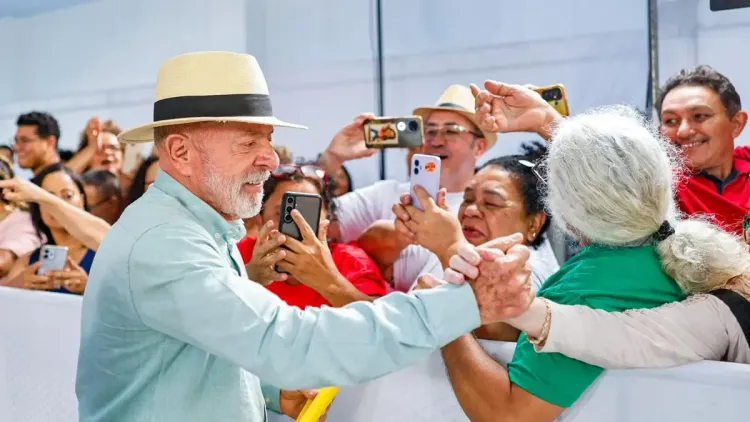
President Luiz Inácio Lula da Silva, seeking re-election, joined a march through eastern São Paulo on Saturday. He defended the ban on betting operations he signed on Friday, pledging that the government would intensify action against clandestine gambling businesses.
Lula also renewed his backing for ending Brazil's six-days-on, one-day-off work schedule — a proposal still pending before Congress. The incumbent held no public campaign events on Sunday.
Bolsonaro Campaigns on Oil, Crime and Offshore Investment
Flávio Bolsonaro held motorcades in Rio de Janeiro's São João de Meriti and Jacarepaguá on Saturday before travelling to Aracaju, where he promised investment in offshore oil production in Sergipe state. He later moved to Goiânia for an additional campaign event.
Bolsonaro reiterated proposals to lower the age of criminal responsibility, permit driving licences for minors, introduce chemical castration for those convicted of raping women and children, and expand entrepreneurship programmes.
Other Candidates Focus on Agriculture, Taxes and Religious Freedom
Romeu Zema, campaigning in Minas Gerais, called for expanded credit for agribusiness, the creation of crop insurance, and lower interest rates. Renan Santos met supporters in Belo Horizonte and Divinópolis before heading to Salvador, focusing his pitch on reducing taxes and shrinking the cost of government.
Ronaldo Caiado attended Sunday Mass in Goiânia, spoke in favour of protecting religious freedom while opposing the use of religion as a political instrument, and called for tougher restrictions on gambling advertising. Augusto Cury, campaigning across Bahia and Minas Gerais, argued that online betting caused serious damage to Brazil's economy and citizens' mental health, calling for its abolition or significantly higher taxation.
Online Gambling Emerges as a Cross-Party Campaign Issue
The regulation of online betting emerged as a recurring theme across party lines during the weekend. Multiple candidates — from the incumbent president to smaller-party challengers — staked out positions on the issue, reflecting public anxiety over the proliferation of betting platforms and their social and economic consequences.
Several minor-party candidates concentrated on public debates and local appearances. Rui Costa Pimenta joined a demonstration on Avenida Paulista in São Paulo. Samara Martins held a rally in São Paulo and later met Afro-Brazilian cultural groups in Florianópolis. Edmilson Costa campaigned in Paraná ahead of a scheduled debate on national sovereignty.
How Brazil's Presidential Election System Works
Brazil uses a two-round presidential system. A candidate must secure more than 50 per cent of valid votes in the first round to win outright. If no candidate clears that threshold on 4 October, the top two finishers advance to a runoff. The outcome carries implications beyond Brazil: as a fellow BRICS and G20 member and one of India's principal partners in Latin America, the next administration will shape cooperation on energy, agriculture, climate negotiations, and multilateral institutional reform.
Point of View
Politically safe target. Lula's decision to sign a betting ban just days before the vote is textbook incumbency strategy: act, then campaign on the action. Yet the deeper structural issues — offshore oil governance, labour reform, agribusiness credit — that will actually define the next administration's economic record received far less airtime than a sector that, however harmful, is peripheral to Brazil's GDP trajectory. For India, the election matters less for who wins and more for whether the new government sustains BRICS momentum at a moment when the bloc's agenda — alternative payment systems, multilateral reform — is under genuine geopolitical pressure.
NationPress
28 Sept 2026
Frequently Asked Questions
When is Brazil's 2026 presidential election first round?
The first round of Brazil's presidential election is scheduled for 4 October 2026. If no candidate wins more than 50 per cent of valid votes, the top two finishers will contest a runoff.
Who are the main candidates in Brazil's 2026 presidential race?
The principal candidates include incumbent President Luiz Inácio Lula da Silva, Flávio Bolsonaro, Romeu Zema, Renan Santos, Ronaldo Caiado, and Augusto Cury, alongside several smaller-party contenders. Each campaigned across multiple Brazilian states during the final weekend before the vote.
Why did online gambling become a major issue in Brazil's election campaign?
Online gambling emerged as a cross-party flashpoint after President Lula signed a ban on betting operations just before the campaign's final weekend. Multiple candidates, including Caiado, Cury, and Lula himself, staked out positions against unregulated gambling, citing economic harm and mental-health consequences for Brazilian citizens.
How does Brazil's two-round presidential election system work?
A candidate must receive more than 50 per cent of valid votes in the first round to win outright. If no one crosses that threshold on 4 October 2026, the two leading candidates advance to a second-round runoff.
Why does Brazil's presidential election matter for India?
Brazil and India are fellow members of both BRICS and the G20, and Brazil is one of India's principal partners in Latin America. The incoming Brazilian administration will shape bilateral cooperation on energy, agriculture, climate negotiations, and reform of multilateral institutions.