BSO-Azad calls Pakistan a 'rogue state' after Mastung mosque shelling

Synopsis
A leading Baloch student body has declared Pakistan a 'rogue state' after helicopter shelling in Mastung district allegedly struck a mosque and damaged Quran copies — a charge that cuts directly at Pakistan's constitutional identity as an Islamic Republic. The incident has triggered local strikes and renewed questions about Islamabad's conduct in Balochistan.
Key Takeaways
BSO-Azad on 4 August labelled Pakistan a 'rogue state' with no regard for morality or religious sensitivities.
Helicopter shelling by Pakistani forces in Khadkocha, Mastung district, Balochistan allegedly damaged a mosque and copies of the Quran .
Pakistani authorities described the operation as targeting Baloch insurgents ; local residents alleged civilian areas were struck.
A shutter-down strike was observed in the area in protest, according to the BSO-Azad .
The organisation accused Pakistan of a consistent pattern of violating religious sentiments in Balochistan and Khyber Pakhtunkhwa .
The Pakistani government had not issued a public response to the allegations at the time of reporting.
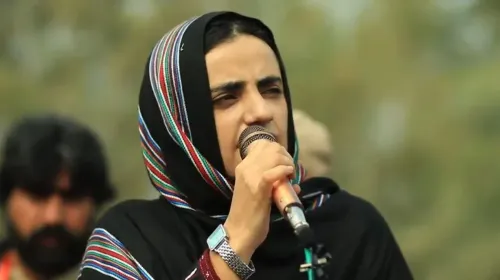
The Baloch Students Organisation (BSO)-Azad on Tuesday, 4 August declared that Pakistan functions as a 'rogue state' with no regard for morality or religious sensitivities, following reports that helicopter shelling by Pakistani forces in the Khadkocha area of Mastung district, Balochistan, damaged a mosque and religious texts, including copies of the Quran. The statement underscores a deepening contradiction between Pakistan's self-projection as an Islamic Republic and its military conduct in restive provinces.
The Mastung Incident
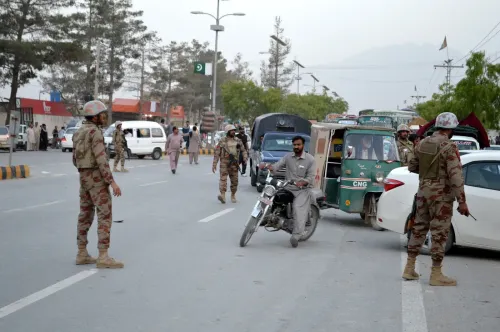
Pakistani authorities described the operation in Mastung district as targeting Baloch insurgents. However, local residents alleged that the shelling struck civilian areas, damaging a mosque, surrounding infrastructure, and religious books stored inside. The incident triggered a shutter-down strike in the area, which the BSO-Azad said reflected 'not only anger but also a profound sense of resistance' among the local population.
BSO-Azad's Core Charge
The organisation argued that Pakistan repeatedly presents itself as a state founded on Islamic principles — through its constitution, diplomatic forums, and public rhetoric — yet its military operations in Balochistan and Khyber Pakhtunkhwa have, according to the group, violated and disrespected the religious beliefs of local communities. 'Mosques are not ordinary structures; they are among the most sacred places in Islam, symbolising worship, unity, and peace,' the BSO-Azad said in its statement. 'The Holy Quran and other religious texts are revered by Muslims as deserving the highest respect.'
The group added: 'Pakistan and its army should be held accountable with transparency for damaging religious sites and targeting innocent people through the use of brutal force.'
Broader Pattern Alleged
The BSO-Azad contended that the Mastung episode is not an isolated incident, asserting that Pakistan's 'past criminal history' across both Balochistan and Khyber Pakhtunkhwa demonstrates a consistent pattern of disregarding civilian and religious sensitivities. The organisation claimed: 'No one is safe under its rule, from being Muslims to being part of other religions; this state has been a hell for everyone surviving here.'
Notably, this comes amid sustained international scrutiny of Pakistan's counterinsurgency methods in Balochistan, where enforced disappearances and civilian casualties have drawn repeated condemnation from human rights groups.
BSO-Azad's Position on Baloch Resistance
Reaffirming its separatist stance, the organisation stated that every act of violence strengthens the Baloch movement seeking freedom from what it termed 'colonial rule.' It urged the Baloch people to recognise that Pakistan, in its view, is 'not Islamic, but only misusing the name of sacred Islam.' The group said it remains committed to exposing what it described as Pakistan's undermining of Baloch cultural values and religious sentiments.
The Pakistani government has not issued a public response to the BSO-Azad statement. How Islamabad addresses the mosque-damage allegations is likely to shape the next phase of local sentiment in Mastung.
Point of View
Not a neutral account — but the underlying allegation of mosque damage in a military operation is precisely the kind of claim that demands independent verification, and none has been offered by Islamabad. Pakistan's Islamic Republic framing has long served as diplomatic insulation; incidents like Mastung, if substantiated, erode that insulation from within. What is consistently underreported is the cumulative effect of such episodes on ordinary Baloch sentiment — not just among separatist organisations, but among communities that have no formal political affiliation. The shutter-down strike in Mastung is a signal worth watching more closely than the rhetoric surrounding it.
NationPress
19 Sept 2026
Frequently Asked Questions
What did BSO-Azad allege about the Mastung helicopter shelling?
The BSO-Azad alleged that helicopter shelling by Pakistani forces in the Khadkocha area of Mastung district, Balochistan, damaged a mosque, surrounding infrastructure, and religious books including copies of the Quran. Pakistani authorities said the operation targeted Baloch insurgents, but local residents disputed this, claiming civilian areas were struck.
Why is BSO-Azad calling Pakistan a 'rogue state'?
The BSO-Azad used the term 'rogue state' to highlight what it describes as a fundamental contradiction: Pakistan presents itself as an Islamic Republic constitutionally and diplomatically, yet its military operations have allegedly damaged mosques and religious texts in Balochistan and Khyber Pakhtunkhwa. The organisation argues this pattern disqualifies Pakistan's Islamic identity claims.
What was the local response to the Mastung shelling?
A shutter-down strike was observed in the Khadkocha area following the shelling, according to the BSO-Azad. The organisation described the response as reflecting not only anger but a deeper sense of resistance among the local Baloch population.
Has Pakistan responded to the BSO-Azad statement?
The Pakistani government had not issued a public response to the BSO-Azad statement or the mosque-damage allegations at the time of reporting. Islamabad's official position on the Mastung operation was that it targeted Baloch insurgents.
What is the BSO-Azad and what does it stand for?
The Baloch Students Organisation-Azad (BSO-Azad) is a Baloch nationalist student group that advocates for the rights and, in its stated position, the liberation of the Baloch people from Pakistani rule. It is one of several organisations that document and publicise alleged human rights violations in Balochistan.