Baloch student group appeals to UN 10 years after Shabbir Baloch's disappearance
Synopsis
Ten years after Pakistani security forces allegedly picked up student leader Shabbir Baloch from Kech district's Gwarkop area in front of his wife, the BSO-Azad has escalated its campaign to the UN — naming other disappeared leaders and citing incidents in Surab, Mastung, and Dasht to build a case of systematic state repression in Balochistan.
Key Takeaways
BSO-Azad has written to the UN Human Rights Commission and the UN WGEID on the 10th anniversary of student leader Shabbir Baloch 's disappearance.
Shabbir was reportedly taken by Pakistani security forces on 4 October 2016 from Gwarkop, Kech district , in front of his wife Zareena Baloch .
The BSO-Azad also named former Chairman Zahid Baloch , Vice Chairman Zakir Majeed Baloch , and Joint Secretary Assad Baloch as fellow victims of enforced disappearances.
The Human Rights Council of Balochistan (HRCB) and Paank (BNM) separately issued statements demanding disclosure of Shabbir's whereabouts and accountability.
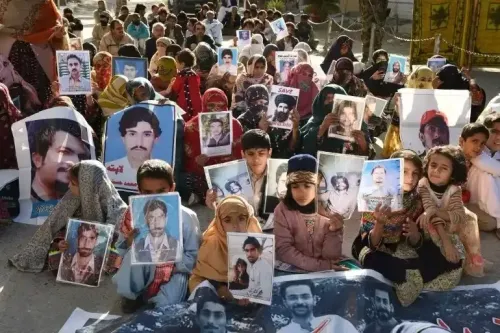
The group alleges a broader pattern of enforced disappearances targeting students, doctors, lawyers, journalists, and activists across Balochistan .
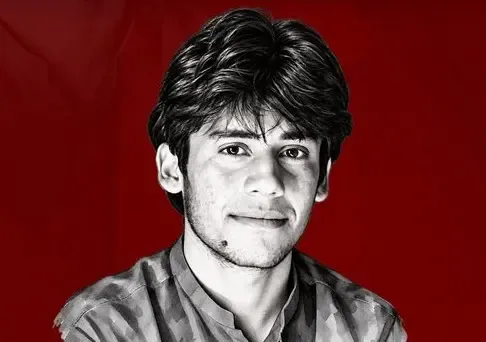
The Baloch Students Organisation (BSO)-Azad has formally appealed to the international community, including the UN Human Rights Commission and the UN Working Group on Enforced or Involuntary Disappearances (WGEID), demanding accountability for the enforced disappearance of student leader Shabbir Baloch, who reportedly vanished after being picked up by Pakistani security forces exactly 10 years ago on 4 October 2016. The appeal, timed to mark the grim anniversary, also draws urgent attention to what the organisation describes as systematic abuses across Balochistan.
The Disappearance of Shabbir Baloch
According to the BSO-Azad's letter, Shabbir Baloch — a student leader and former Information Secretary of the organisation — was subjected to enforced disappearance on 4 October 2016 by Pakistani security forces from the Gwarkop area of Kech district in Balochistan, allegedly in front of his wife, Zareena Baloch. In the decade since, neither his family nor his colleagues have received any verifiable information about his whereabouts or condition.
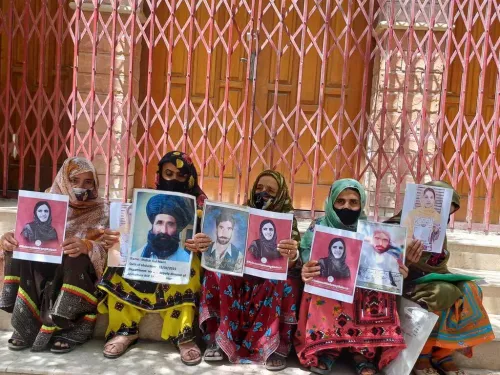
His sister and wife have reportedly spent years pursuing his case through public demonstrations and legal channels, yet Pakistani authorities have provided no response, according to the letter. The BSO-Azad is urging the international community to press Islamabad to secure his release from what the group characterises as 'torture cells', along with all other political prisoners.
Broader Pattern of Enforced Disappearances, BSO-Azad Says
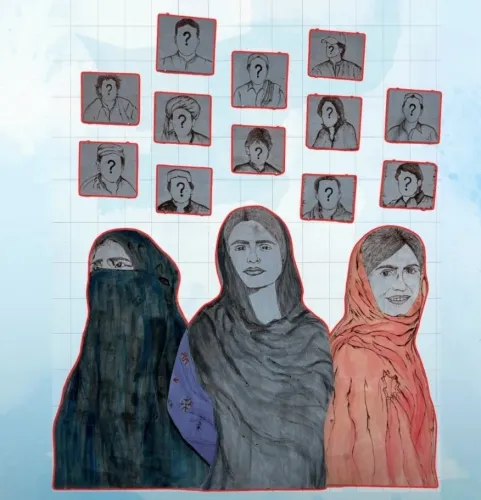
The letter describes Shabbir's case as emblematic of a far wider pattern. The BSO-Azad alleges that hundreds of thousands of people — including students, teachers, professors, doctors, lawyers, journalists, intellectuals, and human rights activists — have been subjected to enforced disappearances by Pakistani state forces in Balochistan.
'The Pakistani state has hit the Baloch nation with brutal repression and violence, killing hundreds of thousands of people, including children, elderly people, and women, regardless of their affiliation,' the letter states. It specifically references recent incidents in Surab, Mastung, and Dasht as evidence of ongoing military operations and massacres, though these claims could not be independently verified.
The letter further alleges that several other BSO-Azad leaders have also been victims of enforced disappearances, naming former Chairman Zahid Baloch, Vice Chairman Zakir Majeed Baloch, and Joint Secretary Assad Baloch among those who have gone missing.
Human Rights Bodies Raise Alarm
Marking the tenth anniversary of Shabbir's disappearance, multiple human rights organisations have issued separate calls to action. The Human Rights Council of Balochistan (HRCB) stated: 'Over the past decade, his family has pursued every available legal avenue, yet the authorities have failed to provide any information regarding his whereabouts. The state must disclose where he is and give his family the truth and justice they deserve.'
Paank, the human rights wing of the Baloch National Movement (BNM), similarly urged Pakistani authorities to disclose Shabbir's whereabouts, ensure his safety, and uphold his fundamental rights, asserting that 'his family has the right to truth, justice and accountability.'
Context: Balochistan's Long-Running Human Rights Crisis
Enforced disappearances in Balochistan have been documented by international human rights bodies for over two decades. The UN WGEID has previously received cases from the region, and organisations such as Amnesty International and Human Rights Watch have repeatedly flagged the practice, attributing it to Pakistani military and intelligence operations. Islamabad has generally denied or disputed the scale of such allegations.
This latest appeal comes amid renewed international scrutiny of Pakistan's human rights record, and as Baloch civil society groups intensify their outreach to multilateral institutions. Whether the UN bodies will take up the specific case of Shabbir Baloch remains to be seen, but the anniversary appeal signals that pressure from civil society is unlikely to ease.
Point of View
And from most coverage of Balochistan, is any credible independent verification of the aggregate scale claimed — 'hundreds of thousands' is a figure that demands scrutiny even as the individual human cost of cases like Shabbir's is beyond dispute. Pakistan's continued non-response to UN mechanisms on Balochistan is itself a pattern worth flagging: it reflects a calculation that geopolitical relationships will insulate Islamabad from meaningful multilateral pressure.
NationPress
5 Oct 2026
Frequently Asked Questions
Who is Shabbir Baloch and why did he disappear?
Shabbir Baloch is a Baloch student leader and former Information Secretary of the Baloch Students Organisation (BSO)-Azad who was reportedly taken by Pakistani security forces on 4 October 2016 from the Gwarkop area of Kech district, Balochistan, in front of his wife Zareena Baloch. No official explanation or acknowledgement of his detention has been provided by Pakistani authorities in the decade since.
What has the BSO-Azad demanded in its UN appeal?
The BSO-Azad has urged the UN Human Rights Commission, the UN Working Group on Enforced or Involuntary Disappearances, and the broader international community to press Pakistan to disclose Shabbir Baloch's whereabouts and secure his safe release, along with that of all other political prisoners in Balochistan.
Which other BSO-Azad leaders have been subjected to enforced disappearances?
According to the BSO-Azad's letter, former Chairman Zahid Baloch, Vice Chairman Zakir Majeed Baloch, and Joint Secretary Assad Baloch are among organisation leaders who have been victims of enforced disappearances by Pakistani state forces.
What have other human rights organisations said about Shabbir Baloch's case?
The Human Rights Council of Balochistan (HRCB) stated that Shabbir's family has pursued every available legal avenue over ten years without receiving any information, and demanded the state disclose his whereabouts. Paank, the human rights wing of the Baloch National Movement (BNM), similarly called for disclosure of his location, his safety, and accountability.
How does this case fit into the broader pattern of disappearances in Balochistan?
Enforced disappearances in Balochistan have been documented by international human rights organisations and the UN WGEID for over two decades. The BSO-Azad alleges that hundreds of thousands of people — including students, academics, journalists, and activists — have been subjected to such disappearances by Pakistani security forces, claims that Islamabad has broadly denied or disputed.