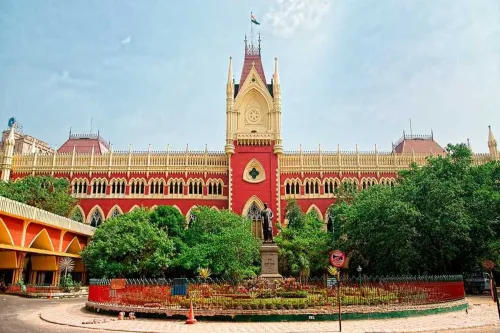
Calcutta HC shifts full court reference time to 4:15 pm to ease case backlog

Synopsis
Calcutta High Court has pushed its full court reference time an hour later to squeeze more hearing time into each working day — a welcome but limited fix, say lawyers, who warn the real bottleneck is 23 unfilled judge posts against a sanctioned strength of 72.
Key Takeaways
Calcutta High Court shifted full court reference time from 3:15 pm to 4:15 pm on all working days effective 19 November 2026 .
The change adds one extra hour of hearing time each working day to tackle the court's growing case backlog.
The court's sanctioned judge strength is 72 , but only 49 judges are currently sitting — leaving 23 posts vacant .
Members of the bar have welcomed the move but say it is insufficient without filling judicial vacancies.
Legal professionals argue that appointment of judges is the only long-term solution to the pendency crisis.
The Calcutta High Court on Thursday, 19 November 2026, postponed its 'full court reference time' by one hour — from 3:15 pm to 4:15 pm on working days — in a bid to carve out additional hearing time for the court's growing pile of pending cases. The move, confirmed by sources within the court, is aimed at easing one of the most pressing administrative challenges facing the high court.
What Is Full Court Reference Time
A full court reference is the formally scheduled period during which all judges of a court assemble to pay tribute — typically following the passing of a sitting or retired judge, or a senior advocate, or on the occasion of a judicial farewell or significant milestone. By shifting this window an hour later, the court effectively frees up an additional 60 minutes each working day for case hearings.
Why the Court Acted Now
The decision comes amid a sharply worsening backlog of pending cases at Calcutta High Court. According to sources within the court, the pressure of unresolved matters has been building steadily, prompting the administration to identify every available lever to increase productive hearing time. This is an administrative measure, not a judicial order, and reflects the court's attempt to self-correct within its existing operational framework.
Legal Fraternity: Welcome, but Not Enough
Members of the Calcutta High Court bar have broadly welcomed the step, calling it at least a beginning. However, legal professionals have been candid that the initiative alone will not resolve the structural problem. The court's total sanctioned strength stands at 72 judges, but only 49 judges are currently sitting — leaving 23 posts vacant.
'Extending the hearing time alone by postponing the full court reference time by an hour will not solve the problem totally. What is required now is filling up the vacant posts of judges,' a senior advocate of the Calcutta High Court said, requesting anonymity.
The Deeper Problem: Judicial Vacancies
The gap between sanctioned strength and actual strength is not unique to Calcutta — it is a nationwide concern for Indian high courts. With nearly 32% of sanctioned judge posts lying vacant at Calcutta High Court, the arithmetic of pending-case reduction is fundamentally constrained regardless of scheduling adjustments. Legal experts argue that the Centre and the Supreme Court Collegium must move faster on judicial appointments to make a meaningful dent in the backlog.
What Happens Next
The revised 4:15 pm full court reference time takes effect on working days with immediate effect. Senior advocates and bar associations are expected to push for a parallel fast-tracking of judicial appointments to complement the scheduling change. The pendency crisis at Calcutta High Court will remain a pressure point until vacancies are addressed.
Point of View
But it papers over a structural fault: Calcutta High Court is running at roughly two-thirds its sanctioned judicial strength, and no scheduling change can substitute for 23 missing judges. The pendency crisis at Indian high courts is ultimately a supply problem — not a timetable problem — and responsibility for fixing it rests with the Collegium and the Centre, not court administrators alone. Until vacancies are filled with urgency, incremental measures like this will be welcomed by the bar and forgotten by the dockets.
NationPress
20 Nov 2026
Frequently Asked Questions
What is the full court reference time change at Calcutta High Court?
The Calcutta High Court has moved its full court reference time from 3:15 pm to 4:15 pm on all working days, effective 19 November 2026. This frees up one additional hour each day for case hearings.
What is a full court reference?
A full court reference is a formal gathering of all judges of a court to pay tribute — usually after the death of a sitting or former judge or senior advocate, or during a farewell or major judicial milestone. It is a scheduled ceremonial event distinct from regular court proceedings.
Why did Calcutta High Court make this change?
The change was made to address the mounting backlog of pending cases at the court. By shifting the reference window later in the day, the administration gains an extra hour of productive hearing time on every working day.
Will this solve the pending cases problem at Calcutta High Court?
Legal professionals say it will not, by itself. The court has only 49 of its 72 sanctioned judges in position, leaving 23 posts vacant. Senior advocates have stated that filling these vacancies is the only durable solution to the pendency crisis.
How many judges are currently sitting at Calcutta High Court?
As of 19 November 2026, Calcutta High Court has 49 sitting judges against a sanctioned strength of 72, meaning nearly one-third of positions remain vacant.