Will Judicial Scrutiny of Electoral Rolls Begin in Bengal on Monday?
Synopsis
Starting Monday, a thorough judicial review of electoral roll discrepancies in West Bengal will commence. With 150 judges from the Calcutta High Court on board, the initiative aims to address approximately 50 lakh voters' documents classified as 'logical discrepancies.' This pivotal process is crucial ahead of the upcoming elections.
Key Takeaways
The judicial review process begins on Monday.
150 judges from the Calcutta High Court will oversee the process.
About 45 to 50 lakh voter documents are under scrutiny.
The final voters' list will be published on February 28.
Transparency and accountability are key goals of this initiative.
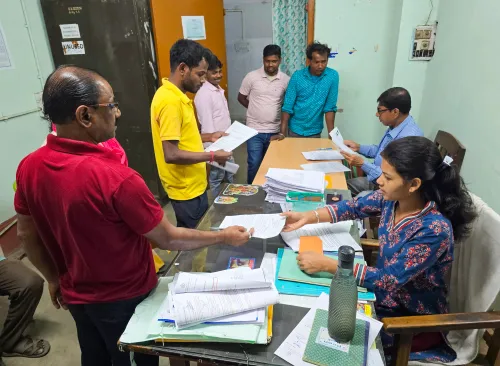
Kolkata, Feb 22 (NationPress) The comprehensive judicial examination of claims and objections arising from the ongoing Special Intensive Revision (SIR) of electoral rolls in the election-bound West Bengal is set to commence on Monday. This process will initially involve 150 session judges appointed by the Calcutta High Court.
A total of 250 judicial officers are participating in this initiative, with the judicial adjudication process being supervised at the district level by a three-member committee appointed by the Calcutta High Court in each district.
The process kicks off on Monday, involving 150 session judges, while the remaining judges will contribute as needed.
Each supervisory committee will consist of one district judge, the district magistrate (who also serves as the district electoral officer), and the relevant district police officer.
“The goal is to finalize the verification of cases labeled as ‘logical discrepancy’ cases that have been forwarded for confirmation by the judicial officers by February 28,” disclosed a source from the office of the Chief Electoral Officer (CEO) of West Bengal.
The final voters’ list for West Bengal is slated to be published as scheduled on February 28, excluding the voter documents referred to the judicial officials for adjudication. Supplementary lists will follow accordingly.
An emergency meeting took place at the Jeshop Bhavan in North Kolkata on Sunday at 11:30 a.m., where judges and representatives from the Election Commission gathered to finalize the hearing procedures, document verification, and timely resolution.
As this report was prepared, the meeting was ongoing and expected to continue for some time. The briefing and training of the judicial officers involved in the process will be concluded by Sunday night, paving the way for the comprehensive judicial adjudication of voters’ documents to begin on Monday.
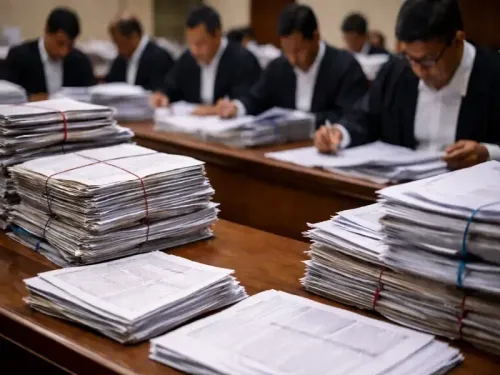
Currently, it is estimated that about 45 to 50 lakh voters’ documents will undergo judicial adjudication, all classified as “logical discrepancy” cases, including those with peculiar family data identified during the “progeny mapping” process.
Point of View
It is crucial to recognize the importance of the judicial review process in ensuring electoral integrity. The upcoming adjudication in West Bengal reflects a commitment to transparency and accountability in the electoral process, which is vital for fostering public trust.
NationPress
19 Sept 2026
Frequently Asked Questions
What is the Special Intensive Revision (SIR)?
The SIR is a process aimed at revising and updating electoral rolls to ensure accuracy and integrity before elections.
Who is overseeing the judicial adjudication process?
The process is overseen by a three-member committee appointed by the Calcutta High Court in each district.
How many voters' documents are affected?
Approximately 45 to 50 lakh voters' documents are categorized as 'logical discrepancies' requiring judicial review.
When will the final voters’ list be published?
The final voters’ list is scheduled to be published on February 28.
What is the significance of this judicial review?
This review is crucial to maintaining the integrity of the electoral process and ensuring that all eligible voters are accurately represented.