Will the Calcutta HC Chief Justice Lead a Meeting Today to Appoint Judicial Officers for SIR Claims?
Synopsis
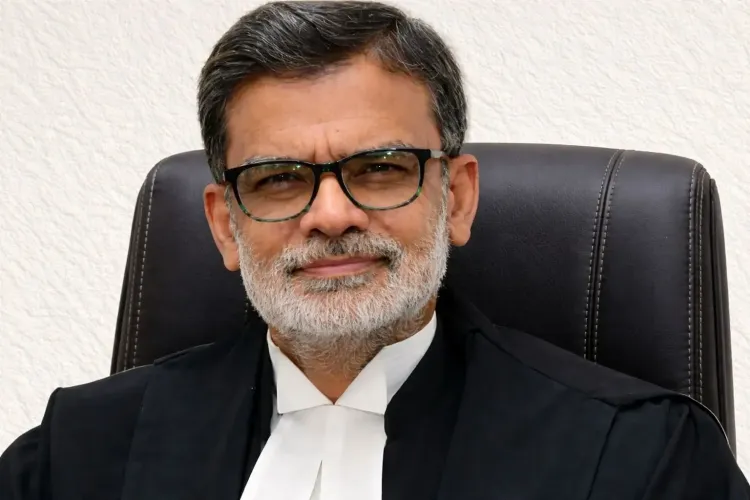
In an unprecedented move, the Calcutta High Court is set to appoint judicial officers to oversee the controversial electoral roll revision in West Bengal. This meeting, chaired by Chief Justice Sujoy Paul, indicates a significant shift towards judicial oversight in political procedures, raising questions about electoral integrity.
Key Takeaways
Judicial officers will be appointed to oversee electoral roll revisions.
The meeting aims to enhance the integrity of the electoral process.
Final voters’ list to be published on February 28 .
Political reactions highlight a contentious electoral landscape.
Judicial oversight is increasingly seen as necessary in political affairs.
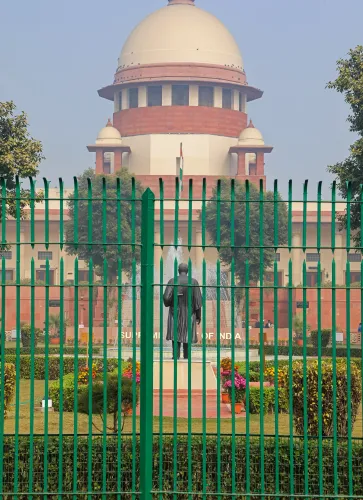
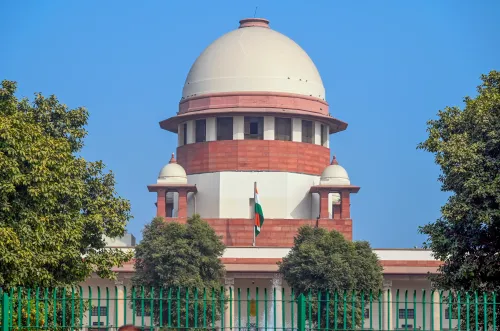
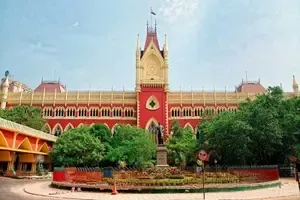
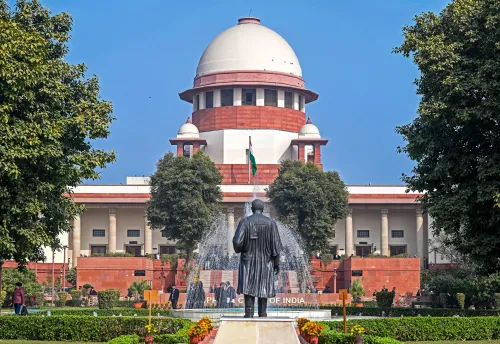
Kolkata, Feb 21 (NationPress) The Chief Justice of the Calcutta High Court, Sujoy Paul, is set to preside over an important meeting on Saturday aimed at finalizing the framework for appointing both current and retired judicial officers. These officers will oversee the adjudication of claims and objections stemming from the ongoing Special Intensive Revision (SIR) of electoral rolls in the election-bound state of West Bengal, as mandated by a three-judge bench of the Supreme Court on Friday.
This pivotal meeting, chaired by Justice Paul, will also include key figures such as the Chief Electoral Officer (CEO) of West Bengal, Manoj Kumar Agarwal, Chief Secretary of West Bengal, Nandini Goswami, the acting state Director General of Police, Peeyush Pandey, and the West Bengal Advocate General, Kishore Datta, along with an additional solicitor general representing the Union government.
According to the Supreme Court's directive, the final voters’ list in West Bengal is expected to be published on February 28, with the exception of cases involving logical discrepancies, which will be referred to judicial officers for resolution.
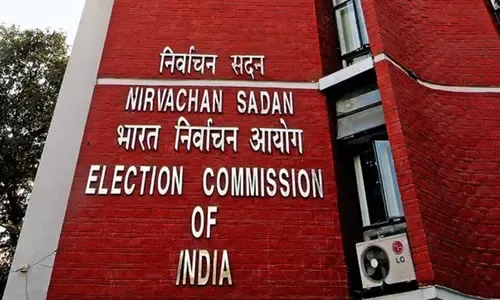
The CEO of West Bengal has also reassured the Chief Election Commissioner (CEC), Gyanesh Kumar, that the final voters’ list will indeed be released as scheduled on February 28. Following this, supplementary lists will be issued based on the recommendations from the judicial officers concerning those cases with logical discrepancies.
This unprecedented order from the apex court regarding the appointment of judicial officers for the revision exercise has been interpreted by political observers as indicative of the increasing necessity for judicial oversight in West Bengal, particularly in procedural matters where political interests are thought to overshadow other considerations.
In response, opposition parties in West Bengal have expressed that the apex court's decision to appoint judicial officers for this process is shameful for the state, noting that similar interventions have not been requested in any other states or Union Territories conducting comparable revision exercises.
Other states such as Tamil Nadu and Kerala are also undergoing revision exercises in preparation for Assembly elections this year, similar to West Bengal.
The ruling Trinamool Congress has historically opposed the revision exercise, asserting that the SIR is a tactic by the Union Government and the BJP to impose the National Register of Citizens (NRC) in West Bengal, potentially displacing legitimate voters.
On Friday, the party welcomed the Supreme Court's intervention, stating that all claims, objections, and logical discrepancies will now be managed by unbiased judicial officers appointed by the Chief Justice of the Calcutta High Court.
Conversely, the BJP has argued that the Trinamool Congress's opposition to the SIR stems from a desire to keep the names of illegal Bangladeshi and Rohingya voters on the list.
Point of View
The involvement of judicial officers in the electoral process in West Bengal highlights a growing concern over the integrity of political procedures. This decision indicates a necessary shift towards ensuring that electoral processes remain fair and free from political manipulation, a concern that transcends regional boundaries.
NationPress
7 Sept 2026
Frequently Asked Questions
What is the purpose of the meeting chaired by Chief Justice Sujoy Paul?
The meeting aims to finalize the appointment of judicial officers to oversee claims and objections arising from the Special Intensive Revision of electoral rolls in West Bengal.
Why is judicial oversight necessary in this electoral process?
Judicial oversight is deemed necessary to ensure that the electoral process remains unbiased and free from political manipulation, especially in a politically sensitive state like West Bengal.
When will the final voters’ list be published?
The final voters’ list is scheduled to be published on February 28, excluding cases with logical discrepancies that need judicial adjudication.
How have political parties reacted to the Supreme Court's order?
Opposition parties have criticized the order as a shameful necessity, while the ruling party has welcomed judicial intervention as a means to ensure fairness.
What implications does this move have for the upcoming elections?
This move could significantly impact the transparency and fairness of the electoral process, as judicial officers are expected to handle disputes impartially.