Why Did the Supreme Court Order Judicial Oversight for SIR in West Bengal?
Synopsis
The Supreme Court’s recent directive to deploy judicial officers for overseeing the SIR exercise in West Bengal has led to contrasting opinions among political leaders, highlighting the ongoing tensions surrounding the electoral process in the state.
Key Takeaways
The Supreme Court has ordered judicial oversight for the SIR process in West Bengal.
This decision has led to mixed reactions from various political leaders.
Some leaders view the ruling as a necessary measure to enhance transparency.
Others perceive it as an embarrassment for the state government.
The ruling may impact the upcoming electoral process significantly.
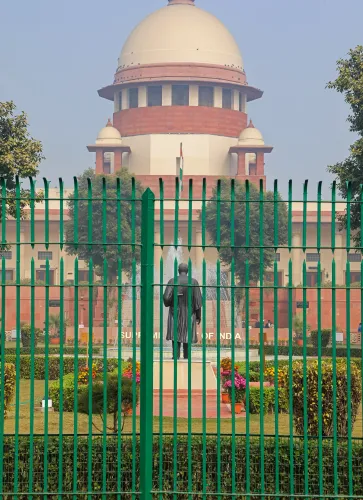
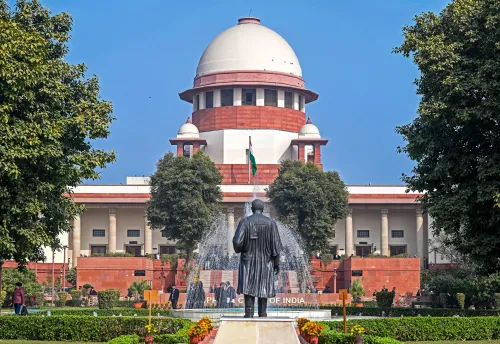
Kolkata, Feb 20 (NationPress) The Supreme Court's directive on Friday for the deployment of both active and retired judicial officers to supervise the handling of claims and objections arising from the ongoing Special Intensive Revision (SIR) of electoral rolls in the election-ready West Bengal has sparked a variety of responses from political factions in the region.
Union Minister of State and former BJP West Bengal president Sukanta Majumdar expressed that the Apex Court’s ruling is a disgrace for the state, highlighting that it is the only region where the revision process could not proceed smoothly without judicial oversight.
"Various states are conducting parallel SIR exercises without issue. However, the ongoing controversies surrounding this revision are unique to West Bengal. The state government and the ruling party have consistently tried to undermine the revision process, which is a source of shame for our state," Majumdar stated.
Similarly, Adhir Ranjan Chowdhury, former president of the Congress' West Bengal unit and five-time Lok Sabha member, noted that such an exceptional order from the Apex Court would not have been necessary if the state government and ruling party had not posed obstacles to the smooth execution of the SIR exercise.
"Under the current regime, West Bengal has repeatedly been highlighted for all the wrong reasons, and this is the latest example," Chowdhury added.
In contrast, the ruling Trinamool Congress has expressed satisfaction with the Supreme Court's decision.
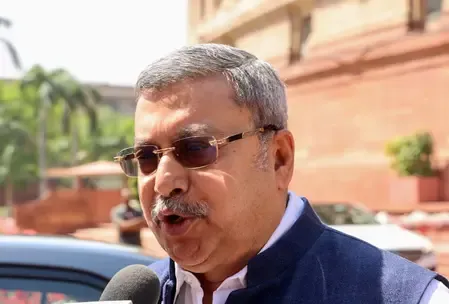
Kalyan Banerjee, a senior advocate and four-time Trinamool Congress Lok Sabha member, remarked that the Apex Court's ruling has undermined the Chief Election Commissioner (CEC) Gyanesh Kumar's belief that he alone would dictate SIR-related matters.
"The CEC seemed to think he was the sole authority on this issue. The Supreme Court's ruling has proven that notion incorrect. Now, the decisions made by the judicial officers appointed by the Calcutta High Court to oversee the SIR adjudication will be final. This is an extraordinary order, and even I was not anticipating such an unprecedented decision this morning," Banerjee stated.
Satarup Ghosh, a youth leader of CPI(M) and a member of the party’s state committee, expressed that while he refrains from commenting on the Supreme Court's order, his party's primary wish is for the adjudication of the revision process to be conducted transparently, ensuring that no legitimate voter is excluded and no fraudulent voter is included.
Point of View
It’s crucial to recognize the implications of the Supreme Court's decision in this politically charged environment. The deployment of judicial officers indicates a significant breach of trust in local governance, reflecting deeper issues within West Bengal’s electoral integrity. It is a call for accountability that resonates nationally as we approach the elections.
NationPress
3 Oct 2026
Frequently Asked Questions
What prompted the Supreme Court to intervene in West Bengal's SIR process?
The Supreme Court intervened due to ongoing controversies and challenges faced by the state government and ruling party, which hindered the smooth execution of the Special Intensive Revision (SIR) of electoral rolls.
How have political leaders reacted to this order?
Reactions have been mixed; while some leaders view it as a necessary measure for transparency, others see it as a source of shame for the state, indicating a lack of trust in local governance.
What is the significance of deploying judicial officers in this context?
Deploying judicial officers aims to ensure impartial oversight of the electoral process, thereby restoring faith in the integrity and transparency of the revision exercise.
What are the implications of this order for West Bengal's elections?
This order may influence the electoral landscape by ensuring a fairer process, but it also highlights existing tensions and governance issues within the state.
Who are the key political figures involved in this discussion?
Key figures include Union Minister Sukanta Majumdar, Congress leader Adhir Ranjan Chowdhury, and Trinamool Congress member Kalyan Banerjee, each offering varying perspectives on the Supreme Court's ruling.