Did the SC Order Deployment of Judicial Officers for SIR Oversight in West Bengal?
Synopsis
The Supreme Court's recent ruling mandates the deployment of judges to oversee the electoral roll revision in West Bengal, addressing serious trust issues between the state government and the Election Commission. This unprecedented move aims to ensure fairness and efficiency in the electoral process.
Key Takeaways
Supreme Court mandated deployment of judges for electoral oversight.
Addressing the 'trust deficit' between state and ECI is crucial.
Judicial officers will help ensure fair adjudication of voter claims.
Final electoral roll to be published on February 28.
Logistical support from District Collectors and Police is essential.
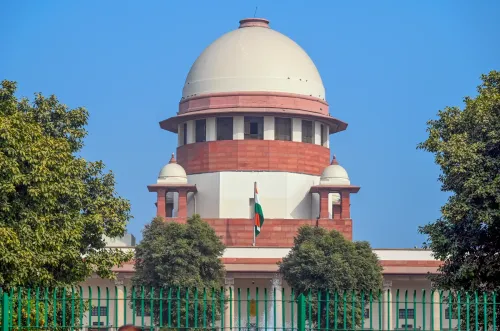
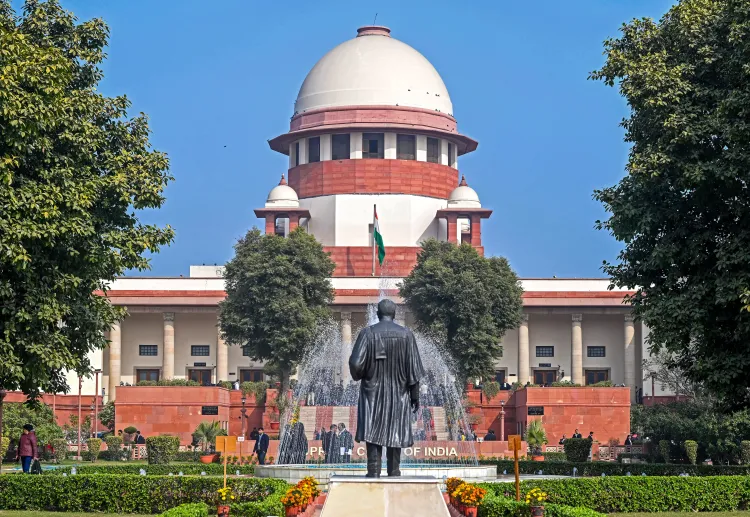
New Delhi, Feb 20 (NationPress) In a landmark decision, the Supreme Court on Friday mandated the assignment of both active and retired judicial officers to supervise the adjudication of claims and objections linked to the ongoing Special Intensive Revision (SIR) of electoral rolls in West Bengal, which is gearing up for elections.
A Bench comprised of Chief Justice of India (CJI) Surya Kant and Justices Joymalya Bagchi and Vipin Pancholi noted that a significant “trust deficit” existed between the West Bengal government and the Election Commission of India (ECI), causing a halt in the SIR process at a pivotal moment.
“An unfortunate blame game has ensued, highlighting the lack of trust between these two constitutional authorities,” the apex court remarked.
The Bench pointed out that numerous voters identified in the “logical discrepancy list” had already submitted pertinent documents validating their inclusion in the electoral rolls, emphasizing the need for equitable adjudication of these claims.
Given the “extraordinary circumstances,” the Supreme Court felt compelled to engage the judiciary to ensure fairness and the completion of the revision procedure.
The court requested that the Chief Justice of the Calcutta High Court allocate serving judicial officers along with retired officers of the rank of Additional District Judge or District Judge to assist in the resolution and reassessment of pending claims across various districts.
“To guarantee fairness in the evaluation of the authenticity of documents submitted and their subsequent inclusion or exclusion from the voter list, we find it necessary to request the Chief Justice of the High Court of Calcutta to make available some serving judicial officers along with former judges,” the CJI Kant-led Bench ordered.
According to the apex court's directive, each judicial officer will be paired with officials dispatched by the ECI and the West Bengal government. Additionally, the court has allowed the publication of the final electoral roll on the planned date of February 28 for the portion of the exercise that has been completed, granting the ECI permission to issue supplementary voter lists thereafter.
To facilitate the efficient completion of the SIR process, the CJI Kant-led Bench instructed District Collectors and Superintendents of Police to provide comprehensive logistical support to the judicial officers and their teams.
The West Bengal Director General of Police (DGP) was further directed to submit a supplementary affidavit detailing actions taken regarding complaints of threats and intimidation faced by officials involved in the SIR process.
During the proceedings, there were intense exchanges between the state government and the electoral body over compliance with previous directives from the Supreme Court regarding the deployment of officers for SIR responsibilities.
While senior advocates Kapil Sibal and Menaka Guruswamy, representing the West Bengal government, argued that adequate Group B officers were provided, senior advocate Dama Seshadri Naidu, representing the ECI, contended that officers qualified to undertake quasi-judicial roles as Electoral Registration Officers (EROs) were not made available.
Expressing dissatisfaction with the situation, the CJI Kant-led Bench remarked, “You are not assigning capable Group A officers. How can unqualified personnel determine the fate of the populace?”
It further noted that there seemed to be “hesitance on both sides,” observing that judicial officers could facilitate the process “to a logical conclusion.”
The Supreme Court underscored the necessity for cooperation among all parties involved, urging the state government to foster an environment conducive to the effective operation of the Calcutta High Court-nominated judicial officers.
“Please assist the High Court. Create an environment for them to work effectively. Consider the implications if the SIR process remains incomplete,” the CJI Kant-led Bench stated.
In a prior hearing, the Supreme Court had issued a show-cause notice to the West Bengal DGP following allegations by the ECI that polling officials faced intimidation and interference during the revision process, while also mandating the training and deployment of state government officials to assist EROs without compromising statutory decision-making authority.
Point of View
It is crucial for us to recognize the Supreme Court's proactive stance in resolving electoral disputes in West Bengal. This unprecedented intervention aims to restore public confidence in the electoral process and ensure that all claims are fairly adjudicated. The judiciary's involvement showcases its commitment to safeguarding democracy, especially in a politically charged environment.
NationPress
3 Oct 2026
Frequently Asked Questions
What is the purpose of deploying judicial officers for the SIR exercise?
The deployment aims to ensure fair adjudication of claims and objections related to the electoral rolls, addressing trust issues between the West Bengal government and the Election Commission.
Who are the judicial officers involved in this process?
Both serving and retired judicial officers, specifically those with the rank of Additional District Judge or District Judge, are being assigned to supervise the SIR exercise.
What concerns prompted the Supreme Court to intervene?
The Supreme Court identified a significant 'trust deficit' between the West Bengal government and the Election Commission, which hindered the SIR process, prompting judicial oversight.
When is the final electoral roll expected to be published?
The final electoral roll is scheduled to be published on February 28, for portions of the exercise that have been completed.
What actions are expected from the West Bengal DGP?
The West Bengal DGP has been directed to file a supplementary affidavit detailing the steps taken regarding complaints of threats and intimidation faced by officials involved in the SIR exercise.