Did BJP Welcome SC Order on Judicial Supervision of Bengal Voter Roll Revision?

Synopsis
The BJP has hailed the Supreme Court's ruling allowing judicial oversight on the electoral roll revision in West Bengal, which they claim undermines the local government. With significant implications for election integrity, this decision is pivotal for the upcoming polls.
Key Takeaways
The Supreme Court's ruling mandates judicial oversight in West Bengal's electoral roll revision.
BJP sees this as a significant setback for the Mamata Banerjee administration.
The ruling is aimed at enhancing transparency and accountability in the electoral process.
Final electoral rolls are set to be published on February 28.
The Special Intensive Revision is crucial for upcoming elections.
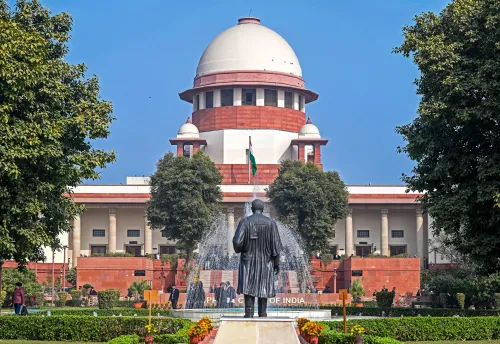
Kolkata, Feb 20 (NationPress) The Bharatiya Janata Party (BJP) expressed on Friday that the Supreme Court's ruling mandating the involvement of both current and former judicial officials to supervise the adjudication of claims and objections related to the ongoing Special Intensive Revision (SIR) of electoral rolls in election-bound West Bengal is a significant blow to the administration led by Mamata Banerjee.
In a statement shared via social media, Amit Malviya, the head of BJP’s Information Technology Cell and the party’s central observer for West Bengal, noted that the apex court’s ruling would guarantee judicial oversight and thwart any potential attempts to undermine the electoral roll revision process.
Malviya explained that the inclusion of judicial officers will replace administrative personnel working under district magistrates, who also function as district electoral officers (DEOs). He alleged these officials had approved cases with incomplete, illegible, or absent documents.
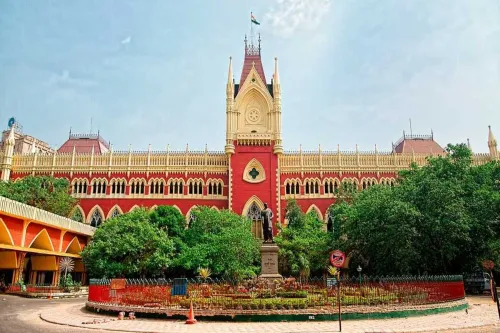
“The Court has directed the Chief Justice of the Calcutta High Court to allocate serving judicial officers, along with former officials at the rank of Additional District Judge or District Judge, to reassess and resolve pending claims categorized as ‘logical discrepancies’. Each judicial officer will be supported by micro observers from the Election Commission of India (ECI), ensuring enhanced transparency and accountability,” Malviya stated.
He further claimed that currently, 4,66,323 documents await verification by district electoral officers (district magistrates), while approximately 30 lakh documents are pending with electoral registration officers (EROs) and assistant electoral registration officers (AEROs) for re-verification. Additionally, he mentioned that decisions regarding documents submitted by nearly 20 lakh voters are still pending.
According to Malviya, district magistrates and sub-divisional officers have allegedly delayed the examination of documents and kept original submissions unprocessed, which he claimed could have permitted approvals without adequate verification or documented rationale.
“All of these cases will now be subject to judicial review and supervision,” he remarked.
Malviya also mentioned that the Supreme Court’s ruling guarantees that the final electoral rolls will be published as scheduled on February 28, with the Election Commission issuing supplementary lists afterwards to include decisions made during the adjudication process.
“The well-structured plans of the compromised Mamata Banerjee administration are starting to collapse. As judicial officers, supported by ECI observers, evaluate the pending documents and objections raised through Form 7 submissions, accountability will finally be enforced. The integrity of West Bengal’s electoral rolls will now be restored under judicial oversight,” he added.
The Special Intensive Revision of electoral rolls is being undertaken in preparation for the forthcoming elections in West Bengal, with authorities scrutinizing claims, objections, and discrepancies to ensure accuracy and transparency in the voters’ list.
Point of View
It's essential to recognize that the Supreme Court's intervention in the electoral roll revision process in West Bengal signifies a crucial moment for electoral integrity in the region. The BJP's stance reflects a broader concern about transparency and accountability in the electoral system, which is vital for democratic processes.
NationPress
30 Sept 2026
Frequently Asked Questions
What is the Supreme Court's recent ruling regarding West Bengal's electoral rolls?
The Supreme Court has ordered the deployment of serving and retired judicial officers to oversee the adjudication of claims and objections related to the electoral roll revision in West Bengal.
Why does the BJP consider this ruling a setback for the Mamata Banerjee government?
The BJP views the ruling as a means to ensure transparency and prevent potential manipulation of the electoral roll revision process, which they believe the current administration may compromise.
When will the final electoral rolls be published?
The final electoral rolls are scheduled to be published on February 28, following the Supreme Court's directive.
What is the significance of the Special Intensive Revision of electoral rolls?
The Special Intensive Revision aims to ensure accuracy and transparency in the voters' list ahead of the upcoming elections in West Bengal.
How many documents are pending verification in the electoral roll process?
Currently, over 4,66,323 documents are pending verification by district electoral officers, along with around 30 lakh documents pending with electoral registration officers.