Why Did the SC Issue a Show-Cause Notice to Bengal DGP?
Synopsis
In a significant move, the Supreme Court has called upon West Bengal's DGP to clarify allegations of electoral disruptions. This decision stems from claims made by the Election Commission regarding intimidation during the ongoing revision of electoral rolls. The court's directive aims to ensure a fair electoral process in the state.
Key Takeaways
The Supreme Court intervened to uphold electoral integrity in West Bengal.
Allegations of disruption during the SIR process have been raised by the ECI.
All Group B officers must report as instructed by the court.
The ECI has the authority to replace underperforming officials.
Micro-observers play a supportive role without decision-making authority.
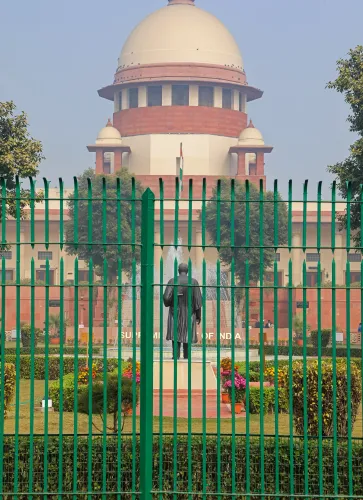
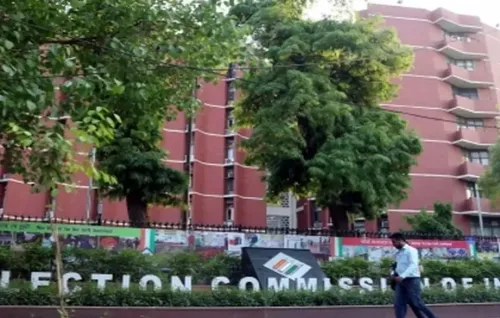
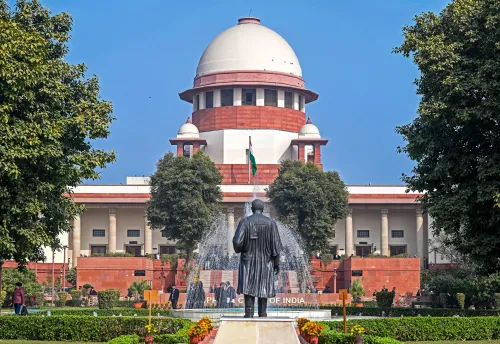
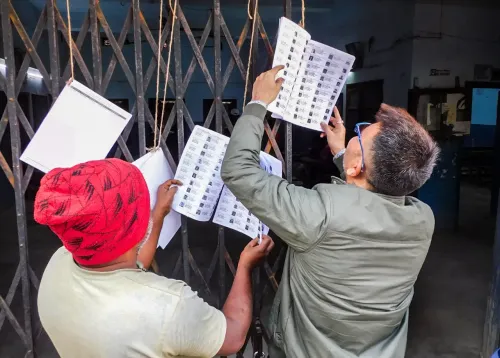
New Delhi, Feb 9 (NationPress) The Supreme Court has issued a show-cause notice to the Director General of Police (DGP) of West Bengal following allegations from the Election Commission of India (ECI) regarding intimidation and disruption during the ongoing Special Intensive Revision (SIR) of electoral rolls in the election-bound state.
A bench led by Chief Justice of India (CJI) Surya Kant mandated that the state police chief submit a personal affidavit responding to claims made in the ECI’s counter affidavit. The affidavit stated that despite complaints from election officials, no FIRs were filed against individuals accused of destroying objection forms and records related to the SIR process.
“Although these allegations are firmly denied by the state government, we recall our directive from January 19, which instructed police authorities to uphold law and order. We believe it is essential for the DGP to respond to these allegations,” remarked the Bench, which also included Justices Joymalya Bagchi and N.V. Anjaria.
To facilitate the SIR process in West Bengal and to address the concerns raised by petitioners opposing the revision, the Supreme Court issued several interim orders.
The CJI-led Bench instructed the West Bengal government to ensure that all 8,505 Group B officers, whose list was submitted to the court, report to the District Electoral Officers (DEOs) or Electoral Registration Officers (EROs) by 5 p.m. on Tuesday.
The apex court granted the ECI the authority to replace current EROs and Assistant EROs (AEROs) with newly available state government officers, provided they meet the necessary qualifications.
These state officials may undergo brief training before assisting the EROs/AEROs.
The Supreme Court unequivocally stated that micro-observers and state officials are to assist only the statutory authorities, with final decision-making power remaining with the EROs.
Recognizing concerns about potential delays due to new officials, the CJI-led Bench allowed the EROs an additional week beyond February 14 to finalize their scrutiny and decisions.
The order also highlighted the ECI’s clarification that micro-observers do not possess decision-making authority and are solely there to assist.
The Supreme Court acknowledged the ECI’s notice that certain officials had been flagged for suspension, yet no action had been taken by the state government.
It was noted that essential officers were transferred at critical times for the SIR exercise.
In response, the bench urged the Chief Minister’s Secretary to address this matter, emphasizing that the state government should act upon suspension recommendations.
The apex court also stated that the ECI has the right to replace underperforming officers.
Point of View
It is imperative that the integrity of electoral processes be upheld. The Supreme Court's intervention signifies the judiciary's role in maintaining democratic values and addressing concerns raised by electoral authorities. This case underscores the need for accountability and transparency within state governance.
NationPress
19 Sept 2026
Frequently Asked Questions
What is the reason behind the SC's notice to the West Bengal DGP?
The Supreme Court issued a notice in response to allegations from the Election Commission regarding intimidation and disruption during the Special Intensive Revision of electoral rolls.
What does the Supreme Court expect from the DGP?
The Supreme Court has asked the DGP to submit a personal affidavit addressing the allegations of inaction regarding complaints from election officials.
What interim measures has the SC put in place?
The court directed the West Bengal government to ensure that all Group B officers report for duty and granted the ECI the authority to replace EROs as necessary.
How long has the ECI been given to complete the scrutiny?
The ECI has been granted at least an additional week beyond February 14 to complete the scrutiny of documents submitted by voters.
What are micro-observers' roles according to the SC?
Micro-observers are only to assist statutory authorities and do not have decision-making power.