Supreme Court Mandates Formation of Appellate Tribunals for Electoral Roll Exclusions in West Bengal
Synopsis
The Supreme Court's recent directive establishes Appellate Tribunals to resolve appeals over electoral roll exclusions during West Bengal's Special Intensive Revision. This crucial move aims to ensure an independent and effective review process amid concerns about rejected claims. A must-read for understanding electoral integrity in the upcoming elections.
Key Takeaways
Supreme Court orders Appellate Tribunals for appeals.
Tribunals to consist of former High Court judges.
ECI to cover all operational costs.
Independent review process established for electoral roll exclusions.
Concerns over judicial officer workload addressed.
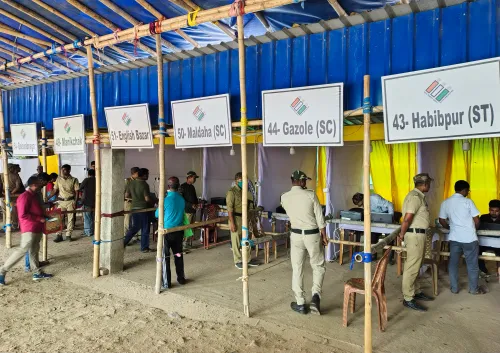
New Delhi, March 10 (NationPress) - The Supreme Court has mandated the establishment of Appellate Tribunals, which will include former Chief Justices and judges of High Courts, to address appeals concerning exclusions from the electoral rolls amid the ongoing Special Intensive Revision (SIR) process in the politically significant West Bengal.
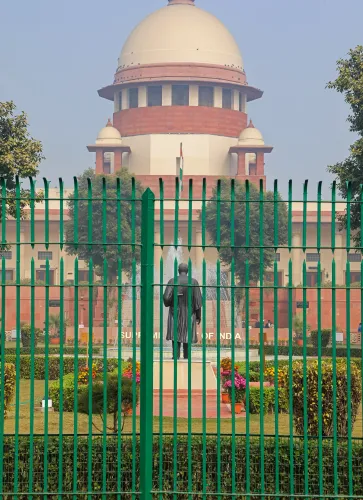
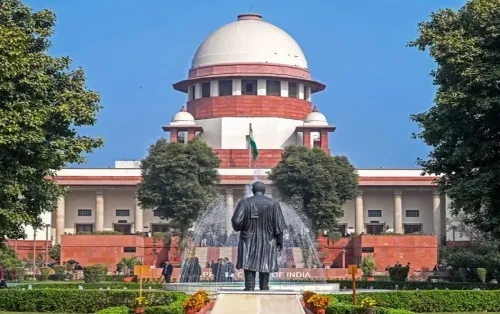
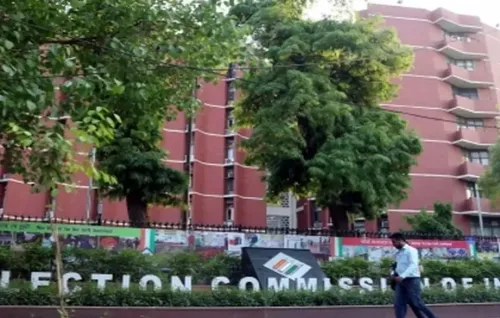
A Bench led by Chief Justice of India (CJI) Surya Kant emphasized that any decisions made by judicial officers during the SIR cannot be contested in front of any administrative or executive body. Instead, the Chief Justice of the Calcutta High Court has been empowered to propose the formation of an appellate structure featuring a former Chief Justice and two or three other judges, either retired or currently serving in High Courts, preferably from Calcutta or adjacent states. Following the recommendations, the Election Commission of India (ECI) will formally appoint these individuals as Appellate Tribunals to adjudicate the appeals stemming from the revision process.
Additionally, the apex court instructed that the ECI is responsible for all expenses related to the operation of this appellate body, which includes the remuneration for the former judges and judicial officers involved in the SIR. “We trust the Chief Justice of the High Court to determine the composition of the appellate bench,” remarked the CJI Kant-led Bench.
This directive arose after worries were voiced regarding the lack of an independent appellate system for individuals whose requests for inclusion in the voter list were declined by judicial officers.
Senior advocate Gopal Sankaranarayanan, representing the petitioners, indicated that nearly 400,000 claims have been denied out of approximately one million decided cases, warning that allowing all such appeals to be filed in the Calcutta High Court could overwhelm it.
The CJI Kant-led Bench noted that a specialized appellate forum composed of former judges could be established to offer an effective solution without overloading the Calcutta High Court.
The apex court received an update from the Chief Justice of the Calcutta High Court stating that as of the evening of March 9, over 1.016 million objections had been resolved by the judicial officers involved.
According to this update, more than 500 judicial officers from West Bengal, along with about 200 officials requisitioned from Odisha and Jharkhand, are actively participating in the SIR process, working diligently even on weekends and holidays.
The CJI Kant-led Bench highlighted that regular video conferences are being held with District Judges to reinforce the importance of the revision exercise, and many officers have had their leaves canceled to ensure the timely completion of the task.
“What greater dedication could we anticipate from our officers? They are demonstrating exceptional commitment,” the apex court remarked. It also pointed out certain logistical and technical challenges faced by the judicial officers, especially concerning the login credentials needed to access the voter verification portal.
However, senior advocate Dama Seshadri Naidu, representing the ECI, assured the Supreme Court that the login credential issues would be resolved swiftly.
The court instructed the ECI to provide comprehensive logistical support to the Calcutta High Court and the officers involved, stating that no new mandatory procedural requirements should be introduced in the SIR process without the Chief Justice of the Calcutta High Court's consent.
Moreover, it mandated that all technical issues on the portal be addressed promptly and that new login IDs be generated without delay whenever necessary for the judicial officers.
The Supreme Court also directed the West Bengal government to ensure the safety, accommodation, and other logistical support for all judicial officers engaged in the SIR process.
It permitted both the state government and the petitioners to approach the Chief Justice of the Calcutta High Court regarding the publication of supplementary electoral rolls for those whose claims have already been adjudicated.
Previously, on February 24, the Supreme Court had invoked its powers under Article 142 of the Constitution to allow the Chief Justice of the Calcutta High Court to request additional judicial officers, including those from the High Courts of Jharkhand and Odisha, to hasten the adjudication process for nearly 5 million claims and objections arising from the revision exercise.
The apex court had also clarified that voters added via subsequent supplementary lists would be considered part of the final electoral roll published on February 28.
Point of View
The Supreme Court's decision to establish Appellate Tribunals reflects a commitment to uphold electoral integrity. Ensuring that citizens have a fair opportunity to appeal exclusions from voter lists is a pivotal step in promoting democratic participation, particularly in a politically charged environment like West Bengal.
NationPress
3 Oct 2026
Frequently Asked Questions
What are the Appellate Tribunals?
The Appellate Tribunals, as ordered by the Supreme Court, will consist of former Chief Justices and judges to hear appeals regarding exclusions from electoral rolls during the Special Intensive Revision exercise.
Why were the Appellate Tribunals created?
They were established to provide an independent mechanism for individuals whose claims for inclusion in the voter list were rejected, ensuring fairness in the electoral process.
Who will bear the costs of the Appellate Tribunals?
The Election Commission of India (ECI) is responsible for all expenses related to the functioning of the Appellate Tribunals.
What issues did the Supreme Court address?
The court raised concerns about the absence of an independent appellate system for denied claims and the logistical challenges faced by judicial officers during the Special Intensive Revision.
What is the significance of this ruling?
This ruling is significant as it aims to ensure electoral integrity and provides a legal recourse for voters in West Bengal, promoting a fair democratic process.