Canada FM Anita Anand meets Modi, Jaishankar in New Delhi to deepen bilateral ties
Synopsis
After expelling each other’s diplomats in 2023-24, India and Canada are now meeting for the 11th time at foreign minister level since September 2025. Canadian FM Anita Anand’s third India visit in four months, combined with a confirmed Modi trip to Ottawa in December, signals the reset is accelerating — with $30.4 billion in bilateral trade as the economic foundation.
Key Takeaways
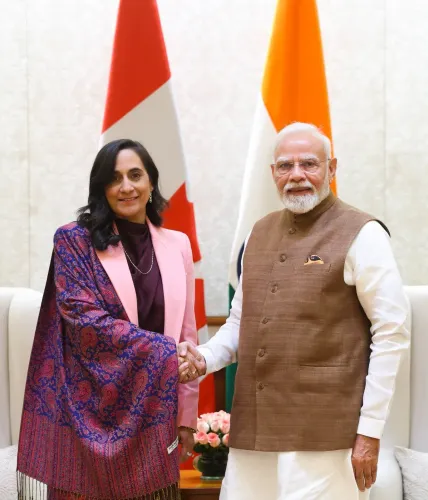
Canadian Foreign Minister Anita Anand met PM Narendra Modi and EAM S.
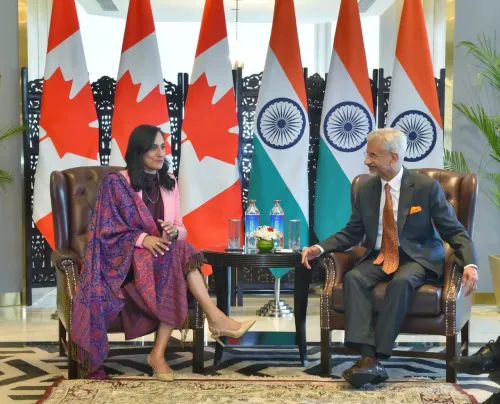
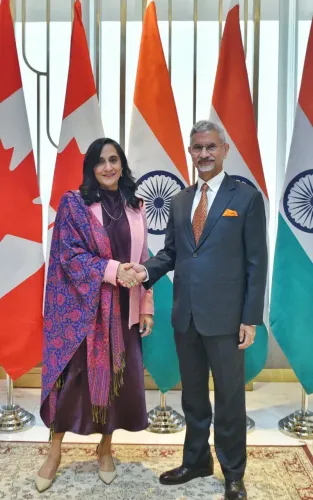
Jaishankar in New Delhi on 15 October 2026 .
This was her third visit to India since June 2025 and the 11th Anand-Jaishankar meeting since September 2025 .
Bilateral trade between Canada and India reached $30.4 billion in 2025 , including $11 billion in goods.
PM Modi is expected to visit Canada in December 2026 , as confirmed by Anand.
The two sides discussed trade, technology, security, energy, education and people-to-people ties; both nations co-appeared at the Bloomberg New Economy Forum .
Relations had hit a serious low in 2023-24 when both countries expelled diplomats; the current reset represents a significant diplomatic turnaround.
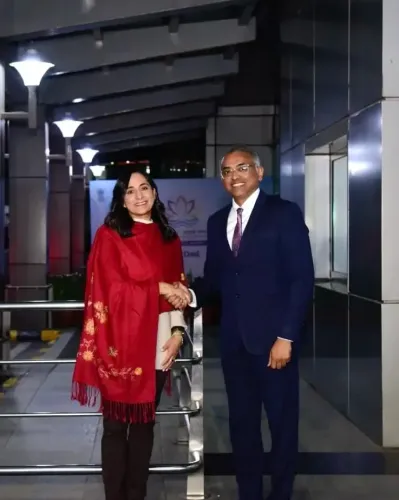
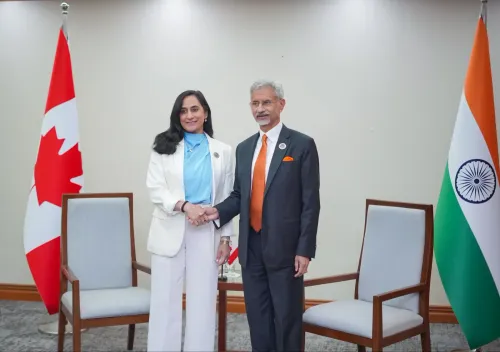
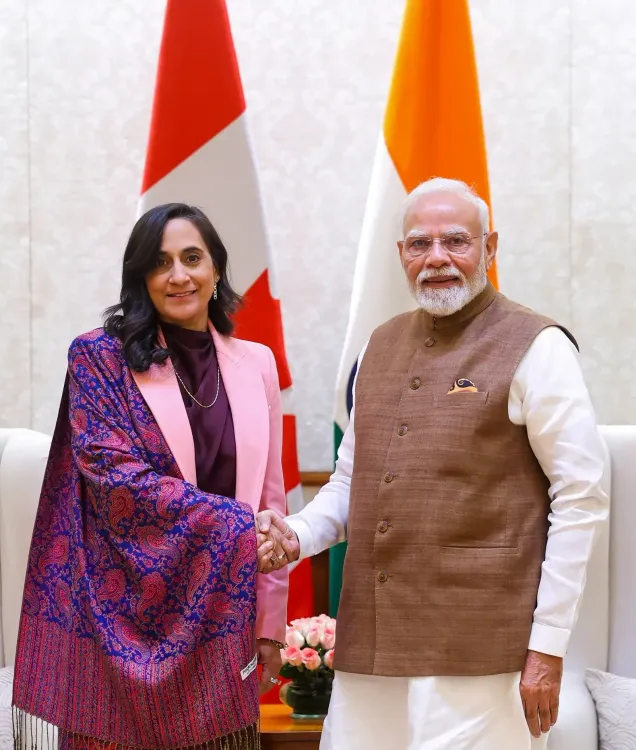
Canadian Foreign Minister Anita Anand met Prime Minister Narendra Modi and held wide-ranging talks with External Affairs Minister S. Jaishankar in New Delhi on 15 October 2026, signalling a continued upswing in India-Canada relations after a period of sharp diplomatic turbulence. Anand described the visit as an effort to build on “renewed momentum” between the two countries, with trade, investment, and security at the top of the agenda.
What Anand Said
“This week, I’m in New Delhi to build on the renewed momentum between Canada and India, and advance our shared priorities in trade, investment and security,” Anand wrote on X on Wednesday. “At a time of global uncertainty, both countries have an interest in building stronger economic ties and finding new areas of cooperation,” she added.
Following her meeting with PM Modi, Anand said the two sides discussed their “strategic partnership and the opportunities ahead for trade, investment and security,” noting that “nearly 80 years of diplomatic ties have been enriched by generations of families, students and entrepreneurs who have brought our countries closer.” She also referenced Canadian Prime Minister Mark Carney’s visit earlier this year and the ongoing Team Canada Trade Mission, framing these as signs of “a growing ambition to turn shared priorities into lasting opportunities for both nations.” Anand further confirmed that Canada looks forward to “welcoming Prime Minister Modi to Canada this December.”
PM Modi and Jaishankar Respond
Prime Minister Modi described the talks as “a productive discussion on further strengthening India-Canada ties in trade, technology, security, energy, education and people-to-people exchanges.” He added that “India is committed to building a constructive and forward-looking strategic partnership with Canada that delivers tangible benefits to the people of both countries.”
External Affairs Minister Jaishankar said the two ministers “reviewed progress in our ties across trade and investment, education, energy, defence and people-to-people exchanges” and also “exchanged views on key regional and global developments.” He noted that the partnership is being “guided by our leadership and sustained engagement across government and industry.”
Scale of Engagement
According to the Canadian government, the Anand-Jaishankar meeting was the 11th between the two foreign ministers since September 2025 — a remarkable cadence for any bilateral relationship. The Ministry of External Affairs noted this was Anand’s third visit to India since June 2025, “reflecting the sustained high-level engagement and positive momentum in India-Canada relations.” Global Affairs Canada had announced that Anand would visit India and the United Arab Emirates from 13 to 16 October to advance bilateral priorities including trade, energy, security and defence.
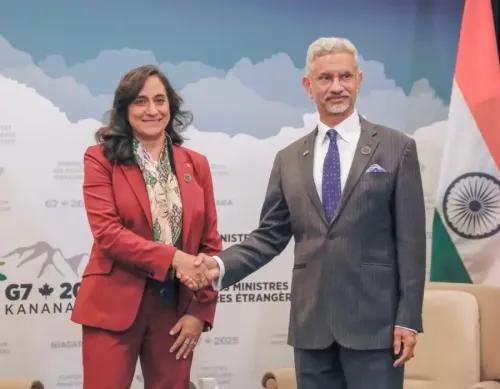
Anand and Jaishankar also appeared together on a panel titled ‘Is this the Middle Power Moment?’ at the Bloomberg New Economy Forum in New Delhi, alongside former Australian Prime Minister Kevin Rudd and former British Prime Minister Rishi Sunak. Jaishankar underlined that “the powers in the middle can move the needle through their individual efforts, but even more, by collaborating with each other.”
Trade Numbers and Context
Bilateral trade between Canada and India reached $30.4 billion in 2025, including $11 billion in goods, according to Canadian government figures. This commercial momentum is notable given that relations between the two countries entered a prolonged freeze in 2023 and 2024, when both sides expelled diplomats following a dispute over the killing of a Canadian Sikh activist. The current diplomatic intensity marks a sharp reversal from that low point.
What Comes Next
A confirmed visit by PM Modi to Canada in December would mark a significant milestone in the relationship’s rehabilitation. Analysts note that the bilateral roadmap now covers a broad spectrum — from defence and energy to education and the sizeable Indian diaspora in Canada — suggesting that this reset is intended to be structural, not merely transactional. How the two countries resolve outstanding sensitivities around diaspora politics will likely determine whether the partnership achieves its stated ambition.
Point of View
Managed reset. What is still unresolved is whether the two sides have genuinely addressed the underlying flashpoint around the Sikh diaspora activism that triggered the 2023 breakdown, or whether the relationship is simply being papered over with trade optics. The $30.4 billion bilateral trade figure is real and growing, but durability will depend on how Ottawa handles domestic political pressure from its large Punjabi diaspora and whether New Delhi is satisfied that Canada is taking its security concerns seriously. A Modi visit to Ottawa in December will be the acid test.
NationPress
15 Oct 2026
Frequently Asked Questions
Why did Canadian FM Anita Anand visit India in October 2026?
Anand visited New Delhi from 13 to 16 October 2026 to advance priorities in the India-Canada bilateral roadmap, including trade, investment, energy, security and defence. It was her third visit to India since June 2025, reflecting the accelerating pace of diplomatic engagement between the two countries.
What did PM Modi and Anita Anand discuss?
PM Modi described the meeting as a productive discussion on strengthening ties in trade, technology, security, energy, education and people-to-people exchanges. He also reaffirmed India’s commitment to a constructive and forward-looking strategic partnership with Canada.
How much bilateral trade do India and Canada conduct?
Bilateral trade between Canada and India reached $30.4 billion in 2025, including $11 billion in goods, according to Canadian government figures. This commercial relationship has grown even as the two countries worked to repair diplomatic ties after a serious fallout in 2023-24.
Is PM Modi visiting Canada?
Yes. Canadian FM Anand confirmed that Canada looks forward to welcoming Prime Minister Modi to Canada in December 2026. The visit would be a significant milestone in the rehabilitation of India-Canada ties.
What caused the earlier breakdown in India-Canada relations?
Relations deteriorated sharply in 2023 and 2024, when both countries expelled diplomats following a dispute over the killing of a Canadian Sikh activist. The current high-frequency diplomatic engagement marks a deliberate effort by both sides to move beyond that crisis.