CAQM flying squads flag unpaved roads on 8 stretches in Noida, Greater Noida
Synopsis
CAQM's flying squads found that 8 of 17 inspected road stretches in Noida and Greater Noida still lack end-to-end paving — a direct driver of particulate air pollution. With GNIDA and the Noida Authority falling short on pathways and central verges, the Commission has ordered faster action as Delhi-NCR's air quality crisis demands more than just seasonal fixes.
Key Takeaways
CAQM flying squads inspected 17 road stretches spanning 46.87 km in Noida and Greater Noida on 11 July .
8 stretches lacked end-to-end paving — 6 under GNIDA and 2 under the Noida Authority .
Paved central verges were absent on 5 stretches — 3 under GNIDA and 2 under the Noida Authority .
9 of 17 stretches had end-to-end paving, indicating partial compliance with CAQM's Standard Framework.
Both GNIDA and the Noida Authority have been directed to expedite remaining redevelopment and ensure regular maintenance.
Inspection drives will continue across Delhi-NCR to monitor air pollution control compliance.
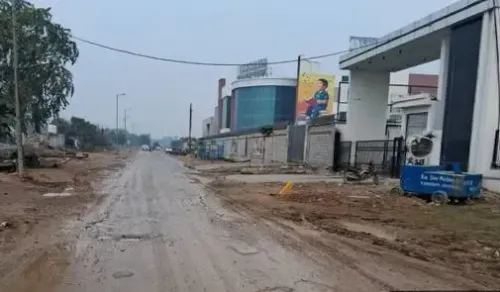
Four flying squads of the Commission for Air Quality Management in NCR and Adjoining Areas (CAQM) conducted a special inspection drive across Noida and Greater Noida on Friday, 11 July, uncovering significant gaps in road redevelopment compliance — including unpaved or missing pathways along 8 road stretches and absent central verges on 5 stretches. The findings point to persistent on-ground shortfalls even as the Commission reports overall progress in urban road upgrades across Delhi-NCR.
Key Findings from the Inspection
The drive covered 17 road stretches spanning approximately 46.87 kilometres, of which 9 had end-to-end paving in place, while 8 still lacked it. Of the non-compliant stretches, 6 fell under the Greater Noida Industrial Development Authority (GNIDA) and 2 under the Noida Authority.
Additionally, paved central verges were found to be absent on 5 road stretches — 3 under GNIDA and 2 under the Noida Authority. The inspection covered roads with Right of Way (RoW) categories of 10–15 metres and greater than 15 metres, spanning 11 stretches under GNIDA and 6 under the Noida Authority.
Which Roads Passed the Test
Of the stretches inspected, 5 under GNIDA and 4 under the Noida Authority were found to have end-to-end paving, indicating compliance with the CAQM's Standard Framework. According to officials, these stretches demonstrated that redevelopment, when completed, can meet the Commission's prescribed benchmarks.
Why Road Paving Matters for Air Quality
The CAQM reiterated that proper paving of roads and adjoining pathways is critical to minimising dust resuspension caused by vehicular movement. Road dust is among the major contributors to particulate air pollution in urban areas, and unpaved stretches significantly reduce the effectiveness of mechanised road sweeping and other dust mitigation measures.
The Commission noted that end-to-end paving, provision of paved pathways, and development of central verges are all essential elements for effective control of road dust emissions — a recurring concern in NCR cities, which regularly breach safe air quality thresholds during winter months.
Directions Issued and What Comes Next
The authorities concerned — primarily GNIDA and the Noida Authority — have been directed to expedite the remaining redevelopment works and ensure regular maintenance of completed stretches. The CAQM emphasised that implementation of the Standard Framework by all road-owning agencies across Delhi-NCR remains critical to long-term mitigation of road dust.
Inspection drives are set to continue across the region to monitor on-ground compliance and facilitate timely corrective action wherever required, the Commission stated.
Point of View
Including missing pathways and absent central verges, means road dust from high-RoW corridors continues to feed particulate loads that breach safe thresholds every winter. Directing authorities to 'expedite' works is the Commission's standard response; what is missing is a public deadline and a penalty framework. Without both, inspection drives risk becoming a monitoring ritual rather than a corrective mechanism.
NationPress
10 Oct 2026
Frequently Asked Questions
What did CAQM's flying squad inspection in Noida and Greater Noida find?
The inspection found that 8 of 17 road stretches — 6 under GNIDA and 2 under the Noida Authority — had unpaved or missing pathways, and that paved central verges were absent on 5 stretches. Only 9 of the 17 stretches inspected had end-to-end paving compliant with CAQM's Standard Framework.
Why does unpaved road surface matter for air quality in Delhi-NCR?
Unpaved roads are a major source of dust resuspension caused by vehicular movement, which contributes directly to particulate air pollution — one of the most serious health hazards in Delhi-NCR. Proper paving also improves the effectiveness of mechanised sweeping and other dust control measures.
Which authorities are responsible for the non-compliant road stretches?
The Greater Noida Industrial Development Authority (GNIDA) accounts for the majority of non-compliant stretches — 6 with missing or unpaved pathways and 3 without paved central verges. The Noida Authority has 2 stretches each in both categories.
What action has CAQM taken after the inspection?
CAQM has directed both GNIDA and the Noida Authority to expedite remaining redevelopment works and ensure regular maintenance of completed stretches. The Commission has also stated that inspection drives across Delhi-NCR will continue to monitor compliance.
What is CAQM's Standard Framework for urban roads?
The Standard Framework is a set of guidelines prescribed by the Commission for Air Quality Management in NCR and Adjoining Areas that requires road-owning agencies to ensure end-to-end paving, paved pedestrian pathways, and developed central verges — all aimed at reducing road dust emissions in urban areas.