Is CBSE’s Career Counsellor Directive a Bold Move or an Unfinished Framework?

Synopsis
The recent mandate by CBSE for career counsellors in schools marks a pivotal moment in addressing student needs. However, the success of this initiative hinges on India's ability to develop a strong framework of professional training and quality standards. Can this be the turning point for career guidance in education?
Key Takeaways
Career counsellors are now mandated in CBSE schools.
Specialized training for career guidance is essential.
Current systems lack professional regulation and standards.
Teachers will play a key role in providing support.
Quality assurance frameworks are urgently needed.
New Delhi, Feb 19 (NationPress) The Central Board of Secondary Education (CBSE) has taken a significant step by mandating the presence of career counsellors in schools, a move that finally highlights the needs of students. However, the effectiveness of this initiative hinges on how India cultivates professional expertise and quality benchmarks.
For nearly a century, India's educational frameworks have acknowledged the vital role of guidance and counselling in academic institutions. Starting from the Acharya Narendra Dev Committee Report in 1939 to the National Education Policy (NEP) of 2020, various policy documents have underscored the necessity for structured support in managing education, personal lives, and career choices.
Despite this long-standing consensus, the actual implementation of career guidance in schools has largely been minimal—often mixed with general counselling, offered informally by teachers, or dependent on an unregulated private sector.
The recent amendment to the CBSE's Affiliation Bye Laws signals a notable transition from past norms. For the first time, CBSE has formally recognized career guidance as a specialized role by requiring schools to hire a dedicated Career Counsellor, separate from the wellness and counselling teacher.
This update is particularly relevant in light of the increasing academic pressures, student mental health concerns, and uncertainties surrounding post-school pathways.
The timing of this initiative is both appropriate and hopeful. Yet, a pressing question remains: are India's educational institutions prepared to fulfill this new expectation?
Previously, CBSE guidelines only mandated schools to appoint a counselling and wellness teacher, implying that socio-emotional support alone would be sufficient to address students' academic and career-related needs.
The revised regulation notably departs from this belief. It acknowledges that career guidance requires distinct skills—such as career evaluation, job market awareness, knowledge of higher education alternatives, research capabilities, and collaboration with parents, universities, and industry professionals.
This recognition is in alignment with global research indicating that career guidance delivered by qualified experts is considerably more impactful than merely providing information.
Furthermore, it reflects the real experiences of students, who often face mental health challenges linked to their concerns about exams, subject choices, and future directions.
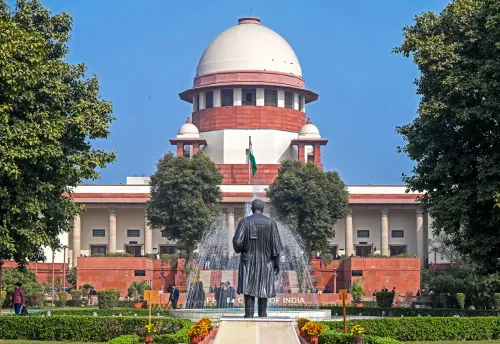
The announcement's significance is further underscored by two landmark rulings from the Supreme Court of India in 2025, which underscored the importance of mental health within educational contexts.
One ruling even proposed a set of 21 guidelines advocating for career guidance for students and parents, recognizing the connection between academic stress, career uncertainty, and mental health issues.
Thus, CBSE's directive can be seen as a response to the demands of the NEP while also addressing judicial considerations.
However, the notification also implicitly acknowledges a major shortcoming: the severe shortage of trained career counsellors in India. Schools are permitted to appoint a 'trained teacher' in lieu of a career counsellor, allowing a two-year window for them to acquire the necessary skills and qualifications.
This provision, while pragmatic, also highlights systemic weaknesses. In India, career services are primarily delivered by individuals lacking formal training as career development specialists.
The field is largely filled with teachers, social workers, human resource managers, IT professionals, industry representatives, and well-meaning entrepreneurs.
Numerous private career counselling enterprises are run by self-taught individuals who entered the field in response to rising demand, rather than through structured training.
Currently, there are very few academic programs in India designed specifically for training career counsellors. The country reportedly has only one dedicated postgraduate degree program in career guidance, along with a limited number of diploma and certificate courses.
Additionally, career development is often restricted to a single module within guidance and counselling programs.
The NCERT’s International Diploma in Guidance and Counselling (IDGC) stands out as a significant exception, but even then, only a small portion of the curriculum is dedicated to career development.
Considering the scale of India’s school system and the vast need, the availability of these programs appears quite limited.
CBSE's announcement specifies the minimum educational qualifications for career counsellors and mentions that the Board will conduct 50 hours of preferred capacity-building programs.
While this is a commendable step, it raises numerous unresolved questions. Who will develop and deliver these programs? What standards will ensure their quality and effectiveness? How will skills be assessed, certified, and updated? What ethical guidelines will govern the field, and who will ensure compliance?
At present, career guidance in India lacks both professional structure and regulation. There exists no universally accepted competency framework, accreditation system, or binding professional conduct code.
While professional associations provide valuable networking and advocacy, their capacity to regulate practices is limited. The absence of a reliable quality assurance framework risks turning this initiative into mere procedural compliance, rather than offering authentic support to students.
In practice, particularly in states with numerous schools and limited resources, educators will inevitably shoulder a substantial burden of career counselling. This situation arises not out of choice but necessity.
Teachers are already guiding students and families, shaping aspirations, and managing expectations—often without sufficient training, time, or institutional support. Acknowledging this reality is crucial.
Making career guidance and counselling a mandatory component of teacher education programs and providing structured, practice-oriented training in career counselling has become essential.
Additionally, flexible delivery models—such as school-complex or hub-and-spoke arrangements, where trained professionals offer support to clusters of schools on a part-time or consultative basis—could serve as a practical interim solution.
It is also critical to define clear boundaries. While information-based sessions can be conducted by trained educators or subject matter experts, deeper career counselling—especially concerning psychological vulnerabilities—should be provided by qualified professionals. Misinformed guidance, even with the best intentions, can lead to significant and lasting harm.
While the CBSE directive is not a definitive solution, it marks an essential starting point. It signifies a long-overdue recognition that making career decisions is not merely a matter of information but a developmental journey requiring skilled professional support.
To realize this potential, India must urgently prioritize: strengthening academic programs in career guidance; establishing national competency and accreditation systems; integrating career guidance into educator training; and fostering professional communities committed to ethical, context-sensitive practices.
If this institutional framework is thoughtfully and promptly constructed, CBSE’s ambitious directive could signify a genuine turning point—not only for educational institutions but also for how India prepares its youth to navigate work, identity, and purpose in an unpredictable world.
(Professor Sachin Kumar is an Educationist and Career Development Practitioner with two and a half decades of experience)
Point of View
The CBSE's directive for career counsellors is a necessary step forward. However, it is essential that we approach this mandate with a focus on quality and training to ensure effective implementation. The nation must rally together to create a supportive environment for students navigating their educational and career paths.
NationPress
30 Sept 2026
Frequently Asked Questions
Why is the CBSE mandating career counsellors in schools?
The CBSE recognizes the need for structured support to address students' academic pressures and career uncertainties, aiming to provide professional guidance tailored to their needs.
What qualifications are required for career counsellors?
CBSE has outlined minimum educational requirements, and schools have the option to appoint trained teachers while providing a two-year timeframe to gain necessary qualifications.
What challenges does the initiative face?
There is a significant lack of trained career counsellors in India, leading to concerns about the quality and effectiveness of the guidance provided.
How will the success of this initiative be measured?
The CBSE plans to implement capacity-building programs and will need to establish criteria for evaluating the quality and effectiveness of these programs.
What is the significance of this directive?
This mandate marks a critical recognition of the importance of career guidance in education, aiming to provide students with the necessary support for their academic and career journeys.