CDS General Subramani leads HADR Exercise 'Sahayata Setu' 2026 in Jamnagar
Synopsis
India's largest joint disaster-response drill of 2026 — 'Sahayata Setu' — concluded in Jamnagar with a multi-agency, multi-nation show of force: Chinooks bridging flood zones, navy commandos at sea, rescue robots locating survivors, and a QUAD huddle on the sidelines. CDS General Subramani's message was pointed — disaster preparedness must be practised before the crisis, not improvised during it.
Key Takeaways
Raja Subramani addressed the Annual Joint HADR Exercise 'Sahayata Setu' 2026 at an Air Force Station in Jamnagar, Gujarat on 19 November 2026 .
The three-day exercise ran from 17 to 19 November under HQ Integrated Defence Staff (IDS) , organised by the Indian Air Force .
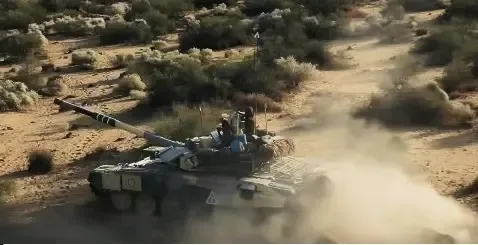
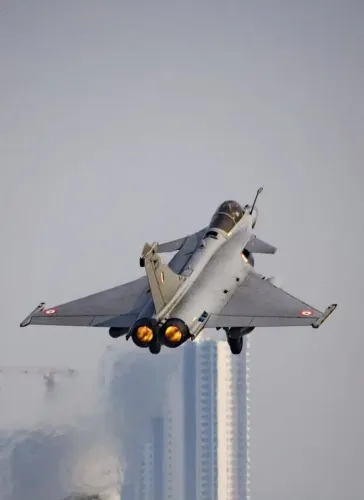
Platforms deployed included IAF Jaguar aircraft, Mi-17 , Chinook , C-130 , C-17 , C-295 helicopters and aircraft, and Indian Navy marine commandos and Dornier aircraft.
The simulated scenario involved a severe cyclone causing flooding and structural collapse, with rescue robots and dogs used to locate survivors.
A QUAD HADR working-level meeting was held on the sidelines with delegates from Australia , India , Japan , and the United States .
The exercise is aligned with India's 'Neighbourhood First' policy and PM Modi's 10-point disaster risk reduction agenda from 2016 .
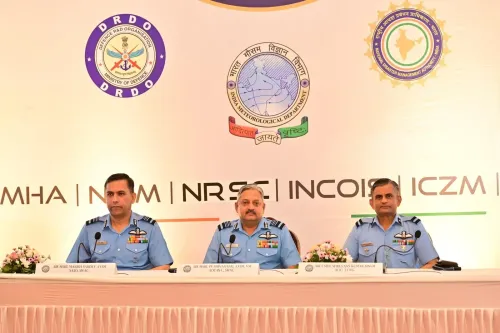
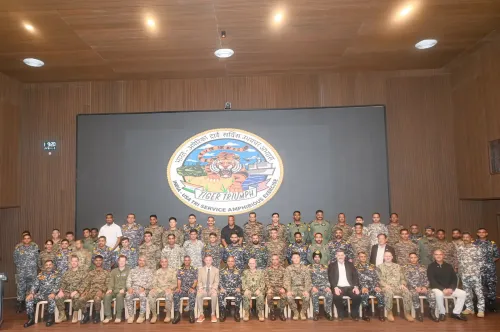
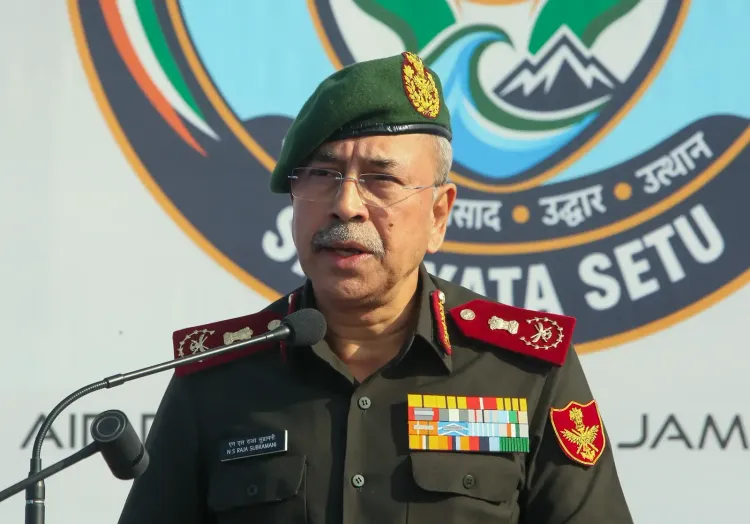
Chief of Defence Staff (CDS) General N.S. Raja Subramani on Thursday, 19 November 2026, underscored the imperative of collective preparedness, seamless coordination, and technology-driven response capabilities as the Indian Armed Forces staged the culminating demonstration of the Annual Joint Humanitarian Assistance and Disaster Relief (HADR) Exercise-2026, codenamed 'Sahayata Setu', at an Air Force Station in Jamnagar, Gujarat. The three-day exercise brought together national agencies and delegates from friendly foreign nations to rehearse a coordinated multi-agency response to a simulated large-scale disaster.
What General Subramani Said
'The participation of friendly foreign countries in this exercise further reinforces the importance of collective preparedness. Disasters do not recognise geographical boundaries, our response hence needs to transcend them. Our endeavour must be to build a self-reliant and technology-enabled HADR capability where jointness is practised before a crisis, coordination is seamless during one, and assistance reaches those in distress without delay,' General Subramani said while addressing the exercise.
He further noted that the effectiveness of any exercise is ultimately measured by the ability to translate coordination into timely action during an actual disaster. He also tied India's HADR approach to its 'Neighbourhood First' policy and the MAHASAGAR vision, positioning the country as a dependable first responder across the Indian Ocean Region and the broader Indo-Pacific.
'Humanitarian assistance and disaster relief is an expression of India's commitment to human security, both in India and in our wider neighbourhood,' he added, linking the exercise to Prime Minister Narendra Modi's 10-point agenda on disaster risk reduction, first articulated in 2016.
Structure and Scale of the Exercise
Conducted from 17 to 19 November under the aegis of Headquarters Integrated Defence Staff (HQ IDS), the exercise was organised by the Indian Air Force in coordination with Headquarters South Western Air Command (HQ SWAC), national agencies, and partner nations. The main event featured a static display, a FICCI exhibition, and a Multi-Agency Capability Demonstration (MACD) on the dispersal-area tarmac.
The simulated scenario depicted a severe cyclone causing widespread flooding and structural collapse. An aerial demonstration opened with the evacuation of an aircraft from the cyclone zone, followed by a simulation of cyclone landfall and the demolition of man-made structures in the affected area.
Key Platforms and Capabilities Deployed
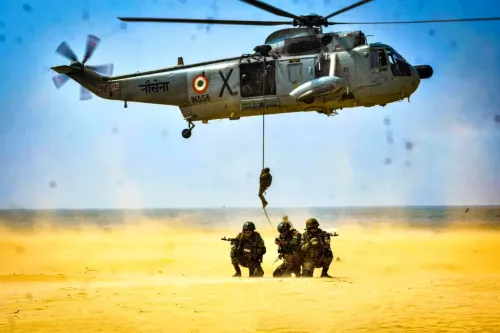
The exercise showcased a wide spectrum of military assets and capabilities. Indian Air Force Jaguar aircraft, remotely piloted aircraft, and other platforms were deployed for aerial reconnaissance. An IAF Mi-17 helicopter airlifted an Army rescue and medical team of 10 personnel into the simulated affected area, also demonstrating a low-hover jump and insertion of Army troops and Air Force Guards.
A Chinook helicopter transported a bridge section to a designated position, while an IAF C-130 airdropped a combat rubberised rescue craft. The Indian Navy deployed marine commandos at sea, and a Navy Dornier aircraft dropped dinghies for survivor rescue. The Indian Coast Guard's Advanced Light Helicopter (ALH) conducted live winching operations.
During the relief and restoration phase, an IAF C-295 carried out an assault landing and inserted Army vehicles before evacuating critical civilian casualties — including two stretcher cases and six seated critical patients. An IAF C-17 subsequently performed an assault landing to insert heavy National Disaster Response Force (NDRF) equipment. Army logistics teams demonstrated the delivery of essential supplies, including blood, to a field hospital via a designated operating corridor.
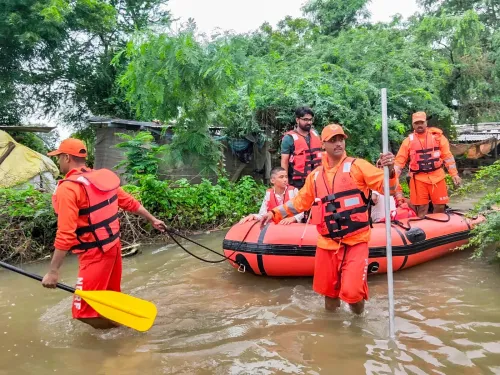
Army rescue teams also demonstrated the use of rescue robots and rescue dogs to locate survivors, while the Army, NDRF, and State Disaster Response Force (SDRF) collectively carried out cutting, lifting, debris removal, and casualty evacuation operations.
QUAD Participation and International Dimension
Notably, the exercise included a QUAD HADR working-level meeting attended by delegates from Australia, India, Japan, and the United States. Officials stated that the exercise was designed to demonstrate 'the importance of timely assistance and cooperation among nations and agencies during emergencies, with the broader objective of strengthening international partnerships and improving the ability to save lives during disasters.'
This international dimension aligns with India's broader strategic posture — positioning itself as a first-mover in regional disaster response while deepening military-to-military cooperation with key Indo-Pacific partners through non-combat frameworks. The exercise concluded with a culmination programme featuring all participating agencies and the National Anthem.
What This Signals Going Forward
As climate-linked extreme weather events increase in frequency and intensity across South Asia and the Indian Ocean region, exercises like Sahayata Setu serve a dual purpose: building genuine operational interoperability and reinforcing India's diplomatic standing as a net security provider. With the QUAD dimension adding a strategic layer to what is ostensibly a humanitarian drill, the exercise underscores how disaster response has become an arena of soft-power projection as much as military preparedness.
Point of View
India is signalling that disaster response has become a theatre for deepening Indo-Pacific alignments, particularly with Australia, Japan, and the United States. The CDS's framing — collective, technology-enabled, boundary-transcending — mirrors the language of India's broader security doctrine. The harder question, which no exercise demonstration can answer, is whether the inter-agency coordination on display in Jamnagar translates to the same speed and coherence when a real cyclone strikes an under-resourced coastal district with no rehearsal script.
NationPress
19 Nov 2026
Frequently Asked Questions
What is the HADR Exercise 'Sahayata Setu' 2026?
'Sahayata Setu' is India's Annual Joint Humanitarian Assistance and Disaster Relief (HADR) Exercise, held from 17 to 19 November 2026 at an Air Force Station in Jamnagar, Gujarat. It is organised by the Indian Air Force under the aegis of HQ Integrated Defence Staff and brings together the Army, Navy, Air Force, NDRF, SDRF, Coast Guard, and delegates from friendly foreign nations to rehearse coordinated disaster response.
What did CDS General N.S. Raja Subramani say at the exercise?
General Subramani stressed that disasters do not recognise geographical boundaries and that India's response must therefore transcend them. He called for a 'self-reliant and technology-enabled HADR capability where jointness is practised before a crisis,' and linked the exercise to India's 'Neighbourhood First' policy and PM Modi's 10-point disaster risk reduction agenda from 2016.
Which countries participated in Sahayata Setu 2026?
The exercise included friendly foreign countries and featured a QUAD HADR working-level meeting on the sidelines attended by delegates from Australia, India, Japan, and the United States. Their participation was highlighted by the CDS as reinforcing the value of collective cross-border preparedness.
What military platforms and assets were deployed during the exercise?
Assets deployed included IAF Jaguar aircraft, remotely piloted aircraft, Mi-17, Chinook, Cheetah, and Coast Guard ALH helicopters, as well as C-130, C-295, and C-17 transport aircraft. The Indian Navy deployed marine commandos and a Dornier aircraft, while Army units demonstrated rescue robots, rescue dogs, and bridging equipment.
What scenario did the exercise simulate?
The exercise simulated a severe cyclone causing widespread flooding, structural collapse, and mass casualties. The demonstration covered the full disaster-response cycle — aerial reconnaissance and evacuation, rescue and casualty management, maritime search and rescue, and the delivery of essential supplies including blood to a field hospital.