Census 2027 in Rajasthan: Online Self-Enumeration Begins May 16
Synopsis
Starting May 16, Rajasthan will initiate the first phase of Census 2027, enabling online self-enumeration from home. This significant shift to digital data collection promises to streamline the process while ensuring comprehensive data accuracy.
Key Takeaways
Census Timeline: May 16 to June 14, 2026.
Online Self-Enumeration: Available from May 1 to May 15, 2026.
Mandatory Household Visits: Enumerators will verify online submissions.
Data Collection: Focused on housing, family size, and amenities.
Confidentiality: All data will be kept confidential.
Jaipur, April 17 (NationPress) The initial phase of the Census 2027 in Rajasthan is set to occur from May 16 to June 14, 2026. This phase will involve a thorough House Listing and Housing Census (HLO).
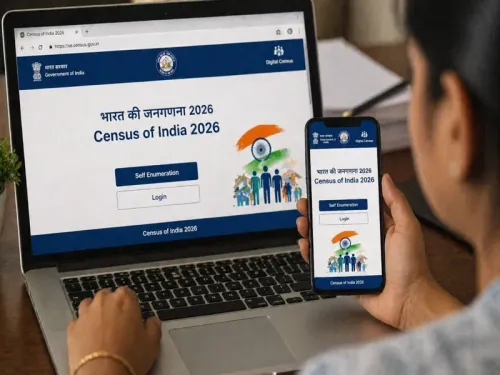
During this period, the focus will be on gathering detailed data regarding homes, properties, and household facilities via a fully digital process. For the first time, residents will have the opportunity to provide their information online from the comfort of their homes using the Self-Enumeration feature available on the official Census website from May 1 to May 15, 2026.
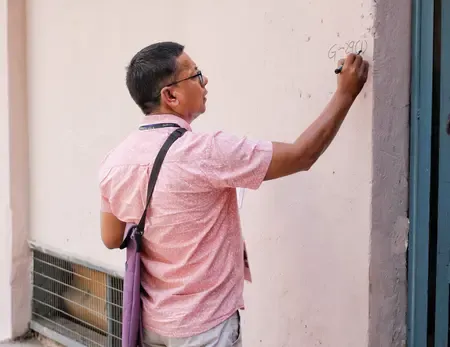
Officials have clarified that despite online submissions, enumerators will still conduct mandatory physical checks at each residence. Rajasthan’s Director of Census Operations, Vishnu Charan Mallick, stated that around 160,000 enumerators and supervisors will be deployed throughout the state for this task. The majority of personnel will be sourced from the Education Department, with an additional 10% held in reserve.
During the survey, officials will gather data using a structured questionnaire consisting of 33 inquiries, addressing critical topics such as housing conditions, family size, access to toilets and drinking water, internet connectivity, mobile phone ownership, cooking gas availability, vehicles, electricity supply, staple foods, and other essential amenities. This data will aid the government in planning and executing development initiatives.
To ensure a smooth operation, comprehensive training is being provided. A total of 103 Master Trainers have completed state-level training, while 2,550 Field Trainers are currently instructing personnel at the district level. Final preparations for enumerators and supervisors will take place from May 1 to May 15.
The entire operation will be executed digitally using mobile applications and online platforms. The Self-Enumeration portal enables households to enter their information via mobile devices or computers. Officials have urged citizens to utilize only the official portal and avoid clicking on unverified links.
Mallick highlighted the importance of not sharing OTPs with anyone, as enumerators will never request them. Official communications will solely be dispatched from the sender ID “RGICEN”. Residents are also encouraged to confirm the identity of enumerators through official identification cards and QR codes.
Officials emphasized that providing accurate and comprehensive information from citizens is vital for effective policy-making. All collected data will remain confidential and utilized exclusively for statistical purposes. Legal measures are in place for those who refuse to cooperate or provide false information; offenders may incur fines up to Rs 1,000 and face imprisonment for up to three years.
In a major departure from traditional practices, the census will be conducted entirely online rather than relying on paper forms. Households can submit their information through a mobile application or the official online portal. The head of the household or any family member can complete the questionnaire if they choose to do so.
To assist with this, a dedicated self-enumeration portal—https://se.census.gov.in—has been established and is accessible via both mobile devices and computers. The operation's monitoring and planning will be conducted through the CMMS portal, while housing unit geo-tagging has already been completed using the HLBC portal. Door-to-door data collection will be conducted using the HLO mobile application.
Mallick reiterated that individuals with multiple residences should provide details based on their primary place of residence. Enumeration of nomadic populations will occur in the second phase.
India’s census occurs under the auspices of the Census Act, 1948, and is categorized under the Union List as per Article 246 of the Constitution. The census system in India is well-established and methodically organized. The first non-synchronous census took place in 1872; the inaugural modern (synchronous) census was conducted in 1881; the last caste census was in 1931; the first census post-Independence was in 1951; and Census 2027 will mark the eighth since Independence and the sixteenth overall.
Point of View
The transition to a digital census in Rajasthan is a significant step towards modernizing public data collection methods. By allowing residents to self-enumerate online, the government aims to enhance data accuracy and accessibility, ensuring that development planning is grounded in reliable information.
NationPress
20 Sept 2026
Frequently Asked Questions
What is the timeline for the Census 2027 in Rajasthan?
The first phase will run from May 16 to June 14, 2026, with online self-enumeration available from May 1 to May 15.
How can residents participate in the census?
Residents can participate by using the Self-Enumeration portal to submit their information online via mobile or computer.
Will enumerators still visit households?
Yes, enumerators will conduct mandatory physical verifications at each household, even after online submissions.
What type of information will be collected?
The census will collect data on housing conditions, family size, access to utilities, and other essential amenities.
Is the information provided confidential?
Yes, all data collected will remain confidential and used solely for statistical purposes.