Centre releases ₹1,09,019 crore tax devolution to states ahead of festive season
Synopsis
The Centre has released a second additional tax devolution tranche of ₹1,09,019 crore to states in a single financial year — matching the August instalment rupee-for-rupee. With Uttar Pradesh alone receiving ₹19,208 crore and the fiscal deficit tracking at 42.1% of the budget estimate at the half-year mark, the move signals both political intent ahead of the festive season and a degree of fiscal confidence at the Centre.
Key Takeaways
The Union Government released ₹1,09,019 crore in additional tax devolution to states on 31 October 2026 , above the regular monthly transfer.
This is the second additional instalment this financial year; an identical tranche was released in August 2026 .
Uttar Pradesh received the highest share at ₹19,208 crore , followed by Bihar (₹10,845 crore) and Madhya Pradesh (₹8,010 crore).
India's fiscal deficit for April–September 2026 stood at ₹7.14 lakh crore , or 42.1% of the full-year budget estimate of ₹16.96 lakh crore .
Net tax revenue reached 44.5% of the full-year estimate, up from 43.3% in the same period last year.
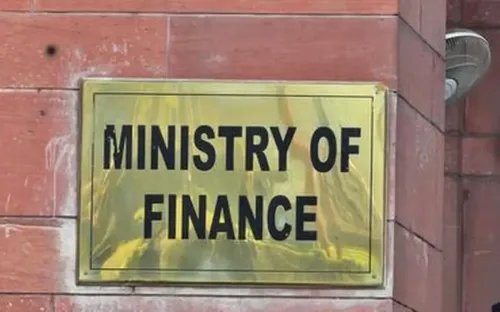
The Union Government on Saturday, 31 October 2026 released an additional instalment of tax devolution worth ₹1,09,019 crore to state governments, over and above the regular monthly devolution. The Finance Ministry said the release is aimed at enabling states to accelerate capital spending and finance development and welfare expenditure ahead of the festive season.
Key Developments
This marks the second additional instalment of tax devolution in the current financial year. An identical tranche of ₹1,09,019 crore was released in August as well, in line with the Centre's stated commitment to strengthen state finances for capital and developmental expenditure.
State-wise Allocation
Uttar Pradesh, India's most populous state, received the largest share at ₹19,208 crore. Bihar followed with ₹10,845 crore, Madhya Pradesh with ₹8,010 crore, West Bengal with ₹7,866 crore, Maharashtra with ₹7,022 crore, and Rajasthan with ₹6,460 crore, among others.
Fiscal Deficit Context
India's fiscal deficit for the first six months (April–September) of the current financial year stood at ₹7.14 lakh crore, constituting 42.1% of the full-year budget estimate. The Centre has budgeted a fiscal deficit of ₹16.96 lakh crore for FY 2026-27.
Revenue Receipts and Tax Collection
Revenue receipts for the first half reached ₹17.57 lakh crore, or 49.7% of the full-year estimate. Of this, net tax revenue was ₹12.76 lakh crore and non-tax revenue stood at ₹4.81 lakh crore. Net tax revenue rose to 44.5% of the full-year estimate, up from 43.3% during the same period last year, while non-tax revenue edged higher to ₹4.8 lakh crore from ₹4.7 lakh crore a year ago.
What This Means for States
The additional devolution provides states with greater fiscal headroom during a period of elevated public expenditure around the festive calendar. Historically, the Centre has used such discretionary releases to front-load capital transfers, allowing states to fast-track infrastructure projects and social schemes before the year-end expenditure crunch. With the fiscal deficit tracking at a manageable 42.1% of the budget estimate at the half-year mark, the release signals that the Centre retains reasonable fiscal flexibility for now.
Point of View
09,019 crore in a single financial year is not routine housekeeping — it is a deliberate fiscal signal. The timing ahead of the festive season, combined with state elections on the horizon in several large states, raises the question of whether these accelerated transfers are purely developmental or carry political calculus. The fiscal deficit sitting at 42.1% at the half-year mark looks comfortable, but that picture depends heavily on second-half tax buoyancy holding up. If GST collections soften or disinvestment slips, the Centre's generosity with states today could tighten its own room tomorrow. The sharper editorial point: the Centre's stated rationale — accelerating capital spending — deserves scrutiny, as state capital expenditure data for the first half consistently trails release schedules, suggesting that liquidity alone does not guarantee deployment.
NationPress
31 Oct 2026
Frequently Asked Questions
What is the additional tax devolution released by the Centre on 31 October 2026?
The Union Government released ₹1,09,019 crore to state governments on 31 October 2026 as an additional instalment of tax devolution, over and above the regular monthly transfer. It is intended to help states accelerate capital spending and fund development and welfare programmes ahead of the festive season.
Which states received the most from this tax devolution instalment?
Uttar Pradesh received the largest allocation of ₹19,208 crore, followed by Bihar at ₹10,845 crore, Madhya Pradesh at ₹8,010 crore, West Bengal at ₹7,866 crore, Maharashtra at ₹7,022 crore, and Rajasthan at ₹6,460 crore.
Is this the first additional devolution instalment this financial year?
No, this is the second additional instalment. The Centre had released an identical tranche of ₹1,09,019 crore in August 2026 as well, also above the normal monthly devolution.
What is India's fiscal deficit position for the first half of FY 2026-27?
India's fiscal deficit for April–September 2026 stood at ₹7.14 lakh crore, which is 42.1% of the full-year budget estimate of ₹16.96 lakh crore. Revenue receipts for the same period reached ₹17.57 lakh crore, or 49.7% of the budget estimate.
Why does the Centre release additional tax devolution instalments?
Additional instalments are released to give states early access to funds, allowing them to fast-track infrastructure projects and welfare spending rather than waiting for the standard end-of-year transfer cycle. The Finance Ministry cited the festive season and the need to accelerate state capital expenditure as the reasons for this release.