Why Did the Centre Withdraw the Wheat Stock Limit Order?
Synopsis
The Central government's recent decision to withdraw the wheat stock limit order due to ample supply and declining prices ahead of the festive season has sparked interest. With wheat stock levels significantly higher and prices dropping, this move aims to ensure food security and stabilize the market.
Key Takeaways
Wheat stock limit order withdrawn due to favorable supply conditions.
Significant increase in wheat stock reported by private entities.
Decline in wholesale prices of wheat observed.
Wheat cultivation area expanded compared to last year.
Government aims to ensure food security during the festive season.
New Delhi, Feb 5 (NationPress) The Central government has opted to retract the wheat stock limit order, originally issued on May 27, 2025, owing to the sufficient availability of wheat and a decline in prices as the festive season approaches, as per an official announcement made on Thursday.
According to the statement, adequate wheat is available to fulfill the needs of the public distribution system (PDS), various welfare schemes, and potential market interventions. The Department of Food and Public Distribution is closely monitoring the prices and stock levels of wheat to ensure easy accessibility throughout the nation.
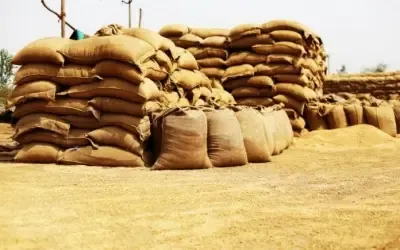
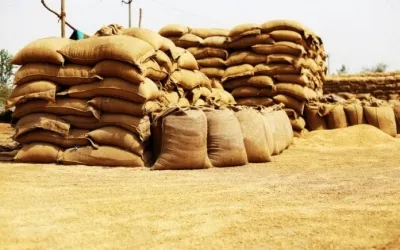
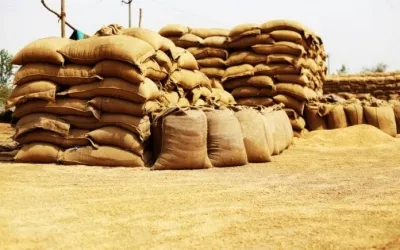
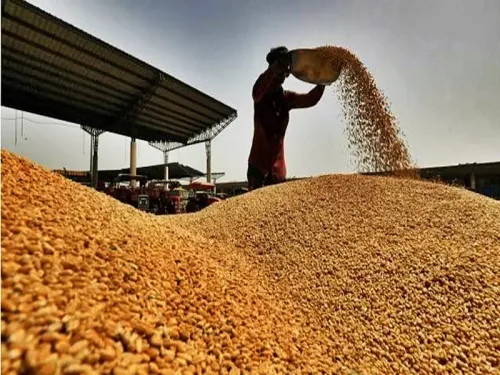
Data from the Department of Food and Public Distribution reveals that the wheat stock reported by private entities for the year 2025–26 shows a significant increase compared to last year. The total stock is approximately 81 lakh metric tonnes, which is about 30 lakh metric tonnes more than the same period in the previous year, indicating a favorable supply situation.
Price trends from the Department of Consumer Affairs demonstrate a downward movement in wheat prices, particularly in the wholesale market. Prices have decreased from Rs 2,970.10 per quintal last year to Rs 2,852.30 per quintal currently, suggesting low demand and excess supply conditions.
The Removal of Licensing Requirements, Stock Limits and Movement Restrictions on Specified Foodstuffs (Amendment) Order, 2025, enacted on May 27, 2025, applies across all states and Union Territories.
This order mandated all wheat stocking entities to declare their stock status every Friday on the food stock portal (https://foodstock.dfpd.gov.in).
In addition, wheat cultivation area has expanded to about 334.17 lakh hectares, compared to 328.04 lakh hectares last year, surpassing the typical expected rabi area, which is likely to result in a higher yield. This demonstrates the ongoing preference among farmers for wheat farming due to guaranteed minimum support price (MSP) and procurement opportunities, signaling the prospect of another abundant harvest.
Point of View
The Central government's withdrawal of the wheat stock limit order reflects a proactive approach to managing food supply and prices. This decision is likely aimed at ensuring food security during the festive period, a time when demand typically surges. As the nation remains vigilant about market conditions, this move aligns with the broader goal of maintaining stability in the agricultural sector.
NationPress
28 Sept 2026
Frequently Asked Questions
What prompted the withdrawal of the wheat stock limit order?
The withdrawal was prompted by sufficient availability of wheat and a decrease in prices ahead of the festive season.
How does this decision affect wheat prices?
The decision is expected to stabilize wheat prices, which have already shown a declining trend.
What is the current stock level of wheat?
The current wheat stock stands at approximately 81 lakh metric tonnes, which is significantly higher than last year.