What Key Steps is the Centre Taking to Reduce Green Hydrogen Production Costs?
Synopsis
India is making significant strides to lower green hydrogen production costs, aiming to become a global hub. The National Green Hydrogen Mission is key to this initiative, targeting 5 million metric tonnes annually by 2030, alongside substantial renewable energy capacity. Discover how these measures will reshape India's energy landscape.
Key Takeaways
India aims for 5 million metric tonnes of green hydrogen production by 2030.
15 companies awarded capacity for electrolyser manufacturing.
Incentives and exemptions are designed to reduce costs .
Green ammonia production is key for industrial applications .
Commitment to clean energy transition is evident.
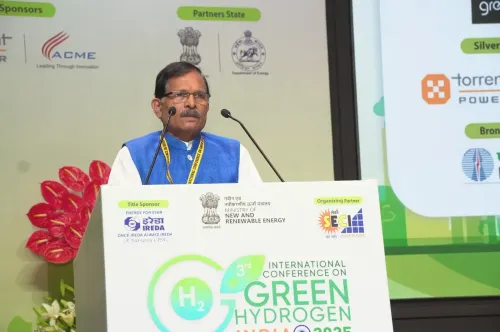
New Delhi, Feb 3 (NationPress) The Indian government is actively taking significant measures to reduce the production costs of green hydrogen, establishing the nation as a global leader in its manufacturing, usage, and export, as stated by Union Minister of State for New and Renewable Energy Shripad Yesso Naik in a written reply to the Rajya Sabha.
The National Green Hydrogen Mission (NGHM) serves as the foundation of these initiatives, with the goal of positioning India as a top player in the green hydrogen sector. The mission aims to achieve a production capacity of 5 million metric tonnes of green hydrogen per year by 2030, backed by an additional 125 GW of renewable energy capacity.
To facilitate reductions in production costs, the government has rolled out incentives for production and supportive policies. Under the electrolyser manufacturing incentive scheme, 15 companies have been granted a total manufacturing capacity of 3,000 MW per year, with total incentives amounting to Rs 4,440 crore. Electrolysers play a vital role in the production of green hydrogen by enabling the electrolysis process powered by renewable energy.
Moreover, the incentive scheme for green hydrogen production has allocated a cumulative capacity of 8,62,000 tonnes per year to 18 companies. Additionally, two companies have been awarded a production capacity of 20,000 tonnes per year specifically for procuring green hydrogen for refineries.
The minister also noted that the Solar Energy Corporation of India has determined prices for the production and supply of 7,24,000 tonnes of green ammonia annually, which is a significant derivative of green hydrogen, to 13 fertilizer units nationwide. This move emphasizes the efforts to establish a stable demand and incorporate green hydrogen into industrial applications.
Other initiatives aimed at cost reduction include exemptions from Inter-State Transmission System (ISTS) charges for green hydrogen and green ammonia plants that utilize renewable energy and are commissioned by December 31, 2030, lasting for 25 years from the commissioning date.
Furthermore, duty benefits have been granted under Section 26 of the SEZ Act, 2005, for units that install and operate renewable energy equipment solely for their own use in green hydrogen production. The government is also optimizing the energy mix for green hydrogen by swiftly expanding low-cost renewable energy through competitive bidding, large-scale solar and wind projects, and frameworks that enable standard bidding guidelines for various renewable initiatives.
Exemptions from certain model approval requirements for renewable equipment in special economic zones or export-oriented units supplying power to green hydrogen facilities have also been established, along with the facilitation of 100 percent foreign direct investment through the automatic route.
These comprehensive initiatives, combined with the development of green energy corridors and transmission infrastructure, aim to ensure affordable and scalable production of green hydrogen while propelling India's transition to clean energy and diminishing dependence on fossil fuels.
Point of View
I believe that India's proactive measures towards reducing green hydrogen production costs demonstrate a commendable commitment to sustainable energy. This initiative not only positions India as a potential leader in the green hydrogen sector but also underscores the necessity of transitioning to cleaner energy sources to combat climate change and ensure energy security.
NationPress
30 Sept 2026
Frequently Asked Questions
What is the National Green Hydrogen Mission?
The National Green Hydrogen Mission (NGHM) is a government initiative aimed at making India a leading player in the green hydrogen ecosystem, targeting a production capacity of 5 million metric tonnes per year by 2030.
How much capacity has been awarded to companies for electrolyser manufacturing?
15 companies have been awarded a total manufacturing capacity of 3,000 MW per annum under the incentive scheme for electrolyser manufacturing.
What incentives are provided for green hydrogen production?
The government has introduced production incentives and supportive policies, including exemptions from ISTS charges and duty benefits under the SEZ Act for units producing green hydrogen.
How does green hydrogen contribute to India's energy transition?
Green hydrogen plays a crucial role in India's clean energy transition by reducing reliance on fossil fuels and promoting sustainable energy solutions.
What is the significance of green ammonia in this context?
Green ammonia is a key derivative of green hydrogen, and its production is integral to integrating green hydrogen into industrial applications, ensuring a stable demand.