Will India Achieve 5 Million Metric Tonnes of Green Hydrogen Capacity by 2030?
Synopsis
India is aiming to become a significant player in the global green hydrogen market with plans to achieve a capacity of 5 million metric tonnes by 2030. The National Green Hydrogen Mission includes various incentives and initiatives aimed at making this vision a reality. Discover the details behind this ambitious plan and its implications for India's energy landscape.
Key Takeaways
India aims for 5 million metric tonnes of green hydrogen by 2030.
National Green Hydrogen Mission focuses on sustainable energy.
Incentives for electrolyser manufacturing and production.
Emphasis on reducing costs for green hydrogen.
Commitment to achieving net-zero emissions by 2070.
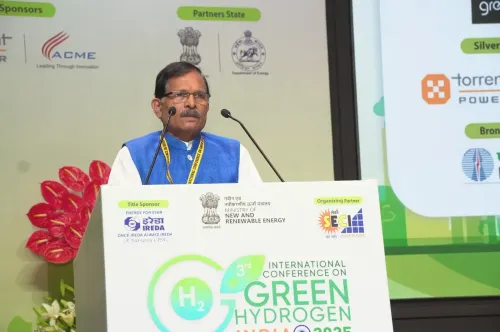
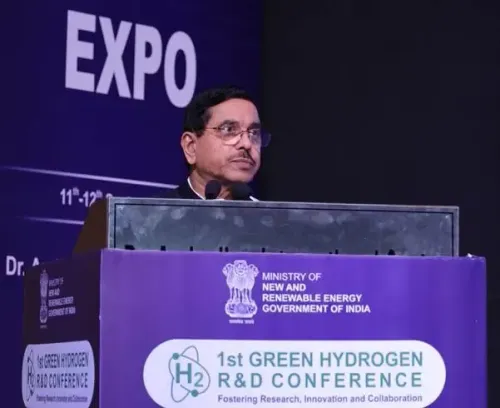
New Delhi, Dec 16 (NationPress) India's capacity for producing green hydrogen is expected to hit 5 million metric tonnes annually by 2030, as disclosed in Parliament on Tuesday. The National Green Hydrogen Mission (NGHM) seeks to position India as a leading center for the production, utilization, and export of green hydrogen and its derivatives, stated Shripad Yesso Naik, Minister of State for New and Renewable Energy, in a written response to the Rajya Sabha.
The minister elaborated on the various incentives and manufacturing initiatives under the NGHM aimed at lowering the cost of green hydrogen.
As part of the electrolyser manufacturing incentive program, 15 companies have been granted a collective manufacturing capacity of 3,000 MW annually, alongside incentives totaling Rs 4,440 crore. For green hydrogen production, 18 companies have been awarded a combined production capacity of 862,000 tonnes per annum.
Additionally, two companies have received incentives for producing 20,000 tonnes annually for refineries, as the minister noted.
To further decrease costs, there are exemptions from interstate transmission system charges for 25 years for plants that are operational on or before December 31, 2030, according to an official statement.
Moreover, duty benefits have been authorized under Section 26 of the Special Economic Zones Act, 2005, for both the installation and operation and maintenance (O&M) of renewable energy equipment solely for the captive consumption of the unit.
The Ministry of New and Renewable Energy is also backing a research and development initiative named 'Scale‑up of Perovskite Tandem Solar Cells (Phase‑I)' with a total investment of Rs. 83.19 crore to enhance and indigenize perovskite tandem solar cell technology.
Naik mentioned last month that India is on a steady path towards achieving 500 GW of non-fossil energy capacity by 2030 and aims for net-zero emissions by 2070.
The minister emphasized the transition of the National Green Hydrogen Mission from planning to execution, which includes incentive initiatives valued at Rs 17,000 crore and projects authorized for 3,000 MW per annum of domestic electrolyser manufacturing and 862,000 tonnes per annum of green hydrogen production.
Point of View
The developments surrounding India's green hydrogen initiatives signify a critical shift towards sustainable energy solutions. As the world grapples with climate change, India's commitment to achieving 5 million metric tonnes of green hydrogen capacity by 2030 showcases its dedication to leading in renewable energy. This mission not only aims to enhance the country's energy security but also positions India as a potential global leader in green hydrogen technology.
NationPress
26 Oct 2026
Frequently Asked Questions
What is the National Green Hydrogen Mission?
The National Green Hydrogen Mission (NGHM) is an initiative by the Indian government aimed at making India a global hub for the production, utilization, and export of green hydrogen and its derivatives.
How much green hydrogen capacity is India targeting by 2030?
India is targeting a green hydrogen production capacity of 5 million metric tonnes per annum by 2030.
What incentives are provided under the NGHM?
The NGHM offers various incentives for electrolyser manufacturing and green hydrogen production, including financial support and exemptions from certain charges.
What is the significance of green hydrogen?
Green hydrogen is a clean fuel produced from renewable energy sources, and it plays a vital role in reducing carbon emissions and transitioning towards sustainable energy.
How is India progressing towards its renewable energy goals?
India is making steady progress towards achieving 500 GW of non-fossil energy capacity by 2030 and aims for net-zero emissions by 2070.