Is Chennai's Poondi Reservoir Nearly Full as the City Prepares for Future Water Needs?
Synopsis
Chennai's water security has reached new heights due to timely interventions by the Tamil Nadu Water Resources Department and significant rainfall. With Poondi reservoir nearing full capacity and additional reservoirs supporting the supply, the city is well-prepared for its water needs over the next year. Discover how these measures ensure a sustainable water future.
Key Takeaways
Poondi reservoir is nearing full capacity.
WRD has effectively managed water resources.
Chennai's monthly water requirement is around 1,000 mcft.
Combined storage across reservoirs is 11,749 mcft .
Officials assure sufficient supply for the next 11 months .
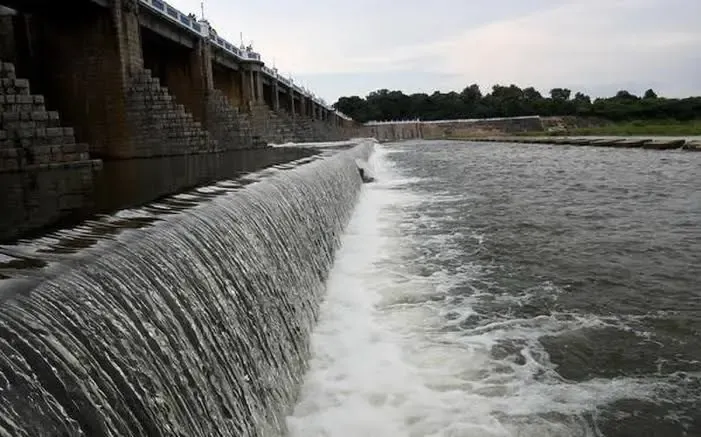
Chennai, Dec 8 (NationPress) The city’s water supply security for the upcoming year has been notably enhanced due to timely actions by the Tamil Nadu Water Resources Department (WRD) and plentiful northeast monsoon rainfall, which collectively enabled significant reservoirs, particularly Poondi, to achieve near-full storage capacity.
In order to optimize monsoon water usage, the WRD requested Andhra Pradesh in late October to temporarily cease releasing water from the Kandaleru reservoir into Poondi. This strategic move allowed the reservoir to naturally fill up with substantial inflows from its catchment area and neighboring parts of Andhra Pradesh. Officials noted that the inflow from Kandaleru was paused after determining that natural water availability would sufficiently replenish the storage.
With Poondi approaching its full capacity, the WRD has indicated that the resumption of the Kandaleru water supply will begin only in April of next year. “The abundant rainfall this season in Poondi’s catchment and surrounding areas has been crucial in boosting storage levels,” a senior WRD official stated.
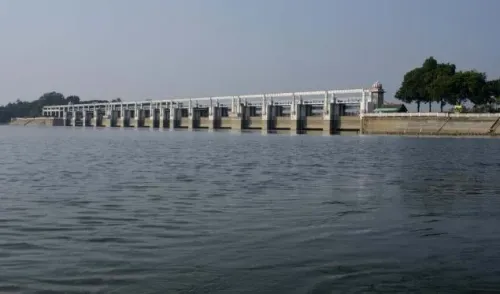
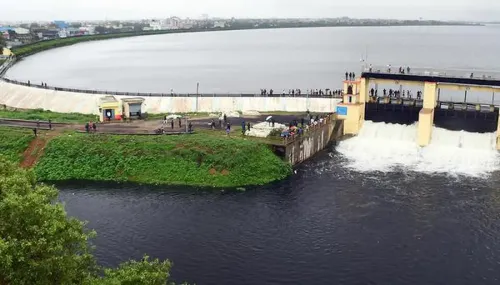
Currently, Poondi reservoir contains 3,114 million cubic feet (mcft) of water, which is approximately 96 percent of its total capacity of 3,231 mcft. Chennai's monthly drinking water requirement is around 1,000 mcft. The combined storage across the city’s six reservoirs, including the Veeranam tank in Cuddalore district, totals 11,749 mcft against a total capacity of 13,222 mcft, guaranteeing sufficient supply for at least the next 11 months.
With water availability at satisfactory levels, Metrowater has increased the daily water supply to consumers to 1,230 million litres per day (mld), up from 1,091 mld during the same period last year. Since Poondi lacks a water treatment facility, around 40 mld of water is redirected daily to the Red Hills reservoir, where it undergoes treatment before distribution across the city.
The Veeranam tank is currently retaining 978 mcft, roughly 67 percent of its full capacity of 1,465 mcft, further enhancing supply reliability.
Among other reservoirs, Cholavaram is at 579 mcft against its full capacity of 1,081 mcft. The Red Hills reservoir, which has a capacity of 3,300 mcft, is nearly full at 3,251 mcft. Kannankottai Thervoikandigai is also in a favorable state with 464 mcft stored against its 500 mcft capacity.
Officials have expressed confidence that, with these storage levels, Chennai’s drinking water requirements will be adequately met for at least the coming year.
Point of View
It is critical to highlight the proactive measures taken by the Tamil Nadu Water Resources Department in ensuring Chennai's water security. The collaborative efforts during the northeast monsoon have resulted in near-full reservoirs, providing a buffer for the city's drinking water needs. This situation exemplifies effective resource management in a region often challenged by water scarcity.
NationPress
22 Oct 2026
Frequently Asked Questions
What is the current status of the Poondi reservoir?
The Poondi reservoir currently holds 3,114 million cubic feet of water, which is about 96% of its total capacity of 3,231 mcft.
How much water does Chennai require monthly?
Chennai's monthly drinking water requirement is approximately 1,000 million cubic feet.
What actions did the WRD take for effective water management?
The WRD requested Andhra Pradesh to temporarily stop releasing water from the Kandaleru reservoir to allow Poondi to fill naturally.
What is the status of other reservoirs in Chennai?
Other reservoirs like Veeranam and Red Hills are also at significant storage levels, ensuring a stable water supply.
Will Chennai have sufficient water supply for the next year?
Yes, officials are confident that the current storage levels will comfortably meet Chennai’s drinking water needs for at least the next year.