Why Are Chhattisgarh Government Employees on Strike?
Synopsis
In a significant move, around 450,000 government employees in Chhattisgarh have begun a three-day strike, demanding urgent action on their 11-point charter. Could this protest lead to a larger movement if their needs remain unmet?
Key Takeaways
Approximately 450,000 employees are on strike.
The strike is organized by the Chhattisgarh Employees and Officers Federation .
Demands include the implementation of dearness allowance at central rates.
Possible escalation of protests if demands are unmet.
Significant disruption to government services is already occurring.
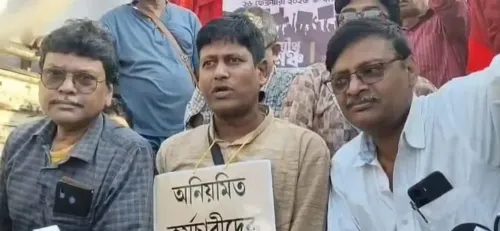
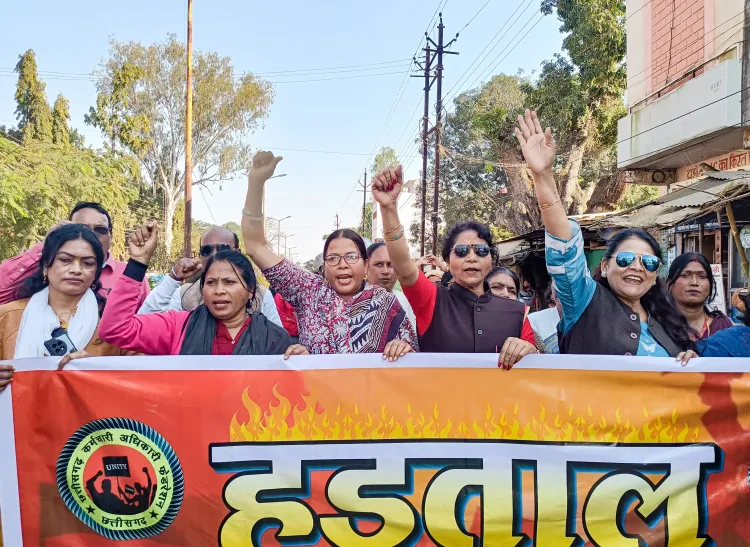
Raipur, Chhattisgarh, Dec 29 (NationPress) Approximately 450,000 government employees throughout Chhattisgarh initiated a three-day statewide strike on Monday, organized by the Chhattisgarh Employees and Officers Federation. They are advocating for the implementation of their 11-point charter of demands.
This protest, characterized as a total work stoppage and pen-down action, is set to last until December 31, likely causing significant disruptions in administrative operations at both the block and district levels across the state. Federation leaders have cautioned that if their demands are not met after this period, a more vigorous movement will commence.
The strike follows previous appeals to the government, including memorandums presented earlier this year, which went unanswered regarding critical issues affecting both employees and pensioners. A primary demand is the implementation of dearness allowance and dearness relief at rates consistent with those of the central government, aligning with what employees refer to as promises made by Prime Minister Narendra Modi.
Additionally, they are requesting the adjustment of pending dearness allowance arrears since 2019 into employees' general provident fund accounts. Another significant issue involves the disclosure of the Pingua Committee report, which aims to address pay discrepancies impacting various groups, including teachers, clerks, health department personnel, and employees involved in women and child development.
The federation is advocating for a four-tier time-bound promotional pay scale based on years of service: 8, 16, 24, and 32 years. They propose that assistant teachers and assistant veterinary officers receive a three-tier scale, while urban local body employees are demanding regular monthly salaries and time-bound promotions.
Other requests include the introduction of cashless medical facilities akin to those in other BJP-ruled states, issuing permanent directives for unconditional compassionate appointments without the current 10 percent limit, and extending these provisions to all direct recruitment roles. They are also seeking an increase in earned leave encashment to 300 days similar to Madhya Pradesh.
Employees further demand that all service benefits be calculated from their initial appointment date, the regularization of Panchayat Secretaries, raising the retirement age to 65 years due to staffing shortages, and the permanent regularization of work-charged, irregular, daily wage, and contractual staff.
On the strike's first day, many offices remained largely empty, and routine government operations were significantly affected.
The federation has been conducting outreach initiatives to garner support, emphasizing that the agitation is focused on securing long-overdue rights and benefits for the state's workforce. The government has yet to provide an official response to the ongoing strike.
Point of View
It's essential to recognize the gravity of the situation in Chhattisgarh. The ongoing strike by government employees highlights persistent issues that require immediate attention. While the demands of the federation are critical for the welfare of the employees, the government's response will be key in determining the future stability of public services in the state.
NationPress
24 Sept 2026
Frequently Asked Questions
What are the key demands of the striking employees?
The striking employees are advocating for the implementation of dearness allowance and relief at central government rates, adjustment of pending arrears, and the release of the Pingua Committee report among other demands.
How many employees are participating in the strike?
Approximately 450,000 government employees across Chhattisgarh are participating in the strike.
What impact is the strike having on government services?
The strike is causing significant disruptions in administrative functions, leading to many offices being largely empty and routine government work coming to a standstill.
What will happen if their demands are not met?
Federation leaders have indicated that if their demands remain unaddressed after this phase, a more intense movement is likely to follow.
Is the government responding to the strike?
As of now, the government has not provided an official response to the ongoing strike.