Has the Area Sown Under Rabi Crops Surpassed 614 Lakh Hectares?

Synopsis
The increase in the sown area for rabi crops signals a promising outlook for agricultural production, potentially benefiting farmers and the economy. This report highlights crucial statistics from the Ministry of Agriculture and discusses the implications of the rising minimum support prices.
Key Takeaways
614.30 lakh hectares of rabi crops sown this season.
Increase of 6.87 lakh hectares compared to last year.
Higher production expected to boost farmer incomes.
Rising minimum support prices for various crops.
Improved weather conditions aiding crop sowing.
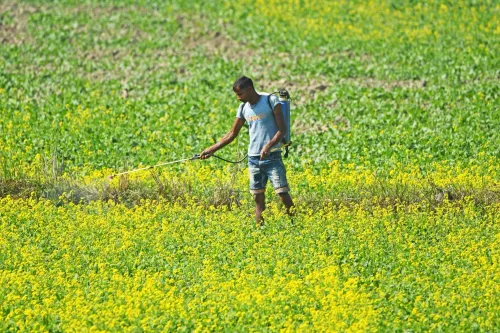
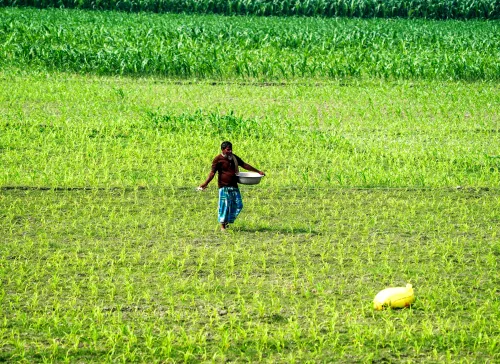
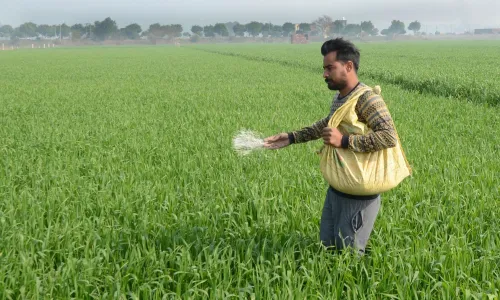
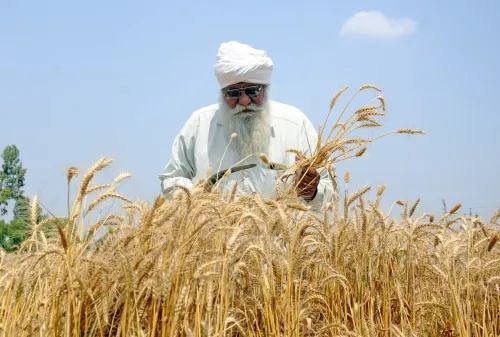
New Delhi, Dec 29 (NationPress) The area cultivated with rabi crops this winter has witnessed a substantial rise of 6.87 lakh hectares, bringing the total to 614.30 lakh hectares as of December 26 this year. This is a notable increase from 607.43 lakh hectares during the same timeframe last year, as reported by the Ministry of Agriculture and Farmers Welfare.
The growth in sown area is anticipated to boost production levels, thereby enhancing farmer incomes and aiding in controlling food inflation.
Official data indicates that the area allocated for wheat has increased to 322.68 lakh hectares, compared to 322.49 lakh hectares from the previous year.
Additionally, the area designated for pulses, including Urd, Lentils (Masur), gram, and Moong, has grown by 3.65 lakh hectares to 133.44 lakh hectares from 129.79 lakh hectares last year.
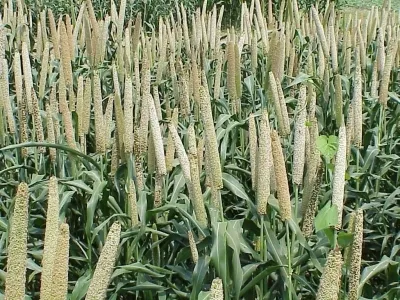
The coverage for coarse cereals or millets such as jowar, bajra, and ragi has expanded to 49 lakh hectares this season, up from 48.89 lakh hectares in the same period last year.
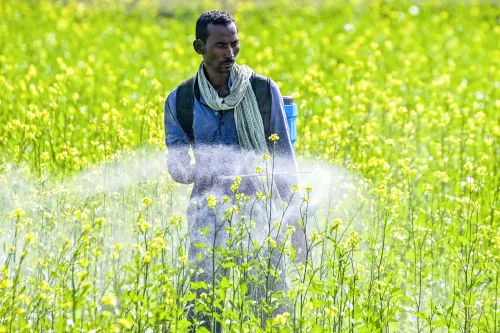
Furthermore, the area under oilseeds like rapeseed and mustard has risen by 1.04 lakh hectares, reaching 94.29 lakh hectares compared to 93.25 lakh hectares last year.
This increase in sown area is largely due to favorable monsoon conditions which have improved sowing capabilities in unirrigated regions, comprising nearly 50 percent of the nation's agricultural land.
On another note, the Cabinet Committee on Economic Affairs (CCEA) approved a rise in the minimum support prices (MSP) for all designated rabi crops for the 2026-27 marketing season on October 1, ensuring profitable pricing for farmers.
The MSP is set ahead of the sowing season, allowing farmers to devise their planting strategies to maximize earnings.
The most considerable MSP hike has been declared for safflower at Rs. 600 per quintal, followed by lentil (Masur) at Rs. 300 per quintal. The increases for rapeseed and mustard, gram, barley, and wheat are Rs. 250, Rs. 225, Rs. 170, and Rs. 160 per quintal, respectively.
This adjustment in MSP aligns with the Union Budget 2018-19 commitment to setting MSP at no less than 1.5 times the All-India weighted average production cost.
The anticipated margins over the All-India average production cost are 109 percent for wheat, 93 percent for rapeseed and mustard, 89 percent for lentils, 59 percent for gram, 58 percent for barley, and 50 percent for safflower.
This increase in MSP for rabi crops will guarantee profitable prices for farmers and encourage diversification in crops.
The production costs for these crops encompass all expenses such as labor, land rent, material inputs like seeds and fertilizers, irrigation charges, and additional operational costs, as detailed in the official statement.
Point of View
It is essential to acknowledge the positive trends in rabi crop sowing. The increased area indicates resilience in agriculture amidst challenges, reflecting the government's commitment to supporting farmers through enhanced pricing strategies. This aligns with our ongoing focus on food security and farmer welfare.
NationPress
20 Sept 2026
Frequently Asked Questions
What is the current area sown under rabi crops?
As of December 26, the area sown under rabi crops has reached 614.30 lakh hectares.
How much has the area under rabi crops increased compared to last year?
The area has increased by 6.87 lakh hectares compared to 607.43 lakh hectares last year.
What is the significance of the increase in minimum support prices?
The increase in minimum support prices ensures better profitability for farmers, encouraging them to grow more rabi crops.
Which crops have shown significant growth in area sown?
Wheat, pulses, coarse cereals, and oilseeds have all shown significant growth in sown area this season.
Why is the sown area increasing this season?
The increase is primarily due to favorable monsoon rains that have aided sowing in unirrigated areas.