Has Rabi Crop Sowing Surpassed 393 Lakh Hectares with Wheat Seeing a 16.9% Surge?
Synopsis
The surge in rabi crop sowing to 393.07 lakh hectares reflects improved agricultural conditions and support for farmers. With wheat seeing a significant 16.9% rise, the government's initiatives ensure better profitability for cultivators and stability in food prices. Discover how these developments shape the agricultural landscape.
Key Takeaways
Total rabi crop area reached 393.07 lakh hectares.
Wheat sowing increased by 16.91%.
Pulses area expanded to 87.01 lakh hectares.
Oilseeds saw a rise to 80.53 lakh hectares.
Government's MSP adjustments aim to benefit farmers.
New Delhi, Dec 1 (NationPress): The total area cultivated for rabi crops during the current winter season has risen by 35.33 lakh hectares, reaching 393.07 lakh hectares as of November 28. This is a notable increase from the 357.73 lakh hectares recorded during the same timeframe last year, according to the data released by the Ministry of Agriculture and Farmers Welfare on Monday.
This expansion in sown area is anticipated to enhance production, ultimately boosting farmers' incomes and aiding in the control of food inflation.
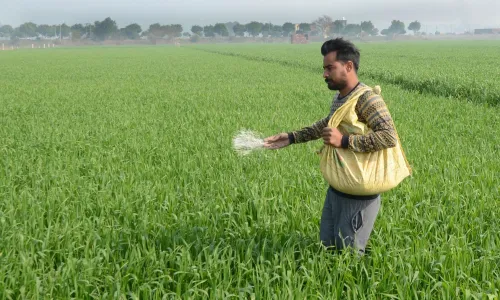
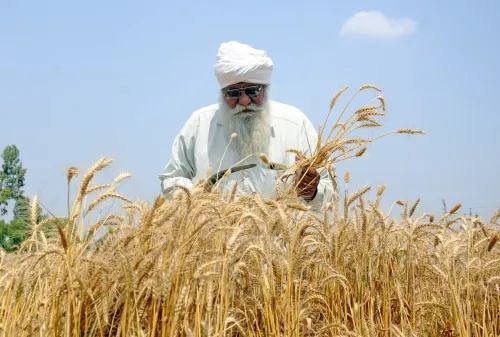
Official statistics reveal that the area designated for wheat has surged by 16.91%, climbing to 187.37 lakh hectares from 160.26 lakh hectares in the previous year.
The area for pulses, including urad, lentils (masur), and moong, has increased to 87.01 lakh hectares, up from 85.06 lakh hectares during the same period last year.
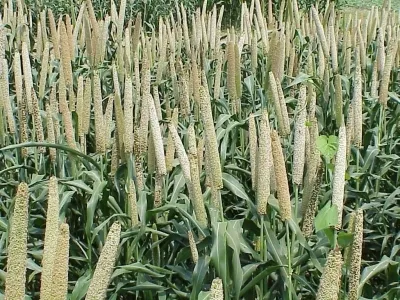
Additionally, the area covered by coarse cereals or millets, such as jowar, bajra, and ragi, has risen by 2.48 lakh hectares to 29.06 lakh hectares this season, compared to 26.58 lakh hectares in the previous year.
For oilseeds like rapeseed and mustard, the area has expanded by 3.14 lakh hectares to 80.53 lakh hectares, up from 77.38 lakh hectares last year.
This increase in sown area is attributed to improved monsoon rains facilitating planting in unirrigated regions, which occupy nearly 50% of the nation's farmland.
The Cabinet Committee on Economic Affairs (CCEA), led by Prime Minister Narendra Modi, approved an increase in the minimum support prices (MSP) for all mandated rabi crops for the 2026-27 marketing season on October 1, ensuring favorable prices for growers.
These prices are announced prior to the sowing season, allowing farmers to strategize their cropping plans for optimal earnings.
The highest MSP increase has been set for safflower at Rs 600 per quintal, followed by lentil (masur) at Rs 300 per quintal. Other increases include Rs 250 for rapeseed & mustard, Rs 225 for gram, Rs 170 for barley, and Rs 160 for wheat.
This adjustment in MSP aligns with the Union Budget 2018-19 commitment to set MSP at a level of at least 1.5 times the All-India weighted average cost of production. The anticipated margin over this cost is 109% for wheat, 93% for rapeseed & mustard, 89% for lentils, 59% for gram, 58% for barley, and 50% for safflower. This enhanced MSP will provide farmers with adequate pricing and encourage crop diversification.
The cost of production encompasses all paid-out expenses, including those related to hired labor, machine usage, land rent, and input materials like seeds and fertilizers, along with other miscellaneous costs, as noted in the official statement.
Point of View
The significant increase in rabi crop sowing is a positive indicator of agricultural resilience and economic stability. The government's commitment to enhancing minimum support prices demonstrates a proactive approach to support farmers. This initiative, amidst favorable climatic conditions, not only promises better yields but also aims to address food inflation, ensuring a balanced agricultural economy.
NationPress
5 Oct 2026
Frequently Asked Questions
What is the current area sown for rabi crops?
As of November 28, the area sown for rabi crops has increased to 393.07 lakh hectares.
What percentage increase has been observed in wheat sowing?
Wheat sowing has recorded a significant increase of 16.91% compared to last year.
How do minimum support prices affect farmers?
Minimum support prices ensure farmers receive fair compensation for their crops, which incentivizes production and helps stabilize income.
Why is the increase in rabi crops significant?
The increase in rabi crops is crucial as it can lead to higher production, boosting farmers' incomes and contributing to food security.
What factors contributed to the increase in sowing area?
Better monsoon rains have facilitated sowing in unirrigated areas, which comprise nearly 50% of the country's farmland.