Khattar at FICCI AGM: 50 crore lifted from poverty in 12-13 years
Synopsis
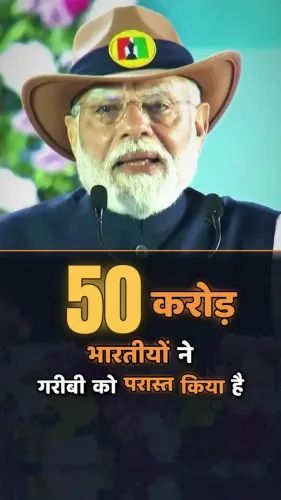
Union Minister Manohar Lal Khattar told the FICCI AGM on 19 November 2026 that India lifted 50 crore people out of poverty in 12-13 years, crediting the right policies and intent, and called India's current reform trajectory a 'guarantee of national success.'
Key Takeaways
Union Minister Manohar Lal Khattar addressed the FICCI Annual General Meeting on 19 November 2026 .
He claimed 50 crore Indians exited poverty in 12-13 years , attributing the shift to 'right policies and right intent.' The claim draws on the framework of NITI Aayog's Multidimensional Poverty Index , which tracks health, education, and living-standards indicators alongside income.
Large-scale welfare programmes — housing, cooking fuel, sanitation, and direct benefit transfers — are the primary policy instruments cited in MPI improvement data.
Khattar declared India's current path 'correct, precise, and a guarantee of the country's success,' positioning welfare delivery as an investment signal for industry.
The next NITI Aayog MPI update and Economic Survey will be key to verifying the precise figure.
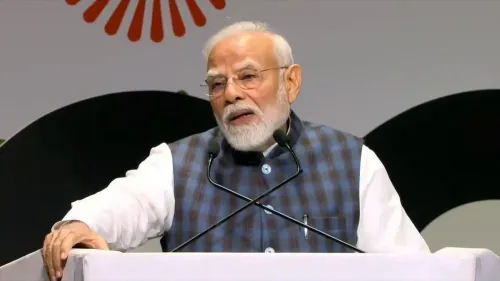
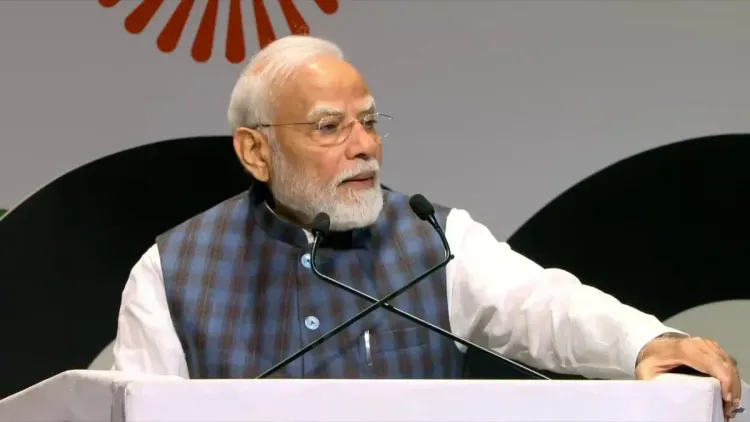
Fifty crore Indians pulled out of poverty in barely a dozen years — that was the centrepiece claim Union Power Minister Manohar Lal Khattar placed before the country's top industry body at the FICCI Annual General Meeting on Thursday, 19 November 2026, making a pointed case that India's current policy direction carries a 'guarantee of national success.'
Speaking at the gathering of the Federation of Indian Chambers of Commerce and Industry (FICCI), Khattar said, 'jab sahi neetiyon ke saath kaam hua, sahi niyat ke saath sarkar aage badhi' — 'when work was done with the right policies, when the government moved forward with the right intent' — the result was a poverty reduction of historic scale. The figure of 50 crore people exiting poverty over 12-13 years, he argued, was not an accident but a proof of concept for the reform path India is now on.
The poverty-reduction numbers and what drives them
The claim draws from the framework of multidimensional poverty measurement that NITI Aayog has tracked through its Multidimensional Poverty Index (MPI) reports since 2023. Those reports map poverty not just by income, but across health, education, and living-standards indicators — a wider lens that tends to capture welfare gains from schemes such as Pradhan Mantri Awas Yojana (housing), Ujjwala Yojana (cooking fuel), Swachh Bharat Mission (sanitation), and direct benefit transfers. Each of those programmes scales to hundreds of millions of beneficiaries, making large headline reductions arithmetically plausible even if the precise 50 crore figure in the minister's speech could not be independently verified against published MPI data at the time of this report.
Why FICCI, and why now
The choice of platform matters. FICCI's AGM draws boardroom India — investors, industrialists, and global business delegations. For the government, dropping a macro-poverty statistic here is a deliberate signalling exercise: poverty decline is reframed as an investment thesis, proof that a stable, delivery-oriented state can underwrite long-horizon capital. Khattar's framing — 'the path is correct, precise, and guarantees the country's success' — aligns with a broader government narrative linking welfare delivery to economic reform, digital public infrastructure, and an expanding middle class as drivers of consumption-led growth.
The minister currently holds the Power and Housing and Urban Affairs portfolios, two ministries directly tied to the electrification and housing programmes often cited in MPI improvement data. His presence at the FICCI AGM underscores how infrastructure-linked welfare is increasingly marketed as an economic growth story, not merely a social-spending one.
India's next NITI Aayog MPI update and the upcoming Economic Survey chapter on poverty and consumption trends will be watched closely to put hard numbers behind the claim — and to tell us whether the trajectory holds.
Point of View
The government signals policy continuity to capital markets and positions social-sector spending as a structural growth driver. The 50-crore figure, drawn loosely from NITI Aayog's multidimensional framework, is notably larger and more politically resonant than narrower income-poverty estimates — a deliberate rhetorical choice. As India approaches the next budget cycle, expect this 'proof of delivery' framing to intensify in both domestic and global investor forums.
NationPress
19 Nov 2026
Frequently Asked Questions
What did Manohar Lal Khattar say at the FICCI AGM 2026?
Union Minister Manohar Lal Khattar said that 50 crore Indians were lifted out of poverty in 12-13 years due to the right government policies and intent, calling India's current path a 'guarantee of national success.'
Is the claim of 50 crore Indians exiting poverty verified?
The claim is based on the framework of NITI Aayog's Multidimensional Poverty Index, but the precise figure of 50 crore over 12-13 years had not been independently verified against officially published MPI data at the time of this report.
What is the NITI Aayog Multidimensional Poverty Index?
NITI Aayog's MPI is an index that measures poverty across health, education, and living-standards indicators — not just income — giving a broader picture of deprivation across Indian households.
What government schemes are credited with reducing poverty in India?
Key schemes include Pradhan Mantri Awas Yojana for housing, Ujjwala Yojana for cooking fuel, Swachh Bharat Mission for sanitation, and direct benefit transfer programmes, all of which are reflected in MPI improvement data.
Why did Khattar raise poverty reduction at the FICCI Annual General Meeting?
FICCI's AGM is attended by top industrialists and investors; the government used the platform to signal that large-scale poverty reduction is evidence of policy stability and a sound investment climate in India.