Anurag Thakur Asks Hamirpur Voters to Flag What Still Needs Fixing
Synopsis
BJP MP Anurag Thakur has publicly acknowledged voter distrust stemming from past governments and called on Hamirpur constituents to write to him without hesitation about what reforms are still needed, framing the current dispensation as a 'friendly government' that listens.
Key Takeaways
Anurag Thakur , BJP Lok Sabha MP from Hamirpur, Himachal Pradesh , posted the appeal on 19 November 2026 .
He openly acknowledged that voters' bitter experiences with previous governments have created distrust he must now navigate.
He explicitly contrasted the current government with past administrations, calling it a 'dost sarkar' — a friendly government.
He invited constituents to write to him 'openly and without hesitation' listing reforms they still consider necessary.
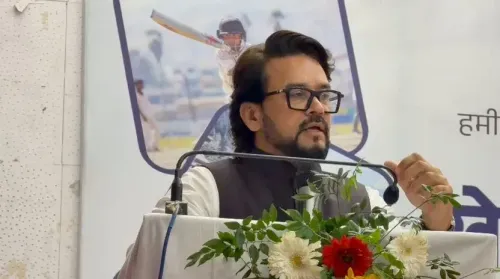
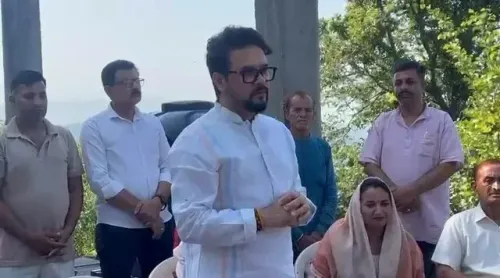
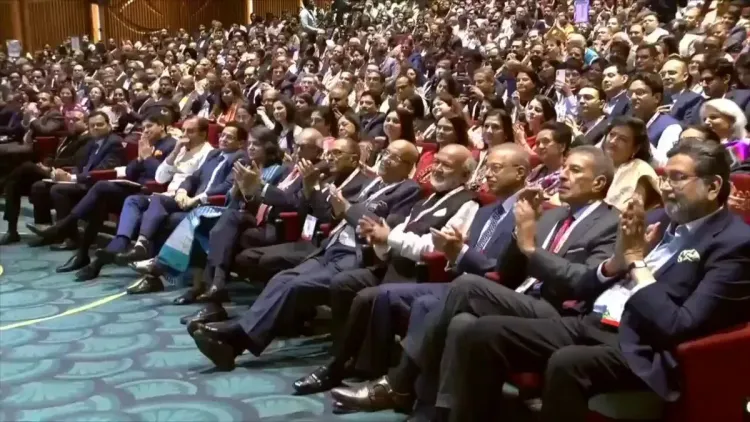
The post included a video, suggesting a targeted community or town-hall address rather than a generic broadcast.
Himachal Pradesh's history of alternating party governments makes this kind of trust-building outreach a recurring political strategy in the state.
Governance feedback rarely comes with an open invitation — but BJP MP Anurag Thakur is asking his constituents to send exactly that, without hesitation, without filter. In a post on X on Thursday, 19 November 2026, the Hamirpur MP acknowledged the public's accumulated distrust of past administrations and turned it into a direct call for written suggestions on what still needs to improve.
Translating from Hindi: 'Aapka purani sarkaron ka anubhav itna khatta hai ki uska khamiyaza mujhe bhugna pad raha hai' — 'Your experience with old governments has been so bitter that I am paying the price for it.' Thakur then pivoted: 'This is not the old government, this is a friendly government. It knows how to honour friendship, and you are my true friends. So without hesitation, without reluctance, write to me openly about what reforms are still needed.'
Turning Voter Fatigue Into a Feedback Loop
The message is a studied piece of constituency outreach. By openly conceding that voters carry scars from previous governments — a pointed reference in Himachal Pradesh, a state that has alternated between the BJP and Congress — Thakur positions himself as the corrective rather than the continuation. The admission of inherited distrust is deliberate: it pre-empts cynicism and reframes it as shared context.
The appeal to 'write to me openly' signals a move beyond the rally and the press release. Social media-based suggestion drives have become a recurring feature of BJP leaders' constituency engagement, particularly in states where the party has had to win back voters after periods in opposition. Hamirpur has returned Thakur to Lok Sabha across multiple terms, making this kind of direct dialogue an established part of his political style.
What Hamirpur May Send Back
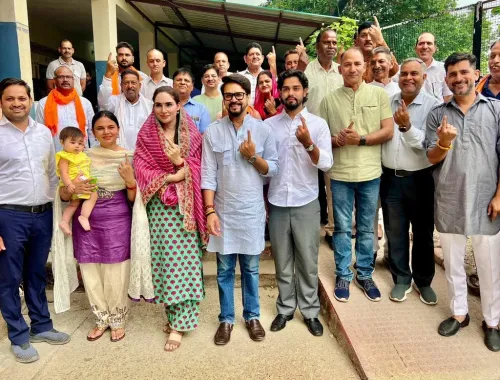
The post comes with a video — context the text alone does not fully capture — suggesting a live address or recorded message to a specific audience. The constituents being addressed are not identified, but the intimate register ('you are my true friends') points to a town-hall or community setting rather than a mass broadcast.
What follows matters as much as the ask itself. Any tangible local initiative or policy response emerging from the feedback round will be the real test of whether this is governance-by-dialogue or governance-by-optics. Hamirpur is watching — and, apparently, now has Thakur's direct ear.
Point of View
He reframes distrust as a problem he inherited rather than one he created. In a state like Himachal Pradesh — where power has swung between BJP and Congress with near-clockwork regularity — such public contrition-cum-invitation is both a trust-building signal and a soft electoral hedge. The 'dost sarkar' framing also echoes a wider BJP communications template that personalises governance, making the MP the face of accountability rather than an abstract party machine. Whether the feedback loop produces visible local action will determine if the moment is strategy or sentiment.
NationPress
19 Nov 2026
Frequently Asked Questions
What did Anurag Thakur post on X on 19 November 2026?
He posted a Hindi-language appeal to his Hamirpur constituents acknowledging their distrust of past governments and asking them to write to him openly about what governance reforms are still needed.
What does 'dost sarkar' mean in Anurag Thakur's post?
'Dost sarkar' means 'friendly government.' Thakur used the phrase to contrast the current administration with what he called the bitter legacy of previous governments.
Which constituency does Anurag Thakur represent?
Anurag Thakur is the BJP Lok Sabha MP from Hamirpur in Himachal Pradesh. He is a former Union Minister of Information and Broadcasting and Youth Affairs and Sports.
Why is Anurag Thakur asking for public feedback on governance?
He framed the appeal as a direct dialogue with citizens, inviting them to flag unresolved issues so the government can address them — a style of constituency outreach he has used regularly.
What is the political significance of this post in Himachal Pradesh?
Himachal Pradesh has a history of alternating between BJP and Congress governments, making voter trust a recurring challenge. Thakur's direct appeal is part of a broader BJP pattern of personalised grassroots engagement in such contested states.