Has the Area Sown Under Rabi Crops Exceeded 634 Lakh Hectares?
Synopsis
The latest data reveals a remarkable increase in the area sown with rabi crops, indicating positive trends for farmers and potential economic benefits. Discover how improved rainfall and government initiatives are driving this growth in agricultural output.
Key Takeaways
The area sown under rabi crops has reached 634.14 lakh hectares.
16.4 lakh hectares have been added compared to last year.
Wheat and pulses show significant increases in sown area.
Government MSP initiatives aim to ensure fair prices for farmers.
Improved rainfall has benefitted unirrigated farmland.
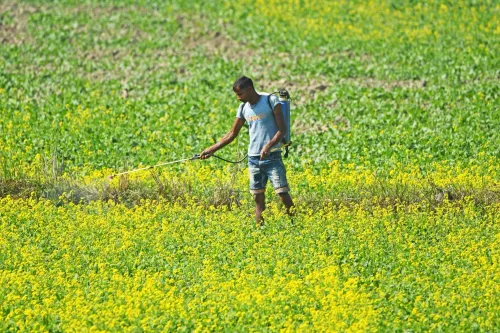
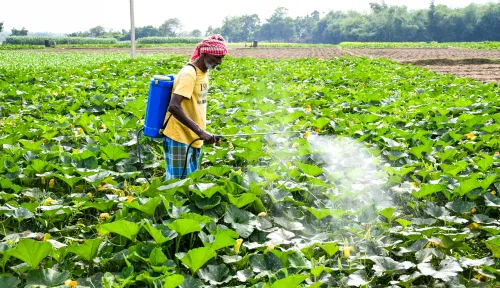
New Delhi, Jan 6 (NationPress) The area cultivated with rabi crops this winter season has expanded by 16.4 lakh hectares, reaching a total of 634.14 lakh hectares as of January 2, compared to 617.74 lakh hectares during the same timeframe last year, according to data released by the Ministry of Agriculture and Farmers Welfare on Tuesday.
This increase in sown area is anticipated to result in higher production levels, which will likely boost farmers' incomes and assist in stabilizing food inflation.
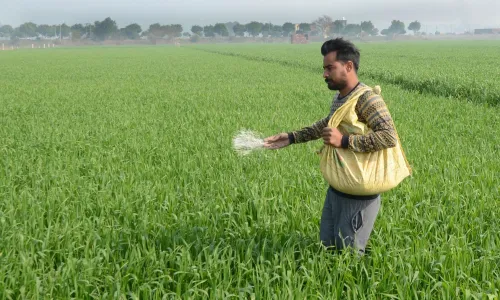
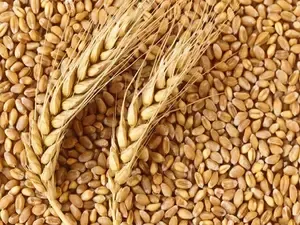
Official statistics reveal that the area dedicated to wheat has grown to 334.17 lakh hectares, up from 328.04 lakh hectares during the same period last year.
The area allocated for pulses such as urad, lentils (masur), gram, and moong has risen by 3.44 lakh hectares, totaling 134.3 lakh hectares, compared to 130.87 lakh hectares last year.
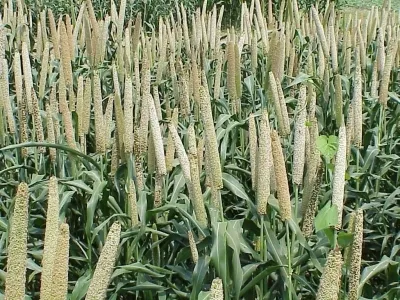
The land utilized for coarse cereals or millets like jowar, bajra, and ragi has increased to 51.79 lakh hectares this season, compared to 50.66 lakh hectares in the previous year.
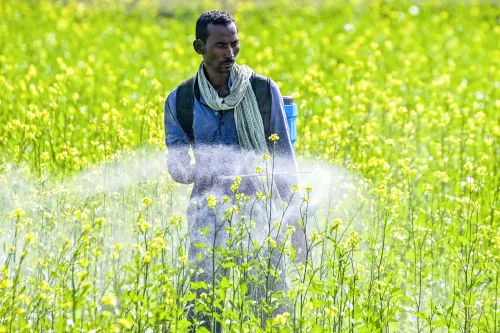
Additionally, the area for oilseeds such as rapeseed and mustard has grown by 3.04 lakh hectares, now totaling 96.3 lakh hectares, up from 93.27 lakh hectares last year.
This surge in sown area is attributed to improved monsoon rains, which have facilitated sowing in unirrigated regions that comprise nearly 50 percent of the nation’s farmland.
The Cabinet Committee on Economic Affairs (CCEA) approved an increase in the minimum support prices (MSP) for all mandated rabi crops for the 2026-27 marketing season on October 1, 2025, to ensure that producers receive fair prices for their harvests.
These support prices are announced ahead of the sowing season, allowing farmers to effectively plan their cropping strategies to optimize their earnings.
The most significant increase in MSP is for safflower at Rs. 600 per quintal, followed by lentil (masur) at Rs. 300 per quintal. Increases of Rs. 250, Rs. 225, Rs. 170, and Rs. 160 per quintal have been announced for rapeseed & mustard, gram, barley, and wheat, respectively.
The rise in MSP for mandated rabi crops for the marketing season 2026-27 corresponds with the Union Budget 2018-19 announcement to set MSP at least 1.5 times the All-India weighted average cost of production. The projected margin over the All-India weighted average cost of production is 109 percent for wheat, 93 percent for rapeseed & mustard, 89 percent for lentil, 59 percent for gram, 58 percent for barley, and 50 percent for safflower. This enhanced MSP for rabi crops aims to guarantee fair prices for farmers and promote crop diversification.
The cost of production for these crops encompasses all paid expenses, including hired labor, machine costs, land rental, and costs related to inputs like seeds, fertilizers, irrigation, and more, as stated in the official report.
Point of View
It is crucial to highlight the increasing area sown under rabi crops as a positive development for India's agricultural landscape. This growth not only signifies an improvement in production capacity but also reflects the government's commitment to supporting farmers through fair pricing and better agricultural practices. The information we present is vital for understanding the ongoing trends in our economy and ensuring that our farmers remain at the forefront of this growth.
NationPress
9 Oct 2026
Frequently Asked Questions
What are rabi crops?
Rabi crops are those that are sown in the winter season and harvested in the spring. Common examples include wheat, barley, and pulses.
Why is the increase in sown area significant?
An increase in sown area typically leads to higher agricultural production, which can enhance farmers' incomes and stabilize food prices.
How does the government support farmers?
The government supports farmers through minimum support prices (MSP), which ensure they receive fair remuneration for their produce.
What factors contribute to the increase in sown area?
Factors include favorable weather conditions, such as improved monsoon rains, and government initiatives aimed at supporting farmers.
What is the importance of MSP?
MSP ensures that farmers receive a guaranteed price for their crops, thus incentivizing them to produce more and diversify their crops.