Has the area sown under rabi crops reached 644.29 lakh hectares?
Synopsis
As of January 9, the area sown under rabi crops has reached an impressive 644.29 lakh hectares, a significant increase from the previous year, thanks to favorable conditions and strategic government support. This growth is set to benefit farmers and stabilize food prices.
Key Takeaways
Rabi crop area has increased to 644.29 lakh hectares .
17.65 lakh hectares more than last year.
Significant rise in pulses and wheat sowing.
Government support through minimum support prices .
Better monsoon conditions aiding sowing.
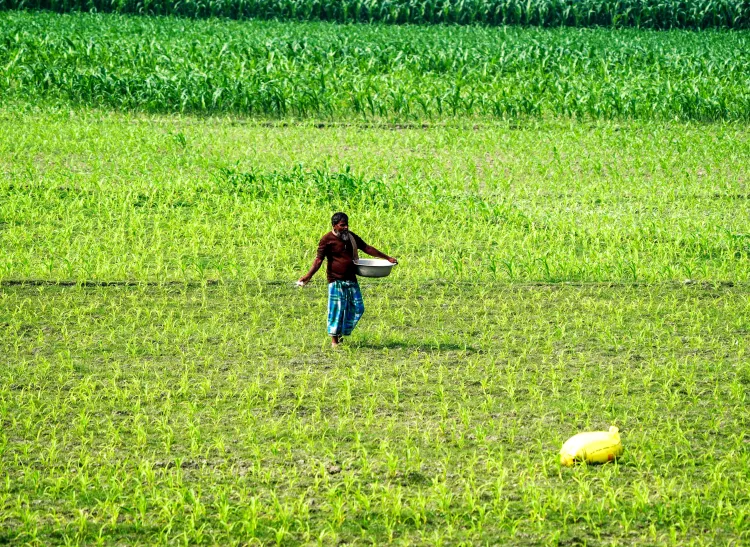
New Delhi, Jan 6 (NationPress) The total area cultivated for rabi crops during this winter season has seen an increase of 17.65 lakh hectares, now totaling 644.29 lakh hectares as of January 9. This is up from 626.64 lakh hectares at the same time last year, according to data released by the Ministry of Agriculture and Farmers Welfare.
This expansion in sown area is anticipated to boost production, ultimately enhancing farmers' incomes and aiding in the control of food inflation.
The area allocated for pulses has risen by 3.74 lakh hectares, while sowing of gram has seen a substantial rise of 4.66 lakh hectares.
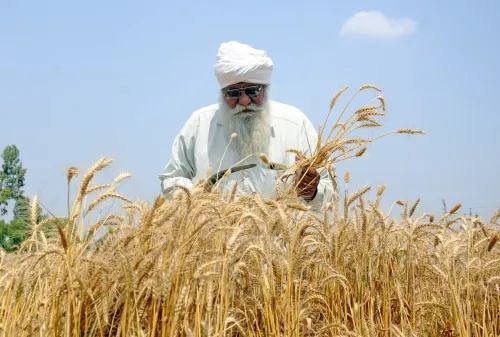
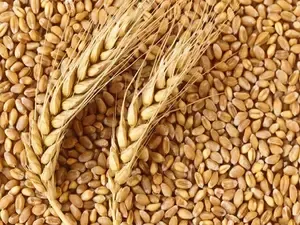
Official statistics indicate an increase in wheat cultivation, with the area expanding to 334.17 lakh hectares, up from 328.04 lakh hectares during the same timeframe last year.
The land area devoted to pulses—encompassing urad, lentils (masur), gram, and moong—has increased by 3.74 lakh hectares, totaling 136.36 lakh hectares, compared to 132.61 lakh hectares last year.
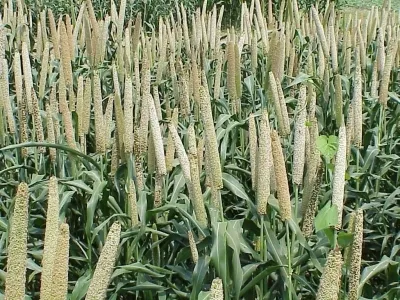
The area dedicated to coarse cereals, including jowar, bajra, and ragi, has risen to 55.20 lakh hectares this season, in contrast to 53.17 lakh hectares during the same period last year.
Moreover, the area for oilseeds like rapeseed and mustard has grown to 96.86 lakh hectares, an increase from 93.33 lakh hectares in the previous year.
The Cabinet Committee on Economic Affairs (CCEA) approved an increase in the minimum support prices (MSP) for all designated rabi crops for the 2026-27 marketing season on October 1, 2025, to ensure that farmers receive adequate compensation for their produce. These prices are declared well ahead of the planting season to allow farmers to plan their crops effectively and maximize their earnings.
The uptick in sown area this season can be attributed to favorable monsoon rains, which have aided sowing in unirrigated regions that represent nearly 50% of the country's agricultural land.
Point of View
The increase in rabi crop sowing area is a positive sign for the agricultural economy. It reflects improved climatic conditions and government policies aimed at providing farmers with better support. This development should be closely monitored as it holds significant implications for food security and economic stability in India.
NationPress
21 Sept 2026
Frequently Asked Questions
What is the current area sown under rabi crops?
As of January 9, the area sown under rabi crops has reached 644.29 lakh hectares.
How much has the area increased compared to last year?
The area has increased by 17.65 lakh hectares from 626.64 lakh hectares during the same period last year.
What factors contributed to this increase?
Favorable monsoon rains have facilitated sowing in unirrigated areas, which comprise nearly 50% of the country's farmland.
What crops are included in the rabi season?
Rabi crops include wheat, pulses, oilseeds, and coarse cereals.
How do minimum support prices affect farmers?
Minimum support prices ensure that farmers receive fair compensation for their produce, helping them plan their cropping strategies effectively.