Is the area sown under rabi crops expanding significantly?
Synopsis
The latest data reveals a significant surge in the area sown under rabi crops, reaching over 652 lakh hectares, marking a remarkable increase compared to the previous year. This growth not only promises higher production and farmer incomes but also aims to regulate food inflation effectively.
Key Takeaways
20.88 lakh hectares increase in rabi crops sown area.
Wheat area reaches 334.17 lakh hectares .
Pulses area increases to 137 lakh hectares .
MSP increases for several crops to ensure farmer profitability.
Higher production expected to stabilize food inflation .
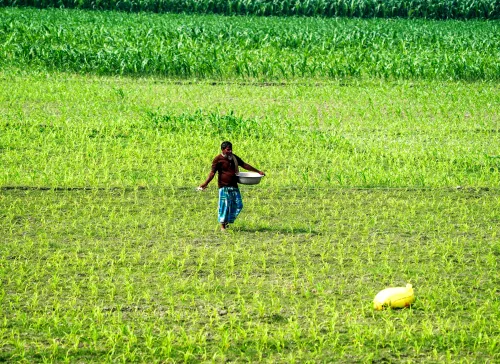
New Delhi, Jan 19 (NationPress) The overall area cultivated for rabi crops during the ongoing winter season has seen an impressive increase of 20.88 lakh hectares, reaching 652.33 lakh hectares as of January 16 this year. This marks a rise from 631.45 lakh hectares recorded during the same timeframe last year, according to data released by the Ministry of Agriculture and Farmers Welfare on Monday.
This expansion in sown area is anticipated to enhance production levels, which will subsequently boost farmers' incomes and help manage food inflation.
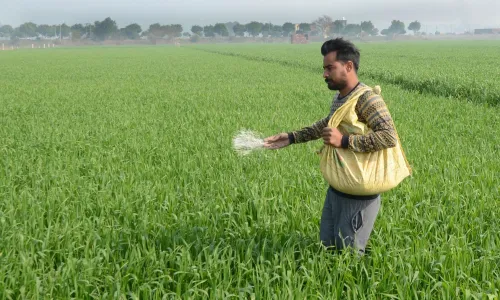
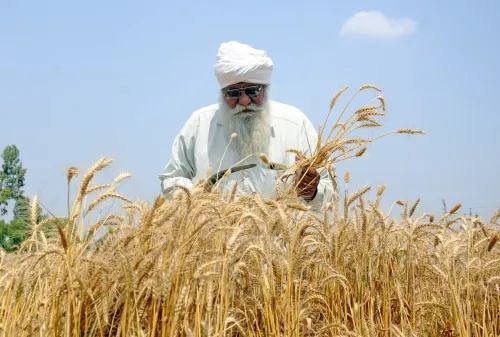
Official statistics indicate that the area dedicated to wheat has increased by 6.13 lakh hectares, totaling 334.17 lakh hectares, compared to 328.04 lakh hectares during the same period last year.
The acreage for pulses such as Urd, Lentils (Masur), gram, and Moong has also risen, increasing by 3.82 lakh hectares to 137 lakh hectares, up from 133.18 lakh hectares last year.
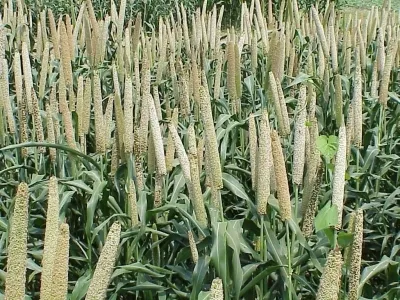
Meanwhile, the area covered by coarse cereals or millets, including jowar, bajra, and ragi, has grown by 2.79 lakh hectares to 58.72 lakh hectares in the current season, compared to 55.93 lakh hectares from last year.
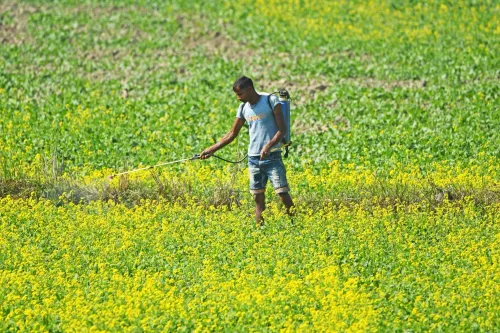
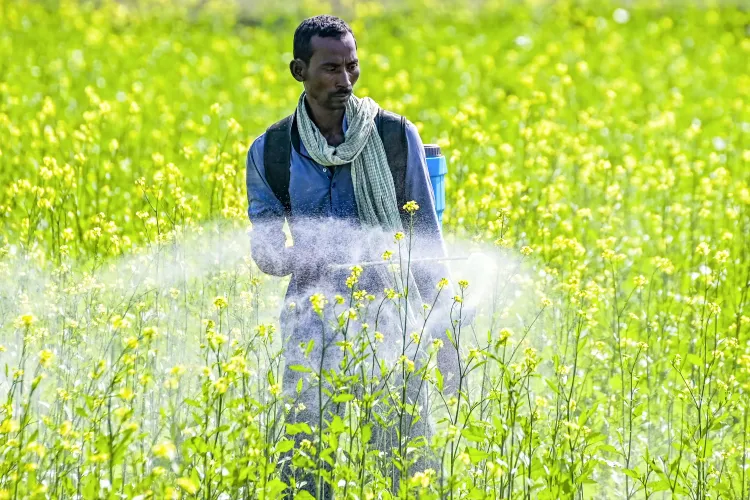
Moreover, the land devoted to oilseeds like rapeseed and mustard has increased by 3.53 lakh hectares, reaching 96.86 lakh hectares, up from 93.33 lakh hectares during the same timeframe last year.
The rise in sown area this season has been facilitated by improved monsoon rains, which have aided sowing in unirrigated regions, representing nearly 50 percent of the nation's farmland.
Additionally, the Cabinet Committee on Economic Affairs (CCEA) approved an increase in the minimum support prices (MSP) for all designated rabi crops for the 2026-27 marketing season on October 1 of last year to guarantee profitable prices for farmers.
The MSP is announced ahead of the sowing season, allowing farmers to plan their crops effectively to maximize earnings.
The most substantial increase in MSP was for Safflower at Rs 600 per quintal, followed by Lentil (Masur) at Rs 300 per quintal. Increases of Rs 250 per quintal for rapeseed and mustard, Rs 225 for gram, Rs 170 for barley, and Rs 160 for wheat were also recorded.
The MSP boost for mandated rabi crops for the 2026-27 marketing season aligns with the Union Budget 2018-19 commitment to fix MSP at a level of at least 1.5 times the All-India weighted average cost of production.
The anticipated profit margin over the All-India average production cost stands at 109 percent for wheat, 93 percent for rapeseed and mustard, 89 percent for lentil, 59 percent for gram, 58 percent for barley, and 50 percent for safflower. This increased MSP for rabi crops guarantees fair prices for farmers and encourages crop diversification.
The cost of production for these crops encompasses all paid-out expenses, including costs related to hired labor, bullock or machine labor, rent for leased land, expenditures for seeds, fertilizers, irrigation charges, and other miscellaneous expenses, as explained in the official statement.
Point of View
It is vital to recognize the significant advancement in rabi crop cultivation. This development not only serves the interests of farmers by enhancing their incomes, but also contributes to stabilizing food prices in a time of economic uncertainty. Such positive trends in agriculture are essential for national food security and economic growth.
NationPress
19 Sept 2026
Frequently Asked Questions
What is the current area sown under rabi crops?
As of January 16, the total area sown under rabi crops is 652.33 lakh hectares.
How much has the area under wheat increased?
The area under wheat has increased by 6.13 lakh hectares, totaling 334.17 lakh hectares.
What impact does the increase in sown area have?
The increase in sown area is expected to lead to higher production, boosting farmers' incomes and helping to manage food inflation.
When does the MSP for rabi crops get announced?
The minimum support prices (MSP) for rabi crops are announced before the sowing season to aid farmers in planning their cropping strategies.
What is the MSP increase for Safflower?
The MSP for Safflower has been increased by Rs 600 per quintal.