How Can Local Leadership Enhance Infant and Maternal Health?
Click to start listening
Synopsis
A groundbreaking study from IIM Lucknow reveals that affirmative action in local government leadership can drastically improve health outcomes in India. By focusing on infant and maternal health, the research highlights how local leaders from marginalized groups can address deep-rooted inequities, offering valuable insights for policymakers seeking to enhance public health.
Key Takeaways
- Affirmative action in leadership can enhance health outcomes.
- Significant improvements were noted in infant survival rates.
- Maternal health indicators also showed positive trends.
- The study highlights the role of local governance in addressing inequalities.
- Challenges in education outcomes remain despite health improvements.
New Delhi, Jan 20 (NationPress) Affirmative action within local government leadership has the potential to greatly enhance health outcomes, especially regarding infant survival and maternal prenatal care, in India, as revealed by a recent study conducted by researchers at the Indian Institute of Management (IIM) Lucknow on Tuesday.
This research, featured in the Proceedings of the National Academy of Sciences (PNAS) journal, sheds light on how structural interventions can tackle long-standing social and health disparities.
The results indicated that village clusters with affirmative action in local leadership exhibited significantly improved health results.
Infant mortality rates were markedly lower in villages governed by local representatives.
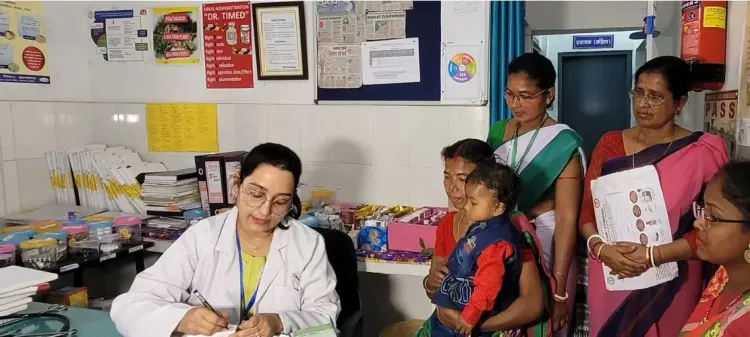
Maternal health metrics also showed positive trends, including increased chances of receiving at least two prenatal visits, tetanus vaccinations, and prenatal supplements by the second trimester.
"Our research indicates that local leaders from historically marginalized groups made health and education spending decisions that seem to mitigate some structural inequalities within local communities," stated Prof. K. G. Sahadevan from the institution.
The study employed a quasi-experimental design, concentrating on the effect of leadership reservation for Scheduled Castes (SC) in India's local governments, the most basic levels of governance responsible for delivering vital public services such as health and education.
A comparison was made between 60 village clusters with SC-reserved leadership and 60 clusters without such reservations in 2021.
The research team utilized a diverse array of data sources, including administrative health records, primary data gathered in schools, and comprehensive interviews with local leaders.
While the study noted an improvement in health outcomes in villages with affirmative leadership, no similar enhancement was observed in the education sector.
The research team did not discover any statistically significant differences in test scores between the two groups.
Moreover, it was found that Scheduled Caste leaders faced challenges in collaborating with teachers, suggesting that enduring social inequalities might hinder the effectiveness of educational improvements. This also discouraged potential SC leaders from stepping forward.
The findings offer significant insights for policymakers in low- and middle-income nations aiming to improve human development outcomes.
Point of View
We recognize the importance of local leadership in shaping health outcomes. This study from IIM Lucknow underscores the critical role of affirmative action in addressing health disparities in India. It offers valuable insights that could inform impactful policies aimed at improving public health, especially for vulnerable populations.
NationPress
20/01/2026
Frequently Asked Questions
What is the main finding of the IIM Lucknow study?
The study found that affirmative action in local government leadership significantly improves health outcomes, particularly in infant survival and maternal prenatal care.
How did the study measure health outcomes?
The research compared village clusters with and without SC-reserved leadership, analyzing data from health records, school data, and interviews with local leaders.
What impact did local leadership have on maternal health?
Villages led by local representatives recorded higher odds of receiving prenatal care, including vaccinations and supplements.
Were there any improvements seen in education outcomes?
The study did not find significant improvements in education outcomes, indicating persistent challenges in the sector.
What implications does this research have for policymakers?
The findings suggest that empowering local leaders can effectively address health disparities, providing a model for policymakers in similar contexts.