Is China Taking Advantage of US Distractions to Strengthen Its Strategic Expansion?
Synopsis
As the US grapples with crises in Venezuela and Iran, China is positioning itself as a stabilizing force. But is this a genuine strategy or opportunism? Explore how Beijing's actions reflect its ambitions for global leadership.
Key Takeaways
China is leveraging US distractions to reshape its global image.
Its ties with authoritarian regimes could undermine its credibility.
China's strategies reflect historical patterns of power shifts.
Economic engagements are prioritized over military interventions.
China positions itself as a mediator in global conflicts.
Beijing, Jan 24 (NationPress) While the United States finds itself deeply engaged in the crises surrounding Venezuela and Iran, China is seizing the moment to assert its ambitions in the global arena. By positioning itself as a 'stabilising force' through economic partnerships rather than military involvement, China aims to reshape perceptions of its role on the world stage. However, the sustainability of this narrative hinges on China's ability to balance its authoritarian ties with its aspiration to be recognized as a responsible global entity, as outlined in a report released on Saturday.
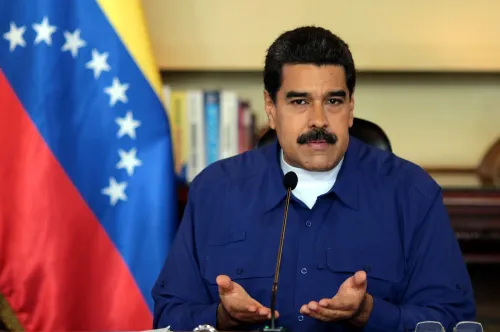
The European Times report indicates that the credibility of China's stabiliser narrative is threatened by its associations with authoritarian regimes such as Maduro's Venezuela and Iran's
Moreover, China's own claims to sovereignty over Taiwan and Tibet reveal inconsistencies in its messaging, prompting caution among various nations that perceive “stability” as a guise for strategic expansion.
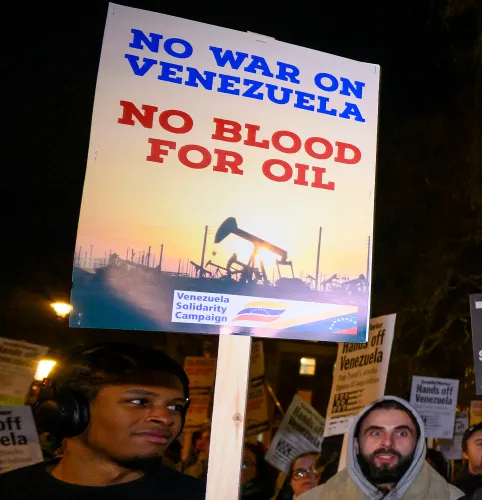
“Amid Washington's preoccupation with the crises in Venezuela and Iran, Beijing views an opportunity to reposition itself as a stabilising agent in international relations. This strategy is not merely opportunistic; it is a calculated move rooted in China's long-term objective to redefine global norms,” the report elaborated.
“The United States' involvement in Venezuela and its rising tensions with Iran evoke memories of Cold War-era disputes, demanding comprehensive military, diplomatic, and economic resources. For Beijing, this diversion highlights a recurring theme: when Washington is engaged in coercive diplomacy, China can further its narrative of non-interference and pragmatic engagement,” the report added.
The report emphasizes that US actions in Venezuela reflect its attempt to retain dominance in the hemisphere, while China counters this by enhancing economic ties through the China-Community of Latin American and Caribbean States (CELAC) Forum, which offers infrastructure and investments without strict political prerequisites.
In addition, Iran plays a pivotal role in China's energy strategy as Beijing continues to trade with the nation despite sanctions, thereby establishing itself as a reliable partner in stark contrast to Washington's punitive approach.
The report noted that China's strategy mirrors historical instances where emerging powers capitalized on US distractions. For example, during the Vietnam War, the Soviet Union expanded its influence across Africa and the Middle East. In a similar vein, Beijing now leverages America's overreach to assume a balancing role, a position previously held by Washington itself,” it stated.
“China’s assertion of stability is founded on three core pillars: Economic Statecraft (where Belt and Road initiatives provide tangible infrastructure, enhancing its image of constructive engagement), Diplomatic Mediation (where Beijing has emerged as a broker in Middle Eastern conflicts, notably facilitating rapprochement between Saudi Arabia and Iran), and Normative Framing (invoking sovereignty and non-interference to appeal to nations wary of US interventionism),” the report concluded.
Point of View
We must recognize the complexities of international relations. While China's current narrative of stability offers an alternative to US interventionism, it raises critical questions about the implications of its alliances with authoritarian regimes. Understanding these dynamics is essential for a comprehensive view of global power shifts.
NationPress
27 Sept 2026
Frequently Asked Questions
How is China positioning itself globally?
China is presenting itself as a stabilizing force by focusing on economic partnerships rather than military interventions, especially during times when the US is preoccupied with crises.
What are the implications of China's alliances?
China's ties with authoritarian regimes like Venezuela and Iran may undermine its narrative of being a responsible global power, raising concerns among other nations.
How does the US's involvement in Venezuela affect China?
The US's focus on Venezuela allows China to advance its own narrative of non-interference and economic engagement in the region.
What historical parallels exist in this context?
China's current strategy mirrors past instances where rising powers took advantage of US distractions, such as during the Vietnam War with the Soviet Union.
What are the three pillars of China's claim to stability?
China's claim to stability is based on Economic Statecraft, Diplomatic Mediation, and Normative Framing, appealing to nations wary of US intervention.