Could China Engage in More Aggressive Operations Around Taiwan?

Synopsis
As tensions mount, the Global Taiwan Institute warns of a potential escalation in China's military activities around Taiwan. With a target year of 2027 set by President Xi Jinping, experts discuss the implications for regional stability and Taiwan's defense capabilities in an insightful panel discussion.
Key Takeaways
China’s military operations around Taiwan are escalating.
2027 has been identified as a critical year for potential military action.
Analysts express concerns about Taiwan's defense capabilities.
Increased cyber intrusions accompany military exercises.
China uses narrative justifications for military activities.
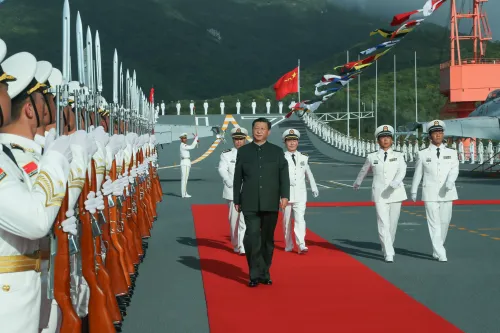
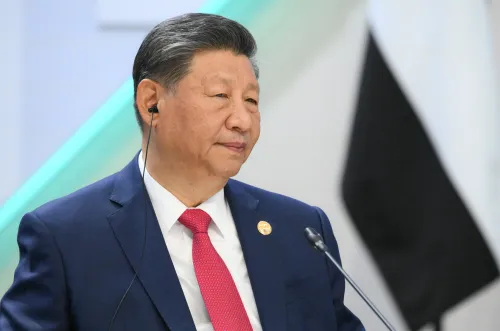
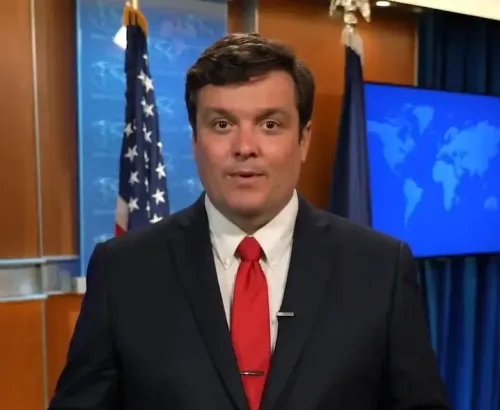
Taipei, Jan 23 (NationPress) The Director of the Global Taiwan Institute (GTI), John Dotson, has issued a warning that the People’s Liberation Army (PLA) might engage in more aggressive and ambitious operations around Taiwan. This preparation aligns with Chinese President Xi Jinping’s objective for the PLA to be capable of taking Taiwan by 2027, as reported by local media on Friday.
According to Ann Kowalewski, a senior non-resident fellow at GTI, 2026 is the critical year for China's PLA to achieve this capability, as noted by Taiwan's daily, Taipei Times. Dotson and Kowalewski shared their insights during a panel discussion in Washington titled 'Looking Ahead for Taiwan Policy in 2026'.
GTI has highlighted the increasing pressure from China on Taiwan in 2025, including the PLA’s 'Justice Mission 2025' military exercises. Analysts have pointed out that 2027 might serve as a flashpoint in cross-strait relations, following warnings in 2021 from then-US Indo-Pacific Command Admiral Philip Davidson, who indicated that Xi Jinping had directed the PLA to prepare for an invasion of Taiwan by 2027.
Kowalewski remarked that substantial political analysis indicates that China is “not quite there yet.” She suggested that we might witness a significant escalation in the military capabilities of the People's Republic of China (PRC) this year, though it remains uncertain if Taiwan and the US can enhance their military readiness or adopt unique strategies to maintain an asymmetrical balance of power in the region.
Dotson noted that PLA military drills conducted in April and December were located towards the south and southeast of Taiwan, very close to the island itself, and involved a more aggressive deployment of the China Coast Guard. He explained that using the coast guard allows China to frame these activities as law enforcement rather than military actions.
The GTI Director stated that China provides a “narrative justification” for its military exercises, such as blaming Taiwan's President William Lai for policies aimed at countering Chinese infiltration in March or criticizing an arms sales package with the US in December of the previous year. He expressed skepticism about these narratives, noting that extensive exercises are typically planned well in advance.
Earlier this month, Taiwan's National Security Bureau accused the Chinese Communist Party (CCP) of conducting military drills near the self-governing island, alongside a series of cyberattacks that included sharing over 19,000 “controversial” messages and executing millions of hacking attempts, according to local media.
A report submitted to the Legislative Yuan revealed that the online activity comprised 799 abnormal accounts aimed at sowing doubt regarding the US, Taiwanese President William Lai, and the military, raising concerns about Taiwan's self-defense capabilities, as reported by the Taipei Times.
The bureau indicated that cyber intrusions targeting government networks intensified during the military exercises, with approximately 2.08 million attacks occurring on the first day of China's military maneuvers and rising to about 2.09 million on the second day.
In its report, the agency claimed that the CCP carried out drills to undermine the support Taiwan receives from its international democratic allies, distract attention from domestic issues, and demonstrate military strength as unaffected by anti-corruption efforts. The NSB alleged that the CCP utilized these drills to channel public discontent towards a nationalist sentiment framed as resistance to external interference.
Point of View
I emphasize the importance of understanding the delicate balance of power in East Asia. The rising military ambitions of the People's Liberation Army pose significant questions about Taiwan's sovereignty and international stability. It is crucial to monitor these developments closely and engage in informed discussions on policy responses.
NationPress
29 Sept 2026
Frequently Asked Questions
What is the primary warning issued by the GTI regarding China's military operations?
The GTI warns that the People's Liberation Army may conduct more aggressive operations around Taiwan as it prepares for a military capability to take Taiwan by 2027.
What did analysts say about the year 2027 in relation to Taiwan?
Analysts have indicated that 2027 could serve as a potential flashpoint in cross-strait relations, following warnings from US military officials about China's intentions.
What has Taiwan's National Security Bureau reported about cyberattacks?
The National Security Bureau reported a significant increase in cyberattacks from the Chinese Communist Party during military drills, with millions of hacking attempts targeting government networks.