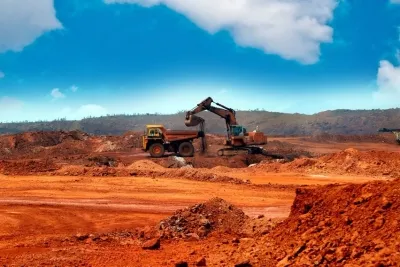
China's Resource-Backed Lending in Africa: Economic and Ecological Concerns

Synopsis
A new report highlights the growing criticisms of China's resource-backed lending model in Africa, raising urgent questions about its sustainability and the resulting economic and ecological risks faced by borrowing nations.
Key Takeaways
Resource-backed loans link borrowing to future commodity exports.
Concerns about sustainability have been raised by the African Development Bank .
Countries like Angola and Kenya show contrasting outcomes from these loans.
The model is criticized for fostering corruption and mismanagement .
Experts warn of increasing economic and ecological vulnerabilities.
New Delhi, March 7 (NationPress) The established model of resource-backed loans by China in Africa is facing increasing scrutiny from experts and development officials, as highlighted in a recent report.
This lending strategy, which connects loans to anticipated commodity exports like oil, copper, and cobalt, has been prevalent throughout the continent for financing infrastructure projects. However, its long-term viability is now under serious question, according to the Daily Monitor.
The African Development Bank (AfDB) has voiced concerns about this approach, with President Akinwumi Adesina labeling the loans as “asymmetrical” and “non-transparent,” advocating for a halt to resource-backed lending (RBLs) in African countries.
Critics contend that China’s transition from lending to debt extraction is placing immense pressure on national budgets and jeopardizing economic stability, as per the report.
Although Chinese financing has spurred an infrastructure surge for over two decades, the slowdown post-COVID and a decrease in new loans have revealed significant weaknesses.
“Linking repayments to unpredictable commodity markets has ensnared nations like Venezuela and Angola in a ‘creditor trap,’ compelling them to increase resource exports to meet debt obligations,” the Daily Monitor reported.
This model also fosters corruption and mismanagement, as loans are often tied to Chinese state-owned contractors through non-competitive bidding processes, frequently resulting in inferior infrastructure.
For instance, Ecuador’s Coca Codo dam fell short of delivering the expected economic benefits.
The effects of this model on African nations are highly variable. Angola managed to utilize its oil income to decrease its debt from $10.2 billion to $8.9 billion in the first half of 2025, stabilizing its debt-to-GDP ratio to approximately 9 percent.
Conversely, Kenya is grappling with the financial strain of the Chinese-funded Standard Gauge Railway, dedicating $1 billion annually from a $33 billion budget to service debts, with obligations being restructured in Chinese yuan, according to the report.
Experts assert that China’s resource-backed debt model, once celebrated as “patient capital,” is shifting towards a cycle marked by economic and ecological fragility.
As access to easy credit diminishes, borrowing countries must navigate the challenge of balancing rising debt with domestic development needs, raising critical questions about the sustainability and fairness of this approach.
Point of View
It is crucial to recognize the multifaceted implications of China's resource-backed loans in Africa. While initially beneficial for infrastructure development, the evolving nature of these loans raises significant concerns about economic stability and environmental sustainability for borrowing nations. A balanced view is essential as we navigate these complex issues.
NationPress
1 Oct 2026
Frequently Asked Questions
What are resource-backed loans?
Resource-backed loans are financial agreements where loans are tied to the future export of commodities, such as oil and minerals.
Why are these loans criticized?
Critics argue that they create dependency on volatile commodity markets, leading to economic instability and potential exploitation.
How do these loans affect African countries?
The impact varies; some countries manage to reduce debt, while others face severe financial strain and mismanagement issues.
What is the role of the African Development Bank?
The AfDB monitors such lending practices and advocates for more transparent and sustainable financing models in Africa.
What are the potential ecological risks?
Resource-backed loans can lead to over-extraction of natural resources, harming ecosystems and local environments.