How Does China’s Forced Labour Policy Create Moral and Economic Issues?
Synopsis
The exploitation of the Uyghur people by the Chinese government has raised significant concerns globally. This article delves into human rights violations, economic repercussions, and the implications for Western supply chains, highlighting the urgent need for action against these practices.
Key Takeaways
Significant global concern over the exploitation of the Uyghur people.
Forced labour poses a human rights crisis.
Chinese economic strategies undermine global markets.
US and international companies are linked to these practices.
Urgent action is needed to hold perpetrators accountable.
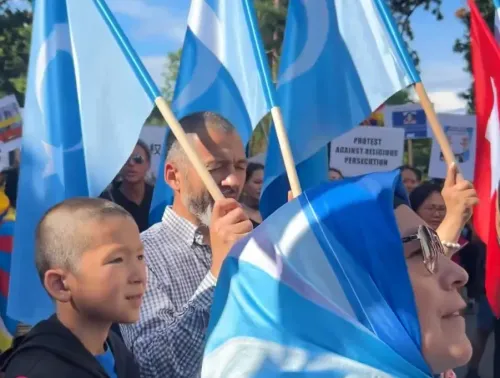
New Delhi, Feb 8 (NationPress) The exploitation of the Uyghur population by the Chinese government has raised significant global alarm. The extensive oppression faced by the Uyghur minority, including arbitrary detention, forced labour, and family separations in work camps, represents a grave breach of human rights.
This forced labour also presents a substantial economic security dilemma, as it allows China to inundate international markets with artificially low-priced goods that undermine businesses in the United States and other nations, while consolidating Chinese dominance over minerals essential for aerospace, defense, and consumer products worldwide.
According to an article from 'Just Security', a digital law and policy journal from New York University School of Law, “The United States and other Western nations bear some responsibility for these atrocities since this exploited labour, on a massive scale, is infiltrating Western supply chains.”
Additionally, a report released last year by Global Rights Compliance traced the origins of four critical minerals sourced from the Xinjiang Uyghur Autonomous Region. By analyzing global trade with this region, it was discovered that Uyghur forced labour is connected to a wide array of products, including coffee mugs, electric vehicles, power tools, spacecraft components, and even various types of paint. These minerals are also vital for advancements in AI technologies.
Despite the enactment of the Uyghur Forced Labour Prevention Act (UFLPA) in 2021, which prohibits the importation of goods mined, produced, or manufactured wholly or partially in Xinjiang into the US, numerous US and international companies are still found to be using mineral-based products sourced from this region. It is highly probable that some of these products are reaching American consumers, as noted in the article.
The report emphasizes that combating these damaging practices aligns with the objectives outlined in the Trump administration's recently released National Security Strategy, which aims to protect Americans from “predatory trade practices, drug and human trafficking” while leveraging “soft power” to exert influence globally.
Taking decisive action against China’s forced labour practices that exploit the Uyghur community would not only enhance US credibility but also fortify supply chain security and ensure that American technology and standards lead global progress without reliance on coercion, the article concludes.
Point of View
I believe it is paramount that we address the concerning exploitation of the Uyghur people by the Chinese government. The implications of such practices extend beyond human rights; they pose significant economic challenges that affect global markets. It is crucial for the international community to advocate for accountability and support ethical trade practices.
NationPress
9 Oct 2026
Frequently Asked Questions
What is the Uyghur Forced Labour Prevention Act?
The Uyghur Forced Labour Prevention Act (UFLPA) is a US law that prohibits the importation of goods made, produced, or mined in whole or part in the Xinjiang Uyghur Autonomous Region, aimed at preventing the use of forced labour.
How does forced labour affect global markets?
Forced labour allows countries like China to produce goods at lower costs, which can lead to unfair competition for businesses in other countries, ultimately undermining local economies.
What are the human rights implications of forced labour?
Forced labour is a severe violation of human rights, leading to exploitation, arbitrary detentions, and the destruction of family units, which has lasting psychological and social impacts on affected communities.
Why should consumers care about products linked to forced labour?
Consumers should be aware of the origins of products to make ethical choices, as purchasing goods linked to forced labour can inadvertently support these human rights violations.
What steps can be taken to combat forced labour?
Raising awareness, supporting policies like the UFLPA, and choosing ethically sourced products are critical steps individuals can take to combat forced labour and promote human rights.