Is Beijing Under Threat from Al-Qaida Over Uyghur Oppression?

Synopsis
A recent report indicates that Beijing's treatment of Uyghurs has caught the attention of al-Qaida, adding a new, dangerous dimension to China's security landscape. This article delves into the implications of this development and the ongoing human rights violations in Xinjiang province. What does this mean for China and the Uyghur community?
Key Takeaways
Beijing faces increasing scrutiny from terrorist organizations regarding its treatment of Uyghurs.
Al-Qaida's recent statements could indicate a shift in focus towards the Uyghur issue.
The ongoing human rights abuses in Xinjiang remain a significant concern for the international community.
China's relations with Afghanistan are influenced by its security concerns regarding Uyghur separatists.
The situation poses potential risks for China's global initiatives and personnel.
New Delhi, Dec 25 (NationPress) Beijing has mostly evaded the scrutiny of terrorist groups, but a new report concerning al-Qaida’s threat has introduced a precarious security aspect for China.
Accusations of human rights violations against the Uyghur population in Xinjiang province stand out as one of the most urgent human rights dilemmas worldwide, with accounts from international human rights organizations and the United Nations outlining systematic oppression.
The threat to China regarding the situation of Uyghur Muslims appears to have been recently highlighted in a Telegram communication attributed to Atef al-Awlaki, the head of al-Qaida in the Arabian Peninsula.
This announcement reportedly applauded assaults on Jews and Americans while cautioning China that its treatment of Uyghurs was being monitored.
The statement vowed to retaliate against Chinese interests “on land and sea” if the abuses against Uyghurs, a Turkic Muslim minority, persist in Xinjiang province.
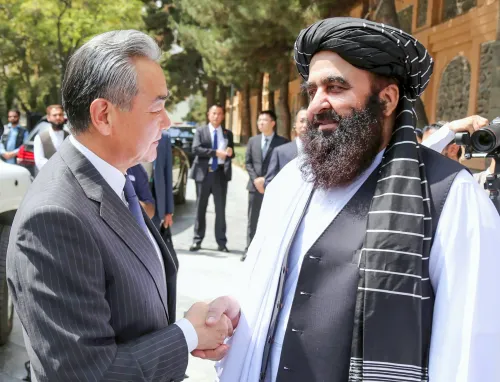
This context is also part of Beijing’s outreach to Afghanistan. The Taliban's control of Kabul and its nearness to Xinjiang is deemed crucial for China.
Since the Taliban regained power in 2021, Beijing has aimed to strengthen relations, motivated by security apprehensions and economic interests. Nevertheless, Afghanistan's capacity to aid China is hindered by its own instability and ideological disparities.
While Beijing might establish short-term partnerships, the deeper grievances of the Uyghurs remain unaddressed. Interestingly, extremist Islamist factions like Al-Qaida and ISIS criticize the current Taliban for not being aggressive enough in their “jihad,” asserting they prefer governance over warfare.
There have indeed been intense confrontations. The Wakhan Corridor, located in Afghanistan’s Badakhshan Province, connects the region where the Uyghur ethnic group seeks autonomy. This area in northwest China borders multiple Central Asian nations.
Beijing is looking for Kabul’s assistance as a security buffer, given that Uyghur separatists are alleged to have bases within Afghanistan.
China is reportedly urging the Taliban to suppress the Uyghurs’ East Turkestan Islamic Movement (ETIM), which Beijing categorizes as a terrorist group.
The ETIM views China as an occupier and strives for liberation through armed revolt. Since 2017, there have been reports of mass detentions, forced labor, and cultural annihilation in what China terms “vocational training centers” in the region.
China maintains that it has engaged in counter-terrorism measures against separatist factions like the ETIM, which are condemned by human rights advocates.
A UN OHCHR Report in 2022 identified “serious human rights violations” that could be classified as crimes against humanity. Reports indicate the arbitrary detention of over one million Uyghurs, the restriction of religious practices, and extensive surveillance and indoctrination efforts aimed at erasing their identity.
The alleged al-Qaida announcement signifies a shift, as it has primarily focused on the US and Israel, but the Uyghur issue now appears to have attracted its attention. Notably, in March 2017, ISIS published a video featuring Uyghur armed insurgents within its ranks.
The video included threats against China, reportedly depicting the execution of an alleged informant by Uyghur militants.
A commentary earlier this year in Defence One, a media partner of the 2025 Global Security Forum, stated, “As of 2025, it is increasingly clear that China is within the sights of transnational terror groups. Capable and determined violent non-state actors could pose challenges for China in various hotspots globally – in Syria, Afghanistan, Pakistan, and beyond.”
In conclusion, it stated, “China was once thought to be exaggerating its terror threats, but that is no longer the case. As China continues to expand its Belt and Road Initiative, with its personnel and infrastructure increasing globally, incidents of kidnapping for ransom, terrorist attacks, and other actions targeting a growing Chinese presence abroad are likely to rise.”
Chinese ventures and their personnel involved in such projects in Afghanistan and Pakistan have previously faced such attacks.
Point of View
It's imperative to approach the situation with a nuanced perspective. The plight of the Uyghurs is not just a regional issue; it poses significant global implications. As the world watches, it is crucial to advocate for human rights while also scrutinizing the potential repercussions of geopolitical shifts, particularly concerning terrorism and international relations.
NationPress
14 Sept 2026
Frequently Asked Questions
What is the situation of Uyghurs in China?
The Uyghur community in Xinjiang province is facing severe human rights abuses, including mass detentions, forced labor, and cultural erasure, as reported by international organizations and the United Nations.
What role does al-Qaida play regarding the Uyghur issue?
Al-Qaida has recently highlighted the plight of Uyghurs in its communications, warning China of potential retaliation if abuses continue, indicating a shift in its focus towards issues beyond its traditional targets.
How is China responding to the Uyghur separatist movements?
China is actively seeking Taliban cooperation to suppress the East Turkestan Islamic Movement (ETIM), labeling it a terrorist organization while conducting counter-terrorism operations against separatist groups.
What are the implications of this situation for global security?
The ongoing repression of Uyghurs and the attention it draws from terrorist organizations like al-Qaida could exacerbate global security threats, particularly as China increases its international presence.
Is the international community taking action regarding Uyghur rights?
Yes, numerous international human rights organizations and the United Nations have condemned China's actions in Xinjiang, calling for accountability and respect for Uyghur rights.