CISF's 'Agni Chakra' drill tests aircraft crash response at Delhi airport
Synopsis
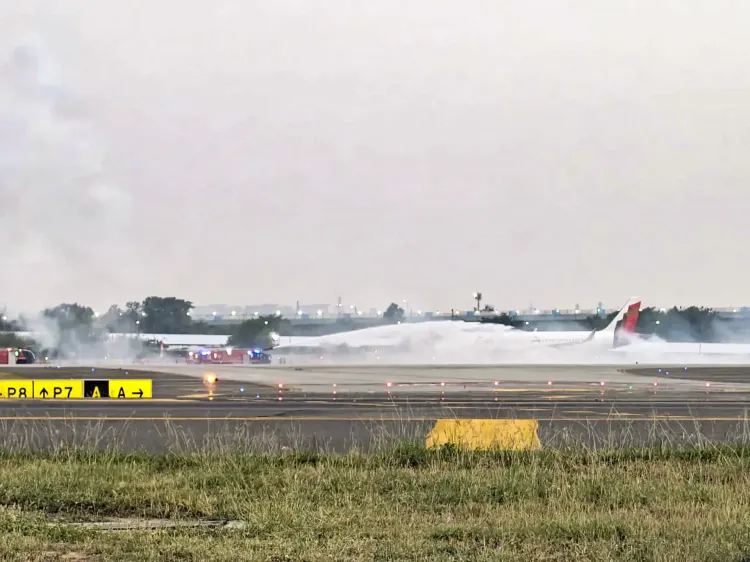
The CISF staged a full-scale aircraft crash simulation — 'Agni Chakra' — at IGI Airport, deploying personnel from over six agencies to test crash-landing response. Coming just two months after a counter-terror drill at the same site, the exercise signals a stepped-up readiness tempo at one of India's most critical aviation hubs.
Key Takeaways
CISF conducted the 'Agni Chakra' aircraft crash mock exercise at IGI Airport, New Delhi on 12 May .
The drill simulated crash-landing conditions, testing rescue, evacuation, access control and inter-agency communication .
Participating agencies included Delhi Police , ARFF , BDDS , DGCA , Delhi Fire Services , medical teams, airlines, and ground agencies.
Just two months prior , the CISF had conducted a counter-terrorist mock exercise at the same airport.
The CISF , established in 1969 under the Home Ministry , oversees security at airports across India and has a dedicated fire wing for disaster management.
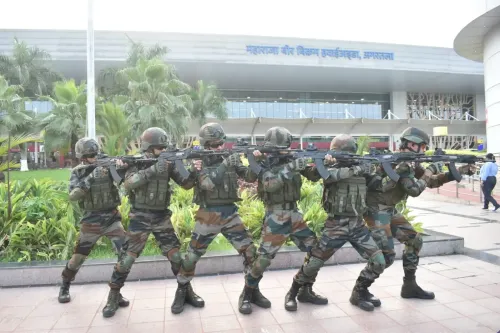
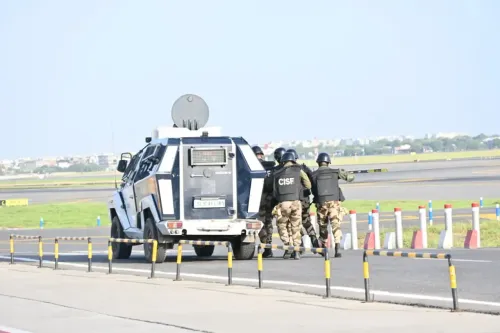
The Central Industrial Security Force (CISF) conducted a full-scale aircraft crash mock exercise named 'Agni Chakra' at the Indira Gandhi International (IGI) Airport in New Delhi on 12 May, simulating crash-landing conditions to test emergency response readiness across multiple agencies. The large-scale drill involved CISF personnel alongside a broad coalition of airport stakeholders, assessing everything from inter-agency communication to casualty handling.
What the Exercise Involved
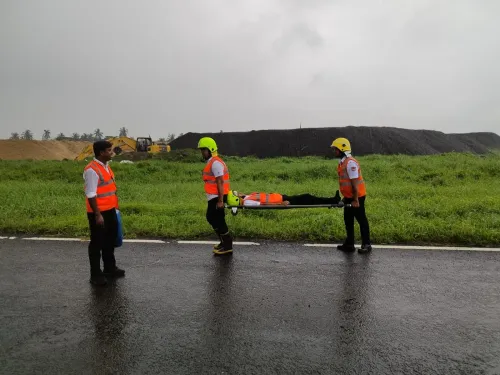
The Agni Chakra drill simulated a crash-landing scenario at the IGI Airport, with a large number of personnel deployed to replicate real-world emergency conditions. CISF teams immediately cordoned off the simulated crash site, enforced access control, and assisted in rescue and evacuation operations. The exercise evaluated inter-agency communication, emergency response protocols, casualty management, and overall crisis coordination.
Agencies That Participated
The drill brought together personnel from multiple agencies, including the Aircraft Rescue and Fire Fighting (ARFF) teams, Delhi Police, Bomb Detection and Disposal Squad (BDDS), Delhi Fire Services, Directorate General of Civil Aviation (DGCA), medical teams, airlines, and ground handling agencies. The CISF's dog squad was also deployed as part of the coordinated response. This multi-agency participation underscores the complex coordination required during an actual aviation emergency.
Context and Recent Drills
This exercise is part of the CISF's routine preparedness programme, which involves mock exercises at regular intervals to brace for unforeseen circumstances. Notably, just two months ago, the force conducted a counter-terrorist mock exercise at the same airport to assess readiness and enhance seamless inter-agency coordination against evolving security threats. The back-to-back drills reflect a sustained focus on keeping response mechanisms sharp across multiple threat scenarios.
About the CISF
The CISF, operating under the Union Home Ministry, was established in 1969 with an initial strength of 2,800 personnel. It is one of India's Central Armed Police Forces, mandated to provide security to large public sector establishments, industrial undertakings, airports, and — in select cases — private entities. The force also offers consultancy services to private industries and plays a significant role in disaster management through its dedicated 'fire wing'. It currently oversees the security of airports across India, making aviation safety a core part of its operational mandate.
The Agni Chakra exercise reaffirms the CISF's commitment to maintaining high levels of preparedness at one of India's busiest airports, with further drills expected to follow as part of its ongoing readiness calendar.
Point of View
One crash simulation — suggest the CISF is deliberately cycling through its full threat matrix rather than treating exercises as periodic box-ticking. What deserves closer scrutiny is whether these drills produce measurable improvements in response times and coordination gaps, or whether they remain largely performative. India's aviation security framework has expanded significantly, but the real test is how quickly agencies can interoperate when an actual emergency unfolds — not during a scripted rehearsal.
NationPress
14 Sept 2026
Frequently Asked Questions
What is the CISF 'Agni Chakra' mock exercise?
'Agni Chakra' is a full-scale aircraft crash simulation drill conducted by the CISF at IGI Airport in New Delhi on 12 May. It involved multiple agencies testing emergency response protocols including crash-site cordoning, rescue, evacuation, and casualty handling.
Which agencies participated in the Agni Chakra drill?
The exercise included personnel from the CISF, Delhi Police, ARFF, BDDS, DGCA, Delhi Fire Services, medical teams, airlines, and ground handling agencies. The CISF's dog squad was also part of the drill.
Why does the CISF conduct mock exercises at airports?
The CISF conducts regular mock exercises to maintain readiness for unforeseen emergencies, assess inter-agency coordination, and refine crisis management protocols. These drills ensure that all stakeholders can respond swiftly and effectively during real incidents.
Has the CISF conducted other recent drills at IGI Airport?
Yes. Two months before Agni Chakra, the CISF held a counter-terrorist mock exercise at IGI Airport to assess preparedness and strengthen inter-agency coordination against evolving security threats.
What is the CISF and what is its role in aviation security?
The CISF is a Central Armed Police Force established in 1969 under the Union Home Ministry. It is responsible for the security of airports across India, large public sector establishments, and select private entities, and also has a fire wing that supports disaster management operations.