CISF drone threat drill at Porbandar Airport: Navy leads awareness session
Synopsis
The CISF and Indian Navy ran a live aerial-threat drill at Porbandar Airport — a coastal facility with a distinct maritime security profile — then followed it with a technical deep-dive on radar, RF detection, and jamming systems. Days earlier, a parallel counter-terror drill at Delhi Airport drew over a dozen agencies. The back-to-back exercises signal a systematic, nationwide effort to treat drone intrusions as a frontline aviation security threat.
Key Takeaways
CISF and the Indian Navy conducted a multi-agency aerial threat mock exercise at Porbandar Airport on 27 September 2026 .
A drone-awareness session led by Lt.
Comdr Suraj covered drone types, emerging threats, and anti-drone technologies including radar , RF detection , and jamming .
A separate joint counter-terrorist mock drill was held at Delhi Airport on the preceding Saturday, involving over 12 agencies including the NSG , Delhi Police , and BCAS .
The exercises are part of a wider push to strengthen coordination and preparedness against unmanned aerial system (UAS) threats at Indian civil airports.
Porbandar's coastal location makes Indian Navy coordination particularly critical given its proximity to sensitive maritime zones.
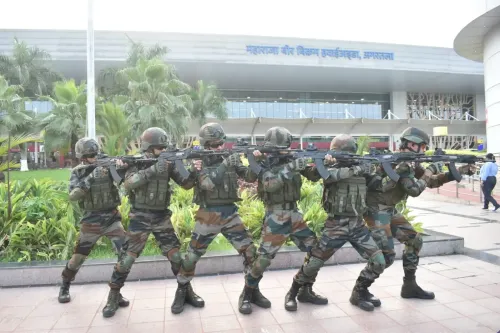
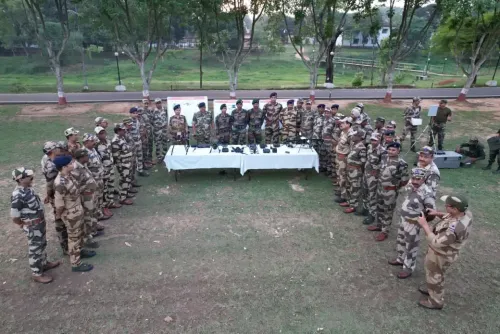
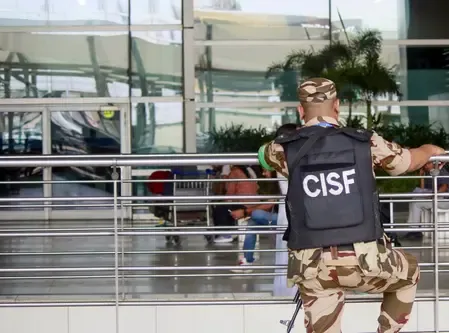
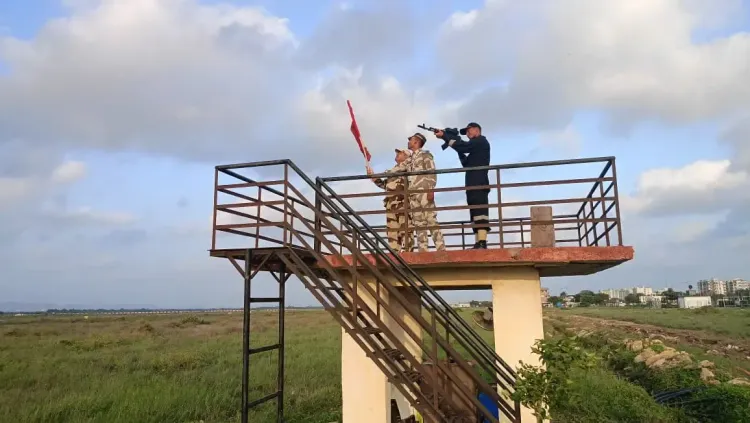
The Central Industrial Security Force (CISF) conducted a multi-agency mock exercise on aerial threats and drone sightings at Porbandar Airport on 27 September 2026, in coordination with the Indian Navy, as security agencies intensified preparedness against potential threats from unmanned aerial systems. The exercise marks a broader push by Indian aviation security forces to address the fast-evolving challenge of drone-based threats at civil airports.
What the Drill Covered
The exercise was designed to strengthen inter-agency coordination, sharpen communication channels, and improve the readiness of security personnel to detect and respond to aerial intrusions. According to the CISF, the drill tested protocols for identifying, assessing, and countering potential drone-related security scenarios in real time.
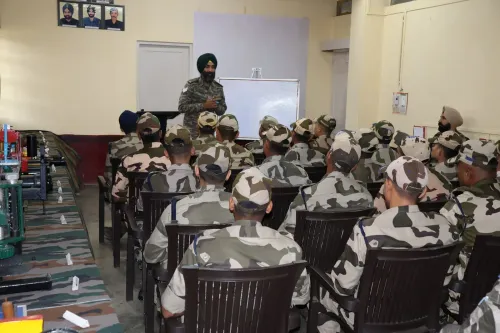
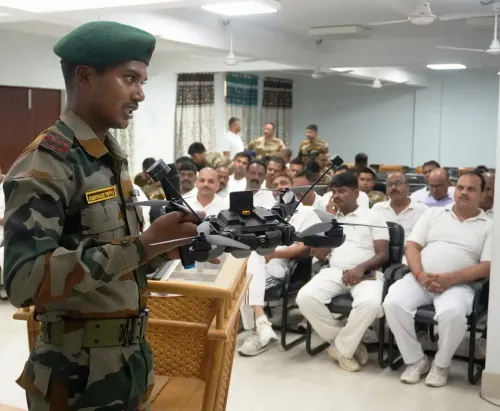
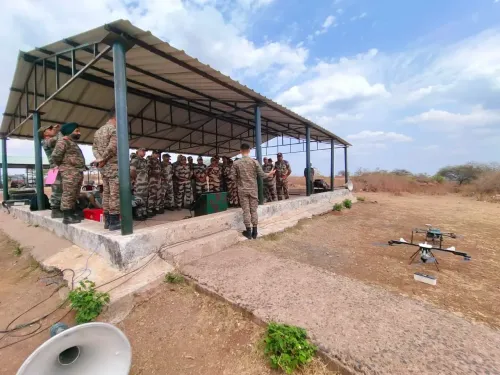
Following the exercise, a dedicated drone-awareness session was conducted by a team from the Indian Navy for CISF personnel deployed at Porbandar Airport. The session was led by Lieutenant Commander Suraj and covered the spectrum of drone types currently in use, emerging threats linked to their proliferation, and the technologies available for detection and neutralisation.
Anti-Drone Technologies Explained
According to the CISF, the awareness briefing included a detailed overview of anti-drone systems and their operational capabilities. Technologies discussed included radar-based detection, radio-frequency (RF) detection, and jamming systems — tools increasingly deployed at sensitive installations across the country. The session aimed to ensure that frontline personnel understand both the threat landscape and the countermeasures available to them.
Delhi Airport Drill Also Held
The Porbandar exercise followed a joint counter-terrorist mock drill conducted at Delhi Airport on the preceding Saturday. That exercise was aimed at validating real-time crisis response mechanisms and strengthening coordination among multiple stakeholder agencies.
As stated by the CISF, the Delhi drill involved personnel from the CISF alongside Delhi Police, the National Security Guard (NSG), BDDS, CIW, DIAL, RAXA, DP ATS, Medanta, DFS, CATS, the Bureau of Civil Aviation Security (BCAS), ARFF, and other concerned agencies. The CISF noted that the exercise 'reaffirmed the commitment towards robust aviation security, seamless inter-agency synergy and enhanced emergency response capabilities.'
The Broader Security Context
These drills come amid continued emphasis by Indian security establishments on hardening civil aviation infrastructure against a range of threats, including drone-based surveillance, smuggling, and potential attacks. Notably, airports in coastal regions like Porbandar — located in Gujarat near strategically sensitive maritime zones — face a distinct threat profile that warrants dedicated inter-agency coordination with naval assets.
The frequency of such exercises has increased in recent months, reflecting a wider government push to align civil aviation security with the rapidly evolving capabilities of commercial and modified unmanned aerial systems. With drone technology becoming more accessible, security planners are treating the aerial threat vector as a standing risk rather than an edge case.
Point of View
Accessible drone technology. What these exercises do not yet answer publicly is whether the detection and jamming infrastructure is actually in place, or whether the drills are outpacing real deployments. Awareness sessions are necessary but insufficient if the hardware lags behind the training. The inclusion of the Indian Navy at Porbandar is a meaningful signal: maritime approaches to coastal airports represent an underappreciated vulnerability, and bringing naval expertise into civil aviation security is a structural improvement worth tracking.
NationPress
27 Sept 2026
Frequently Asked Questions
What was the CISF drone mock exercise at Porbandar Airport?
The CISF conducted a multi-agency mock exercise on aerial threats and drone sightings at Porbandar Airport on 27 September 2026, in coordination with the Indian Navy. The drill tested inter-agency coordination, communication protocols, and response preparedness against potential unmanned aerial system threats.
What did the Indian Navy's drone-awareness session cover?
The session, led by Lieutenant Commander Suraj, covered different types of drones, emerging security threats linked to their use, and technologies for detection and neutralisation. It included an overview of radar-based detection, radio-frequency (RF) detection, and jamming systems.
Was a similar exercise held at any other airport?
Yes. A joint counter-terrorist mock exercise was conducted at Delhi Airport on the preceding Saturday, involving over 12 agencies including the NSG, Delhi Police, BCAS, ARFF, DIAL, and Medanta, among others. The drill focused on real-time crisis response and inter-agency coordination.
Why is aerial threat preparedness at airports significant?
Drone technology has become increasingly accessible, raising the risk of its use for surveillance, smuggling, or attacks at sensitive installations including airports. Regular drills help ensure that security personnel and agencies can respond in a coordinated and timely manner.
Why is the Indian Navy involved in security at Porbandar Airport?
Porbandar is a coastal city in Gujarat situated near strategically sensitive maritime zones. The Indian Navy's involvement brings specialised expertise in detecting and countering aerial threats that may approach from maritime corridors, a distinct vulnerability for coastal airports.